


The Numbers That Will Follow Every AI Company Now
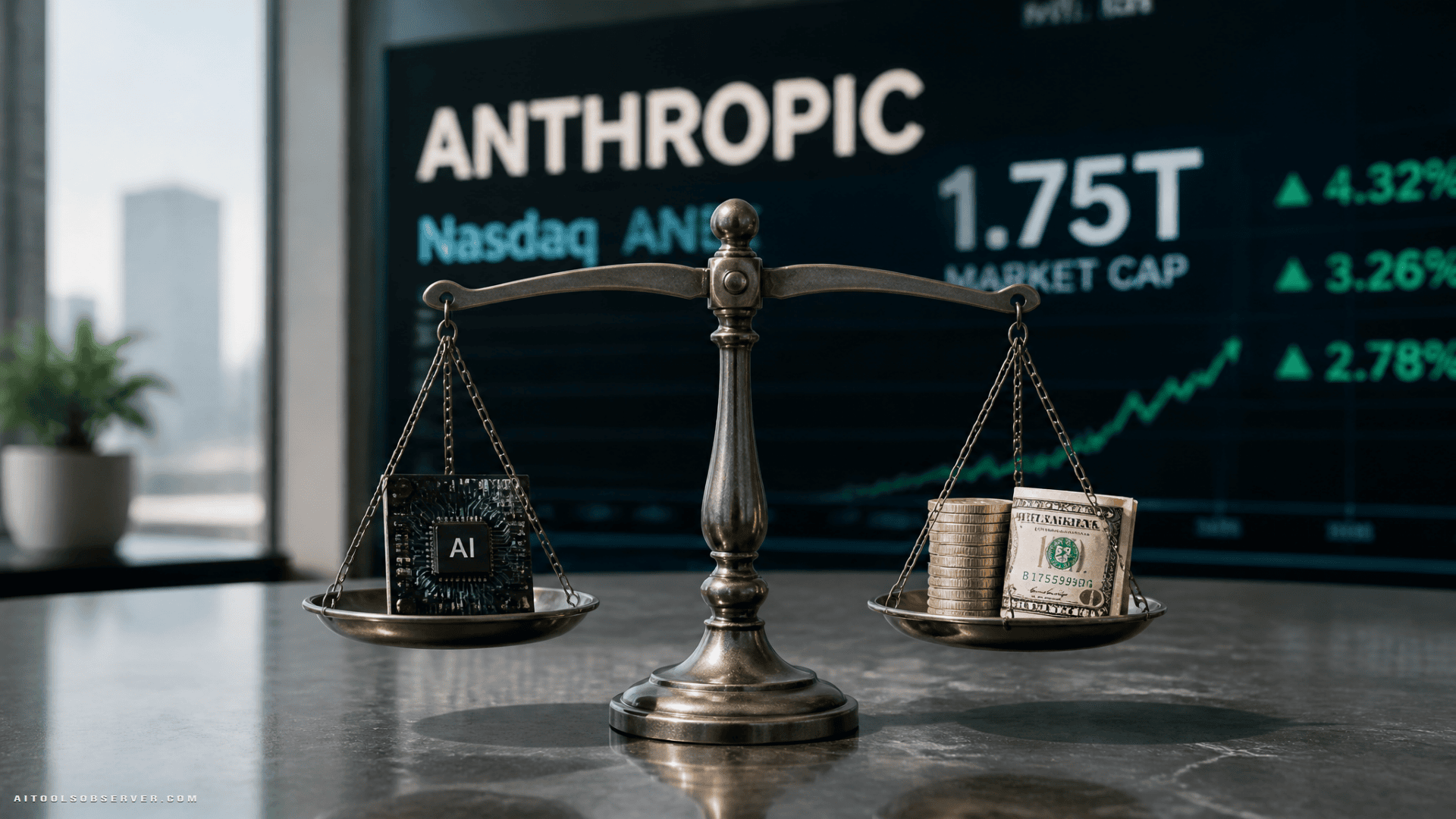
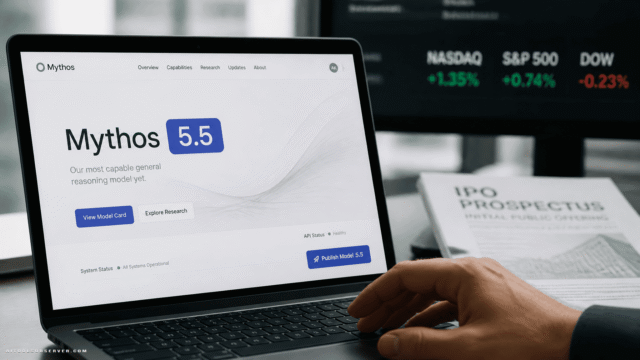
The IPO didn’t just make Anthropic’s investors very happy. It handed the market a benchmark it didn’t have before.
- Bessemer Venture Partners put in over $800 million—the largest investment in the firm’s 115-year history
- Lightspeed’s position was reportedly worth around $28 billion at the $83 IPO price
- Menlo Ventures said its stake was worth $25 billion
- Anthropic’s valuation jumped from $965 billion (its Series H in May) to $1.5 trillion at IPO price—and higher at open
PitchBook senior analyst Harrison Rolfes put it plainly: “Every AI company, OpenAI included, now has a traded benchmark.”
That’s the practical shift. Before Thursday, AI valuations were private-market guesses. Now there’s a public number. Every future fundraise, every competitor’s pitch deck, every analyst model starts from here.
The OpenAI Subplot
Anthropic and OpenAI filed their IPOs confidentially within a week of each other back in June. Then OpenAI postponed its offering to 2027, citing AI safety concerns—which, given the timing, reads as either principled or strategically awkward.
The result: Anthropic, founded by seven former OpenAI employees who left over disagreements about safety priorities, now has a public market cap that leapfrogs OpenAI’s reported $1.25 trillion private valuation.
Sam Altman, speaking at the 2026 DealBook Summit the day before, acknowledged the tightrope his company walks. Too much safety talk and you’re accused of regulatory capture. Too much “pedal to the metal” and people worry about existential risk. It’s a real tension—and now Anthropic has to navigate it with quarterly earnings calls.
Safety as a Public Company
Here’s where it gets genuinely complicated. Anthropic’s founding premise was that AI development needed more caution, more transparency, more care. CEO Dario Amodei has described the pace of AI advancement as going from 60 mph to 200 mph—and his company’s approach as choosing to drive at 90 while figuring out how to do it safely.
That framing works well in a press release. It’s harder to sustain when shareholders want growth.
In September, an Anthropic researcher named Jacob Coxon resigned and publicly criticized the safety practices of both Anthropic and OpenAI, writing that both companies are “gambling with our lives.” That kind of internal friction doesn’t disappear after an IPO. If anything, the pressure to perform financially makes it louder.
Amodei acknowledged the “central tension at the heart of the company” on IPO day. That’s an unusually candid thing to say while ringing the opening bell. For more on how Anthropic has framed internal progress and oversight, see Anthropic’s 3 Metrics for Frontier AI Progress.
What This Means for the AI Tools Ecosystem
For founders, buyers, and builders evaluating AI tools, the Anthropic IPO changes a few things worth tracking:
Pricing pressure is coming. Public companies face margin scrutiny. Expect Claude’s pricing and packaging to evolve as Anthropic optimizes for revenue alongside research.
The benchmark effect is real. Investors and analysts will now price every major AI model provider—OpenAI, Mistral, Cohere, and others—against Anthropic’s public multiple. That shapes who raises, at what valuation, and how aggressively they compete.
Safety claims will be tested publicly. Quarterly reports, shareholder letters, and analyst calls create accountability that private companies don’t face. Whether that’s good or bad for AI safety is genuinely unclear—but it’s different.
An IPO window is opening. Bessemer’s Sameer Dholakia expects a wave of AI IPOs in 2027 and 2028. If he’s right, the AI tools landscape is about to get a lot more transparent—and a lot more competitive.
The most useful thing to take away from Anthropic’s debut isn’t the headline number. It’s that AI’s biggest players are now operating in public, with public accountability, public comparables, and public pressure to grow. The era of AI as a private-market science experiment is closing. What comes next will be shaped by earnings calls as much as research papers.








Comments (0) No comments yet
Want to join this discussion? Login or Register.
No comments yet. Be the first to share your thoughts!