


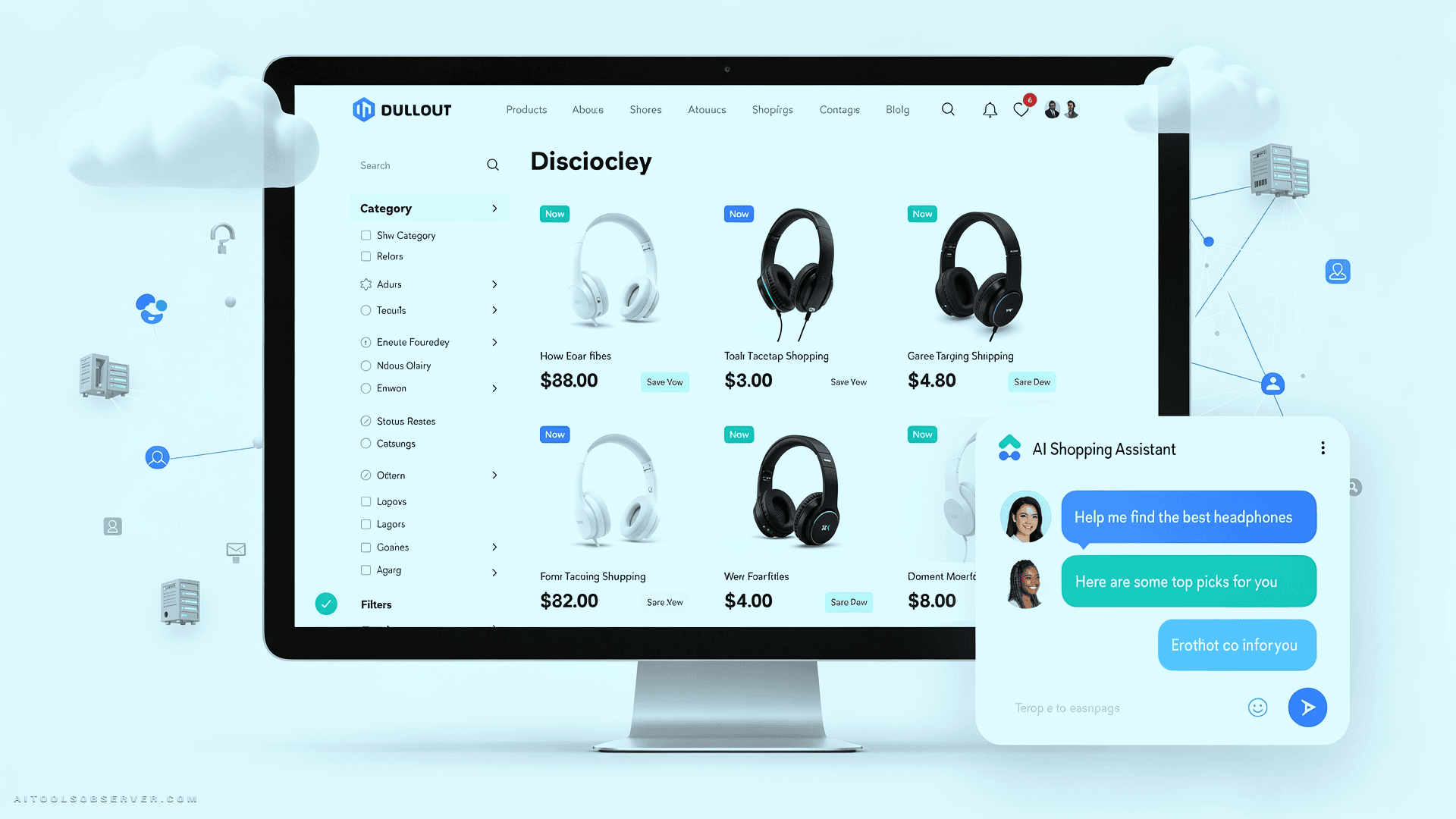
What ASA Actually Is

ASA isn’t a single product — it’s a bundle. Think of it as AWS handing retailers a pre-assembled kit and saying, “Here’s everything you need. We’ll even help you put it together.”
The stack includes three core AWS components: Amazon Bedrock for foundation model access, Amazon Bedrock AgentCore for building and orchestrating AI agents, and OpenSearch for powering the product search layer that keeps chatbot responses grounded in actual catalog data.
The professional services side is equally important. AWS is routing implementation support through systems integrators and its own Generative AI Innovation Center — a unit that handles the messy customization work: brand voice, design guidelines, product catalog integration, and guardrails to keep chatbots from going off-script.
That last part matters more than it sounds. An electronics retailer probably doesn’t want its AI assistant confidently dispensing bad repair advice. Guardrails aren’t optional polish — they’re table stakes.
Where ASA Came From

ASA has a clear lineage. It’s derived from Alexa for Shopping, a tool Amazon rolled out on its own marketplace earlier in May 2026. That tool lets shoppers generate product comparisons, track price history, and navigate purchasing decisions conversationally.
Alexa for Shopping itself replaced an older set of AI features that Amazon credits with driving nearly $12 billion in incremental sales last year. That’s not a footnote — that’s the proof of concept AWS is now selling to the rest of retail.
The pattern here is deliberate. Amazon builds something internally, proves it works at scale, then packages it for external customers. It did this with cloud computing. It did this with logistics. Now it’s doing it with AI-powered commerce.
The 60-Day Promise

Building a custom AI application from scratch can take years. ASA compresses that to roughly 60 days.
That’s the headline claim, and it’s credible given what’s included. Retailers aren’t starting from zero — they’re configuring a pre-built stack with expert help. The Generative AI Innovation Center can build personalization workflows based on shopper chat history, and even layer in analytics tools to monitor output quality over time.
Sixty days to a production-ready AI shopping assistant is fast. It’s not magic — it’s what happens when someone else has already solved the hard infrastructure problems.
Why This Move Makes Sense Right Now
ASA fits neatly into a broader Amazon strategy that’s been accelerating in 2026. Earlier this month, the company launched a service letting third-party retailers ship via its logistics network. Before that, Amazon floated the idea of selling its warehouse robots externally — a fleet that currently exceeds one million units across its fulfillment centers.
The throughline: Amazon is monetizing the internal systems that power its own competitive advantage. If it works for Amazon at scale, it becomes an AWS product.
For retailers, this is genuinely useful timing. Conversational commerce is no longer a differentiator — it’s becoming an expectation. The question isn’t whether to build an AI shopping assistant, but how fast and how well.
What to Watch

A few things worth tracking as ASA rolls out:
- Customization depth. The Generative AI Innovation Center’s involvement is promising, but the quality of those implementations will vary. Early case studies from real retailers will tell the real story.
- OpenSearch as the grounding layer. Using a managed search engine to anchor chatbot responses to actual product data is a smart architectural choice. It reduces hallucination risk in a domain where accuracy directly affects purchasing decisions.
- The 60-day benchmark. If that timeline holds consistently across different retail verticals and catalog sizes, ASA becomes a serious competitive pressure on boutique AI implementation shops.
Sixty days from kickoff to a live AI shopping assistant is the kind of number that makes a CFO pay attention. Whether ASA delivers on that consistently is the question — but AWS has enough internal proof points to make the pitch credible.
For retailers still sitting on the conversational commerce fence, the fence just got a lot less comfortable.












Comments (0) No comments yet
Want to join this discussion? Login or Register.
No comments yet. Be the first to share your thoughts!