



Two Types of AI Shopping Tools Worth Knowing
Before you start prompting, it helps to understand what you’re working with.
General-purpose chatbots — ChatGPT, Gemini, Claude, Perplexity — pull from across the web. They’re good at brainstorming, comparing options, and surfacing things you wouldn’t have thought to search for. OpenAI has specifically positioned ChatGPT as a shopping research tool, which tracks with how people are already using it.
Retailer AI assistants — Amazon, Walmart, Target, Macy’s, Ulta — stay within their own catalogs. The tradeoff is narrower scope, but deeper integration. Amazon’s Alexa for Shopping connects suggestions to your purchase history, past conversations, and live cart. Macy’s describes its Ask Macy’s assistant as “curated discovery” rather than search—a meaningful distinction if you’re tired of scrolling through 4,000 results.
What Each Type Is Actually Good At
General-Purpose Chatbots
- Brainstorming across categories and price points
- Comparing products by features, reviews, and value
- Finding alternatives when something is out of stock or over budget
- Explaining why a recommendation fits your criteria
The open-web access is the real advantage here. You’re not locked into one retailer’s inventory, which matters when you’re shopping for someone with specific tastes.
Retailer AI Assistants
- Faster path from idea to checkout
- Personalized suggestions based on purchase history
- Real-time stock and pricing within that retailer
- Promotions and deals surfaced automatically
If you already know where you’re buying, a retailer assistant removes friction. If you’re still figuring out what to buy, a general chatbot is the better starting point.
The Trust Problem Nobody Talks About Enough
Here’s the part that deserves more attention: 75% of AI users say they’d trust recommendations less if they knew brand dollars were influencing them. Same percentage said they’d trust the brand less too.
That’s not a small number. It reflects a real concern—that AI shopping tools could quietly become another ad channel dressed up as helpful advice.
General-purpose chatbots aren’t immune to this either. Retailer assistants, by definition, only recommend what they sell. Neither type is fully neutral.
The practical move: ask the chatbot to explain its reasoning. If a recommendation is vague or suspiciously enthusiastic, push back. Why this one over the alternatives? is a useful prompt.
How to Get Better Results From Any AI Shopping Tool
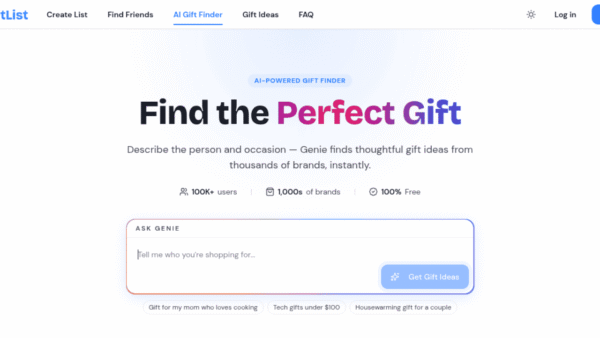
The quality of the output depends almost entirely on the quality of your input. Vague prompts produce vague suggestions. For more AI-powered gift ideas, the same principle applies.
- Be specific about the recipient — age, interests, hobbies, what they already own
- Set a hard budget — not “around $50” but “$40–60, no higher”
- Add constraints — shipping deadlines, allergies, sizing, whether they prefer experiences over objects
- Ask for multiple options — don’t accept the first suggestion as the final answer
- Request the reasoning — “why did you recommend this?” surfaces assumptions you can correct
- Verify before buying — prices change, stock runs out, and AI doesn’t always catch either
The Honest Takeaway
AI is a genuinely useful brainstorming and research layer for gift shopping. It’s fast, it surfaces options you’d miss, and it handles the tedious comparison work reasonably well.
But it doesn’t know the person you’re shopping for. It doesn’t know the inside joke, the thing they mentioned once six months ago, or why a particular gift would land differently than the specs suggest.
Use AI to get from zero to a short list. Use your judgment to get from that list to the right gift. That division of labor is where these tools actually earn their keep.




Comments (0) No comments yet
Want to join this discussion? Login or Register.
No comments yet. Be the first to share your thoughts!