



AI Agents as the Defining Threat Vector
Analysts at BTIG summarized the conference consensus bluntly: “AI agents have fundamentally changed the threat landscape.” The observation came not from a single vendor pitch but from conversations across partners, customers, and vendors throughout the event.
The implication is structural. Attackers are now deploying AI agents to automate reconnaissance, accelerate exploitation, and adapt in real time. The threat environment, in BTIG’s framing, is “meaningfully worse” than it was even a year ago.
What makes this moment particularly significant is the gap it reveals. Despite the acceleration on the attack side, enterprise deployment of AI-native defense tools is still described as being in the “early innings.” Demand is rising faster than adoption.
What This Means for Enterprise Security Spending
Businesses attending Black Hat were not there to browse. They were looking for concrete answers to a specific problem: how to secure systems against adversaries who are now operating with AI-assisted speed and scale.
This urgency is translating into spending pressure across several security categories:
- Endpoint security — BTIG noted that AI is creating a new modernization cycle in this space, directly benefiting CrowdStrike’s core business.
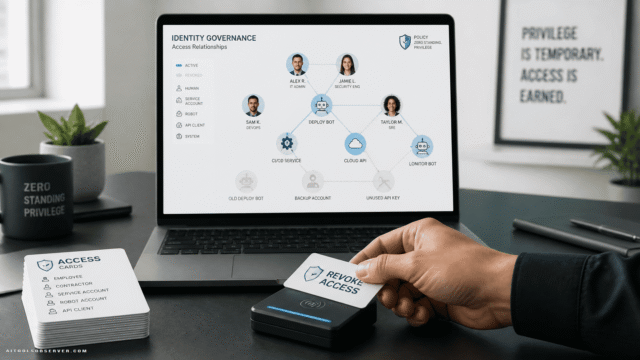
- Identity platforms — Palo Alto’s identity infrastructure is positioned to benefit as AI agents multiply the number of non-human identities requiring governance.
- Data and detection platforms — Products like Palo Alto’s XSIAM and Chronosphere are being cited as building durable data advantages across security verticals.
Analysts at Cantor framed the shift concisely: “AI has moved from being a cybersecurity feature to a key pillar of both the attack surface and the attacker/defender infrastructure.”
The Practical Takeaway for AI Tool Evaluators
For teams currently evaluating or procuring security tooling, the Black Hat signal is worth taking seriously. The conference did not introduce a new product category — it confirmed that the existing categories are under pressure to evolve faster.
The tools that appear best positioned are those built around agentic threat detection, identity governance at machine scale, and unified data platforms that reduce analyst response time. Point solutions that lack AI-native architecture are likely to face harder questions in procurement conversations over the next 12 to 18 months.
If your organization is still running a security stack assembled before agentic AI became a realistic attack vector, the gap between your current posture and the current threat environment is probably wider than your last audit suggested.










Comments (0) No comments yet
Want to join this discussion? Login or Register.
No comments yet. Be the first to share your thoughts!