


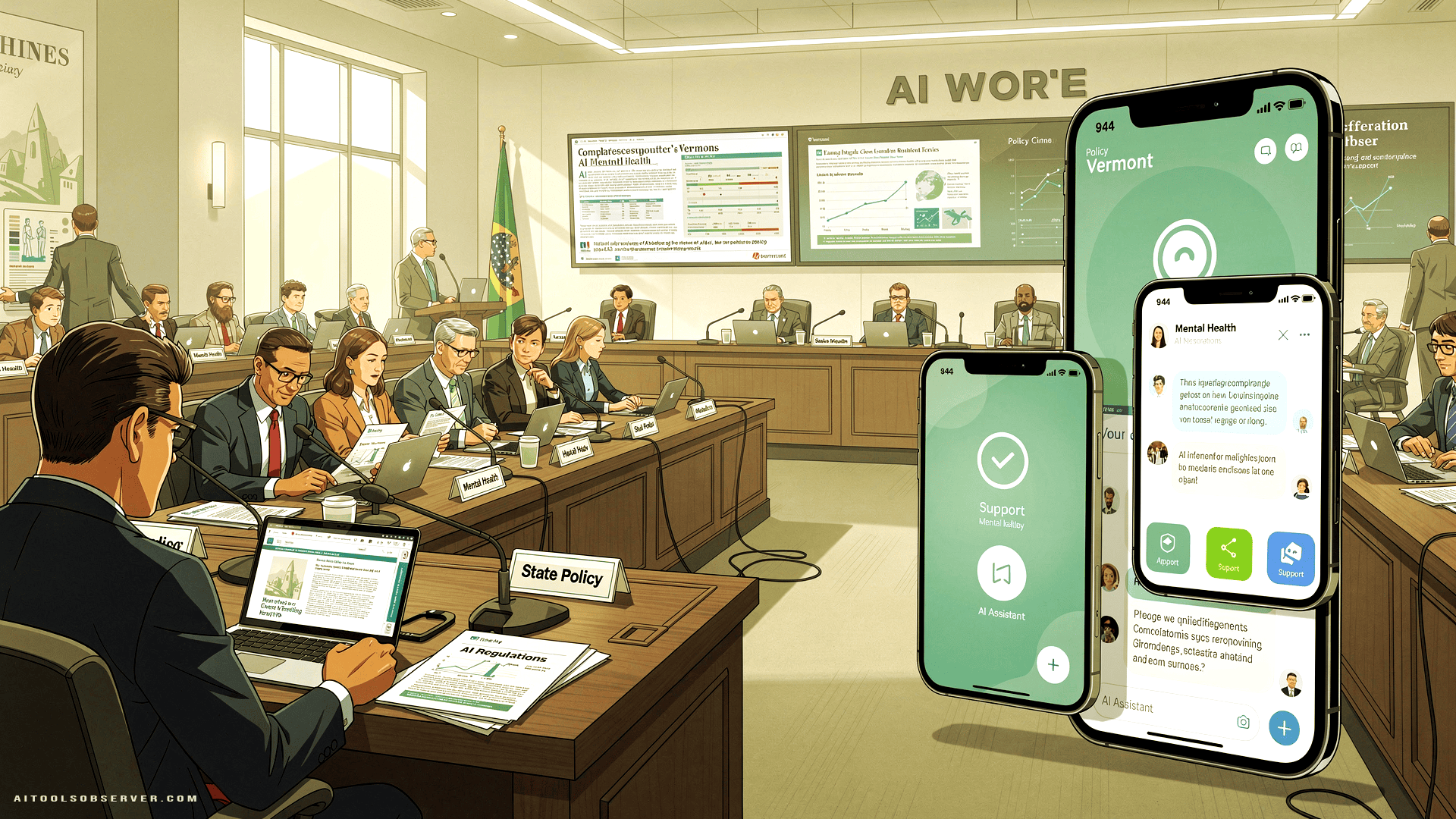
The Bill Sounds Reasonable. The Definitions Are Not.

H 816 defines “mental health services” as including “counseling, therapy, or psychotherapy services used to diagnose or treat an individual’s mental or behavioral health or provide ongoing recovery support.”
That last phrase — ongoing recovery support — is doing a lot of heavy lifting. Without further qualification, it’s broad enough to capture psychoeducational apps, motivational content platforms, and general wellness tools that have no clinical intent whatsoever.
Then there’s “therapeutic communication,” defined as “any advice related to diagnosis, treatment, or recovery.” Under that framing, an AI that reminds you to drink water and breathe deeply might technically be offering therapeutic communication. That’s not regulate AI. That’s a word salad with legal consequences.
Who Gets Caught in the Net?

This is where it gets practically important for anyone building or using AI tools in the wellness space.
The CCIA’s coalition flags three categories of products that could be unintentionally swept in:
- General-purpose AI assistants offering emotional support or guidance
- Wellness and coaching apps providing motivational or psychoeducational content
- Crisis intervention tools — including AI systems that connect users to resources like the 988 Suicide & Crisis Lifeline
That last one is the sharpest edge. AI-powered crisis support tools exist precisely to bridge the gap between a person in distress and professional help. Regulatory ambiguity that chills development or deployment of these tools isn’t consumer protection — it’s the opposite.
The Compliance Problem Is Real

Even if a company believes its product falls outside the bill’s scope, H 816’s vague definitions make that determination genuinely difficult. Businesses can’t build compliant products around rules they can’t interpret.
Kyle Sepe, CCIA’s Northeast Region State Policy Manager, put it plainly:
“Businesses should be able to clearly determine whether their products fall within the law’s scope and what compliance obligations apply.”
That’s not a radical ask. Legal clarity is the baseline for any functional regulatory framework. When definitions are fuzzy, the safest move for companies is to pull back — and that means fewer tools, not safer ones.
What This Means for the AI Tools Ecosystem

If H 816 passes as written, expect a chilling effect on AI wellness product development in Vermont — and potentially a template that other states replicate before the definitional problems get fixed.
For founders and product teams building in the mental health or wellness AI space, this is a signal worth watching closely. Regulatory risk is now a product risk. How you describe your tool’s features — “support,” “guidance,” “recovery” — may determine whether you’re suddenly operating a regulated mental health service.
For AI adopters evaluating tools in this category, compliance posture is becoming a legitimate evaluation criterion alongside features and pricing.
The Smarter Path Forward

CCIA isn’t asking Vermont to abandon consumer protection. The coalition is asking the Governor to veto the bill and return to the table with clearer, more precise definitions that distinguish clinical treatment from informational support.
That’s a reasonable position. Protecting people seeking mental health support through AI is a worthy goal. Doing it with language precise enough to actually achieve that goal — without collateral damage to the tools helping people every day — is the harder, necessary work.
Observe the pattern here: the AI regulation conversation is accelerating, and the gap between legislative intent and legislative language is where real harm happens. The tools that get caught in that gap are often the ones people need most.










Comments (0) No comments yet
Want to join this discussion? Login or Register.
No comments yet. Be the first to share your thoughts!