


What happened
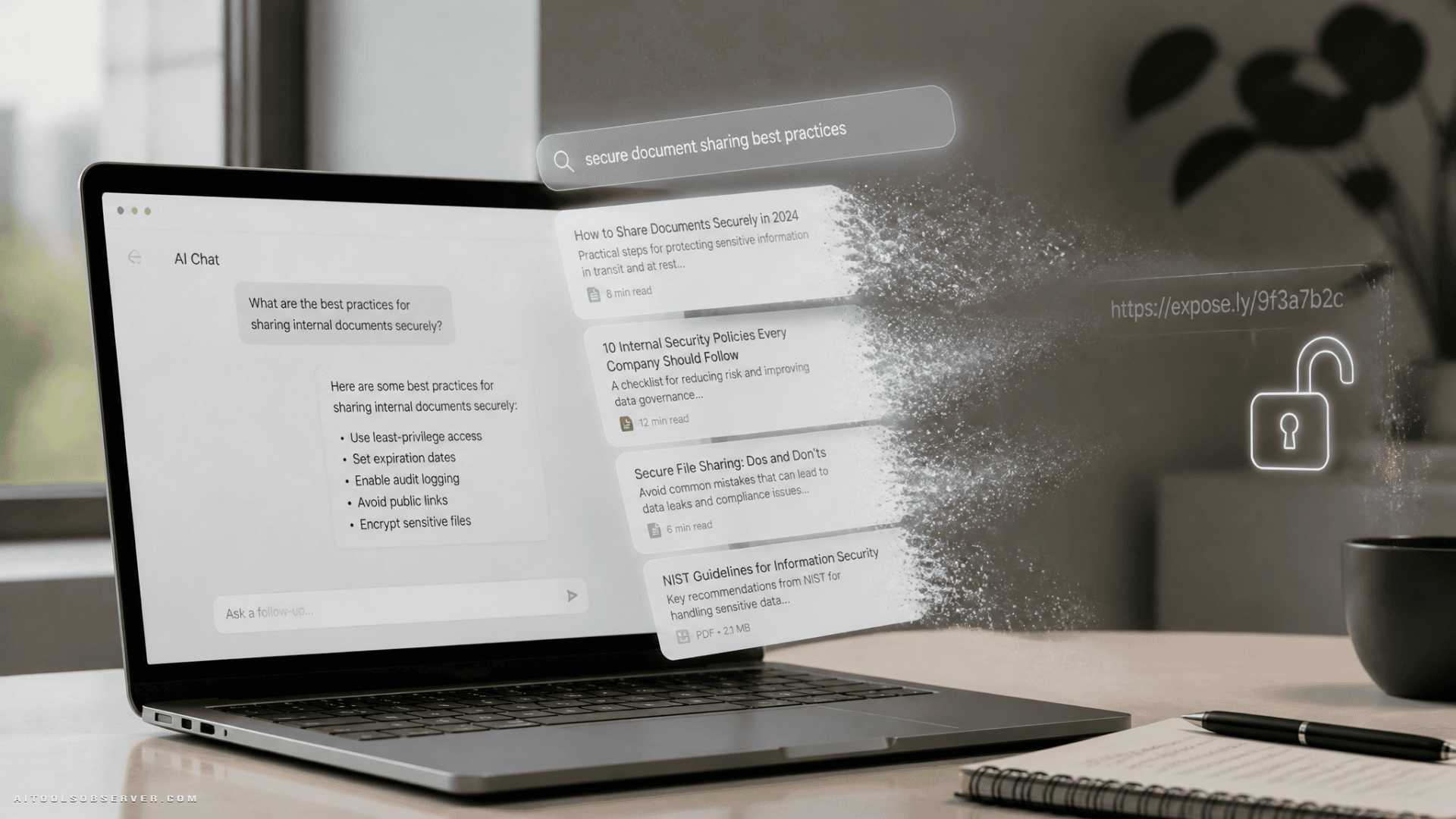
According to the reported findings, shared Claude chat pages became available in search results across Google and other engines. The indexed pages included a wide range of conversations, from harmless prompts to material that appears more sensitive.
Examples reportedly included:
- CVs with names, contact details, and work history
- Draft writing related to corporate projects
- Research-style conversations in areas such as healthcare
- Personal or unusual prompts users likely did not expect to become searchable
Anthropic’s position, based on the reported comments, is that users control whether they share a conversation. Once shared publicly, that content can be archived or surfaced by third-party services like any other public web page.
That distinction matters. A link may be hard to guess, but if search crawlers can access it, “unlisted” does not mean “private.”
Why this matters beyond Claude
This is not just a Claude story. It is a recurring design problem across AI products.
AI chat tools increasingly include sharing features for collaboration, publishing prompts, or showing outputs to others. The user experience often suggests a narrow form of sharing: send a link to a colleague, a client, or a friend. But if the page is crawlable and indexable, the internet may interpret that link very differently.
The pattern has shown up before with other major AI products. The practical lesson is straightforward: when a chatbot creates a public URL, users should assume there is at least some risk that search engines, archives, or third-party scrapers may find it.
The real issue: sharing controls vs user expectations
The core problem is less about search itself and more about expectation mismatch.
A message such as “anyone with the link” sounds narrower than “this may become searchable on the public web.” Many users understand the first phrase as semi-private sharing, similar to a document link that is difficult to discover unless actively passed around.
In practice, there are several layers:
- A link can be technically public
- A page can be crawlable by search bots
- A search engine can index and rank it
- Archived copies can persist even after removal
Those are separate states, but many users experience them as one decision: “share.”
That is where privacy failures happen.
What kinds of data were at risk
The reported examples highlight a familiar problem with AI usage in the workplace and in personal tasks: people paste in more than they should.
Sensitive exposure may include:
- Personally identifiable information
- Job application materials
- Internal business drafts
- Project details not meant for publication
- Research notes or transcripts
- Health-related context
- Personal reflections or emotionally revealing conversations
Even when a user voluntarily clicks “share,” that does not mean they intended search-level visibility. It often means they underestimated what public web access actually allows.
How search engines fit into this
Search engines generally do not decide on their own that a private page should be public. They discover what websites make accessible and then follow the site’s instructions about crawling and indexing.
That means responsibility is usually split across two layers:
- Product design: how clearly the tool explains sharing consequences
- Site controls: whether the page is blocked from search indexing
If a shared chat page is publicly reachable and not marked to prevent indexing, search engines may treat it like any other page on the web.
This is an important distinction for AI adopters evaluating tool safety. A privacy incident does not always require a hack, breach, or leaked database. Sometimes it comes from ordinary web mechanics meeting unclear product language.
What Anthropic users should do now
If you use Claude, the practical response is to review your past behavior before assuming the issue is resolved.
Assume copies may persist
Even if indexing has been blocked or pages removed from results, cached or copied versions may still circulate elsewhere. Removal from search is helpful, but it does not guarantee complete disappearance.
Change team habits
If Claude is used at work, update internal guidance now:
- Do not paste confidential information into chats that may later be shared
- Separate test prompts from real client or company material
- Strip names, identifiers, and project specifics where possible
- Treat share links as publication, not collaboration
That last point is the safest default.
What AI teams and tool buyers should learn from this
For founders, operators, and AI leads, this incident is a useful test case when comparing tools.
Ask these questions:
- Are shared conversations public by default?
- Are shared pages blocked from indexing?
- Is the warning language explicit about search discoverability?
- Can shared links be revoked easily?
- Are admins able to control sharing at workspace level?
- Is there a clear audit trail for what was shared and when?
These are not edge-case procurement questions anymore. They belong next to pricing, model quality, and integrations.
A tool can perform well in prompting and output quality while still creating avoidable privacy risk through weak sharing design. That matters when evaluating tool safety.
The broader product lesson
AI vendors have made chat sharing feel lightweight. Users now need heavier assumptions.
There is a large gap between how people emotionally categorize a chatbot conversation and how the web technically handles a public URL. Users often treat a chat as closer to a draft notebook. The internet treats a crawlable page as a publishable asset.
That gap will keep producing similar incidents unless products make the consequences unmistakable and block indexing by default for shared chats that are meant for limited distribution.
What to do going forward
The safest working rule is simple: if an AI tool gives you a shareable web link, assume the content could travel further than intended.
For Claude users, that means reviewing old shared chats and tightening what goes into future ones. For teams choosing AI tools, it means treating link-sharing controls as a serious security feature, not a minor convenience setting tied to privacy.













Comments (0) No comments yet
Want to join this discussion? Login or Register.
No comments yet. Be the first to share your thoughts!