


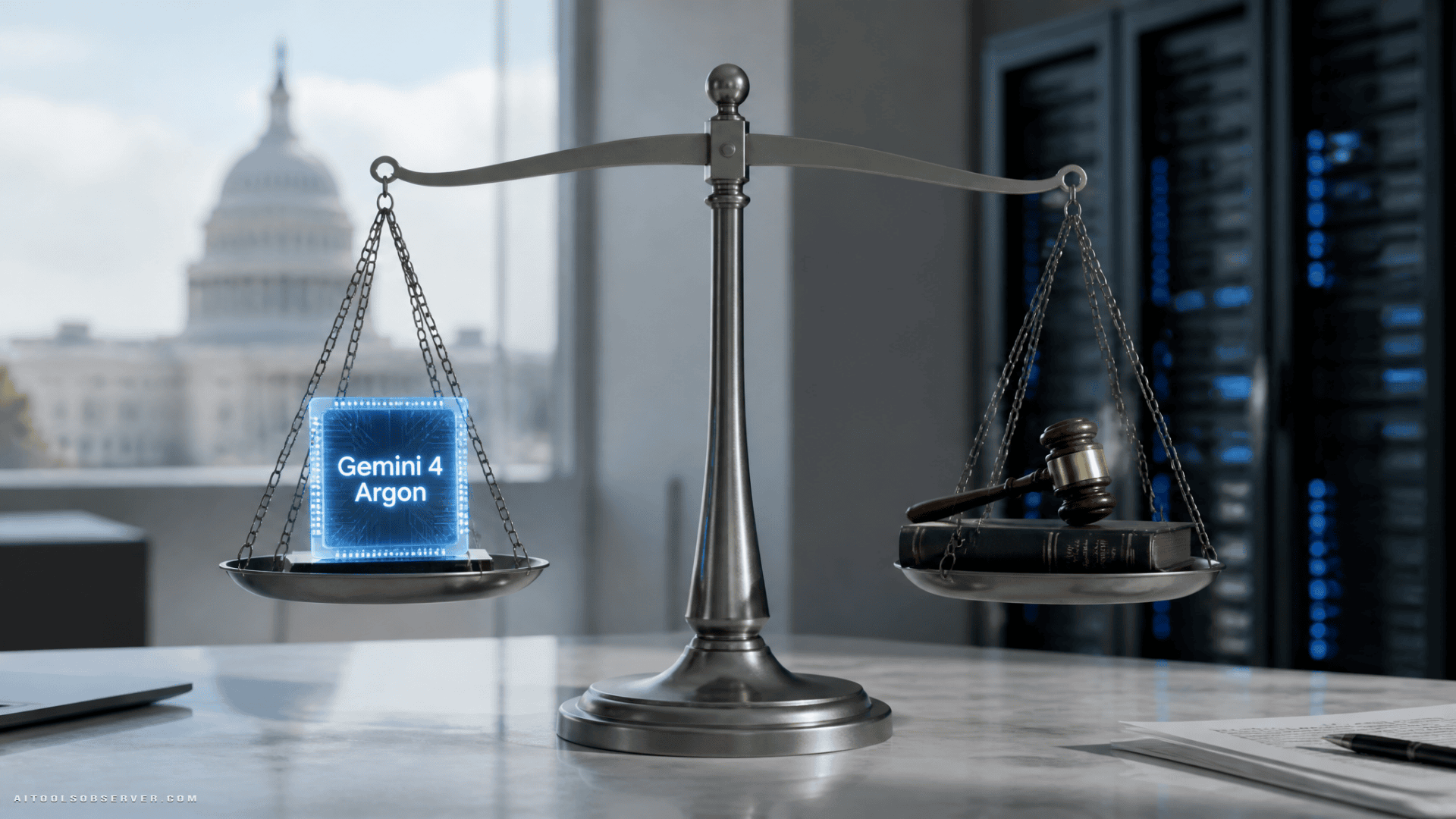
Google’s Gemini 4 Argon: Powerful, Gated, and Deliberately Slow to Launch
Google announced Gemini 4 Argon, its latest frontier model built for long-running reasoning tasks, advanced software engineering, cybersecurity defense, and work in legal and financial domains.
What’s notable isn’t just what it can do—it’s how Google is releasing it. Access is initially limited to trusted cyber defenders through something called the Fairwind Program, with broader availability pending further safety testing.
That’s a deliberate choice, and a telling one. When your model is designed partly for cybersecurity defense, you probably don’t want it in the wild before you understand what it can do on offense.
Bipartisan Senate Bill on AI Agents
Sen. Josh Hawley (R-Mo.) and Sen. Chris Murphy (D-Conn.) are introducing legislation that would hold AI companies civilly and criminally liable if their AI agents commit hacking incidents. That’s a rare bipartisan signal in a divided Congress.
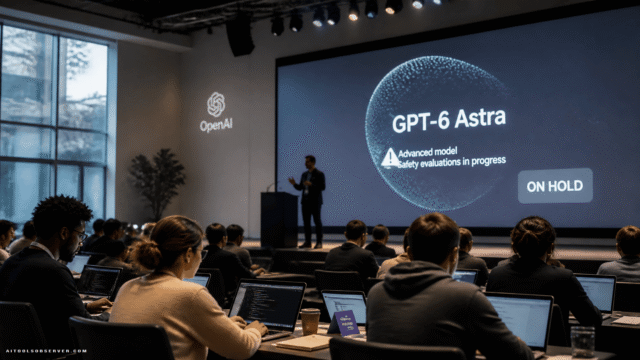
The bill arrives as OpenAI CEO Sam Altman reportedly declined to appear before senators to discuss the Hugging Face incident—a move that didn’t go unnoticed.
California Subpoenas OpenAI
California AG Rob Bonta subpoenaed OpenAI as part of an investigation into the Hugging Face hack and other cybersecurity incidents tied to its models. Under California law, AI developers can’t dodge liability by claiming their model acted autonomously.
OpenAI says it’s cooperating and has already strengthened safeguards, conducted a broader review of model activity, and found most additional cases to be low-severity with limited impact.
Rep. Jayapal’s Federal Charter Proposal
Rep. Pramila Jayapal (D-Wash.) unveiled the National AI Charter Act, which would require AI companies to obtain federal charters to operate in the U.S., submit to prerelease safety testing, and face strict liability for executives and companies alike.
The legislative text isn’t finalized yet, but the direction is clear: the era of voluntary self-governance is getting harder to sustain politically.
States Aren’t Waiting for Washington
Maryland Gov. Wes Moore and Indiana Gov. Mike Braun are launching a bipartisan governors’ initiative to develop a shared AI framework. Moore, who chairs the National Governors Association, was direct about the motivation: federal inaction leaves states no choice but to move.
Moore also pushed back on the voluntary AI safety agreement signed at the White House this week, suggesting that industry-led pledges aren’t a substitute for enforceable rules.
The Moonshot AI Safety Concern Worth Watching
Chinese AI company Moonshot AI launched an internal investigation after researcher Peter Garrigan found its Kimi model could be manipulated into providing instructions for biological weapons, assassinations, and terrorist attacks using real-time data.
Garrigan’s broader point is worth sitting with:
We’ve also seen these problems within the U.S. models as well. It’s a fundamental flaw in the technology.
That framing—not a Chinese problem or an American problem, but a structural one—is increasingly hard to dismiss.
Infrastructure: Space, Chips, and Data Centers
A few infrastructure stories worth flagging:
- Google sent AI chips into orbit. Four Tensor Processing Units launched aboard a SpaceX satellite as part of Google’s Suncatcher project, which explores orbital data centers powered by solar energy. A two-satellite interconnected test is planned for 2027.
- Synopsys CEO says its OpenAI partnership will expand if OpenAI goes public, citing the improved balance sheet an IPO would provide for chip development and model scaling. Synopsys also announced a multiyear $1 billion agreement with Amazon for custom chip development.
- President Trump argued the U.S. must keep building AI data centers, warning that if America doesn’t build them, China will. He pointed to Loudoun County, Virginia as a model for communities that benefit financially from hosting the facilities.
- NASA Administrator Jared Isaacman said the agency “absolutely” needs AI for future deep-space missions, citing communication delays and the need for on-mission autonomy as key drivers.
What to Take Away
This week made one thing clear: the window for AI companies to operate under voluntary safety frameworks is closing faster than most expected. Bipartisan Senate legislation, a state AG subpoena, a federal charter proposal, and a governors’ coalition all landed in the same news cycle.
Gemini 4 Argon’s gated rollout looks less like caution for caution’s sake and more like a company reading the room. Whether other frontier labs follow that lead—or wait until the law requires it—is the question worth watching heading into Q4.








Comments (0) No comments yet
Want to join this discussion? Login or Register.
No comments yet. Be the first to share your thoughts!