



What Changed, and How Fast
The pace of this valuation jump is notable. In roughly half a year, Databricks added $56 billion in valuation. That kind of acceleration does not happen on momentum alone — it reflects real revenue growth and, based on CEO Ali Ghodsi’s comments, genuine demand pressure from enterprise customers deploying AI agents at scale.
Ghodsi described demand as “crazy,” pointing specifically to the surge in AI agent adoption across large organizations. The framing is consistent with what many enterprise buyers are experiencing: the shift from experimenting with AI to running it in production, at volume, with proprietary data.
The Products Driving Growth
Three product lines appear to be doing the heaviest lifting:
- Lakebase — Databricks’ database built for AI agents, already exceeding a $100 million revenue run rate despite being a recent addition to the portfolio.
- Lakehouse — The core data warehousing product has surpassed a $1.5 billion run rate, confirming it remains the foundation of the business.
- AI Gateway — A tool for controlling model usage and costs, which is gaining traction as enterprise CFOs grow uncomfortable with unpredictable token costs.
- Genie — A business agent product rounding out the company’s move up the AI application stack.
The AI Gateway angle is particularly worth watching. As token costs become a boardroom-level concern, tools that help organizations govern and optimize model usage are moving from nice-to-have to operationally necessary.
The Token Cost Problem Is Reshaping Buying Behavior
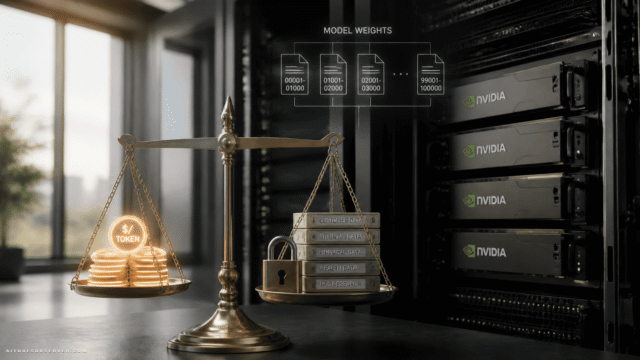
One of the more concrete observations from Ghodsi: the “token maxing” problem — runaway inference costs — is changing how enterprises think about model selection. CFOs are pushing back on exclusive reliance on frontier proprietary models, and Chinese open-source alternatives are being reconsidered despite earlier hesitations.
This is a meaningful shift. It suggests that cost governance, not just capability, is now a primary driver of enterprise AI infrastructure decisions. Databricks appears well-positioned to benefit from that dynamic, given its AI Gateway product and its long-standing emphasis on open-source tooling.
Why the IPO Is Still on Hold
Databricks is not avoiding public markets permanently — Ghodsi has stated the company intends to go public. The current reasoning is practical: private capital is abundant, market volatility is high, and an IPO would introduce distractions at a moment when the company is investing aggressively in product.
The round was led by Coatue, Blackstone, MGX, T. Rowe Price, and Sixth Street Growth — a mix of growth equity and institutional investors that signals confidence in the company’s trajectory without requiring a public listing to validate it.
Anthropic and OpenAI have both reportedly filed confidentially for IPOs. Databricks, by contrast, is choosing to stay private longer while its revenue base continues to compound.
What This Means for AI Tool Buyers
The data layer is becoming the AI layer. Databricks started as a data analytics platform. Its current growth is driven by AI agents, databases built for agents, and model governance tooling. The line between data infrastructure and AI infrastructure is effectively gone.
Cost control is now a product category. The success of AI Gateway reflects a real gap in the market. If your organization is running multiple models at scale, the question of who controls usage, cost, and access is no longer theoretical.
Valuation signals where enterprise spending is concentrating. A $190 billion private valuation, backed by institutional investors, points to sustained enterprise commitment to AI infrastructure — not a pullback. For buyers, that means the vendors in this space are investing heavily in product, and the competitive landscape will keep moving.
The useful takeaway: Databricks is no longer just a data platform that added AI features. It is building a vertically integrated stack for enterprise AI — from data storage through agent deployment to model cost governance. Organizations evaluating AI infrastructure should assess whether that kind of consolidation simplifies their stack or creates new lock-in risks.













Comments (0) No comments yet
Want to join this discussion? Login or Register.
No comments yet. Be the first to share your thoughts!