



What Cisco actually announced
Cisco’s update spans three connected areas:
- Webex and collaboration devices
- Customer experience workflows
- Smart workplace and workplace management
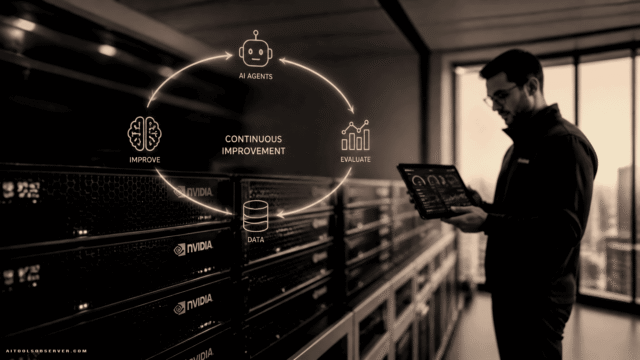
The headline theme is agentic AI. In plain English: AI tools that do more than answer prompts, and instead keep working across tasks, systems, and follow-ups.
Based on the available context, Cisco is positioning these agents as co-workers inside enterprise workflows rather than as sidecar chatbots.
Webex gets AI agents, not just AI features
The Webex side of the announcement appears focused on embedding AI into collaboration workflows. That includes Webex AI agents designed to work alongside people and teams, with an emphasis on shared context and continuity.
That distinction is important. Plenty of meeting tools can summarize a call. The more useful test is whether AI can carry context forward after the call ends, help route next steps, and reduce the number of things humans need to manually restate.
If Cisco gets that right, the value is less “look, AI” and more “finally, this follow-up did itself.”
Cisco devices now add native Google Meet support
One practical update stands out fast: Cisco devices are set to support Google Meet natively through a partnership with Google.
For buyers, this is the kind of feature that sounds boring until it saves a budget meeting. Many organizations run mixed collaboration stacks, whether by design or by merger, department politics, or simple entropy. Native support across Webex, Microsoft Teams, Zoom, and Google Meet makes Cisco hardware easier to justify in those environments.
The real story here is not brand alignment. It is procurement friction.
RoomOS 27 is coming, and the room itself is getting smarter
Cisco is also introducing RoomOS 27, due in November, for its collaboration devices.
Alongside that, the updated Cisco AI Assistant on supported devices can handle natural-language commands in 32 languages. The examples given are nicely unglamorous: adjusting room temperature or lowering blinds.
That may sound small, but workplace tech usually wins on small things. A “smart room” is only smart if people can use it without a training deck and a support ticket.
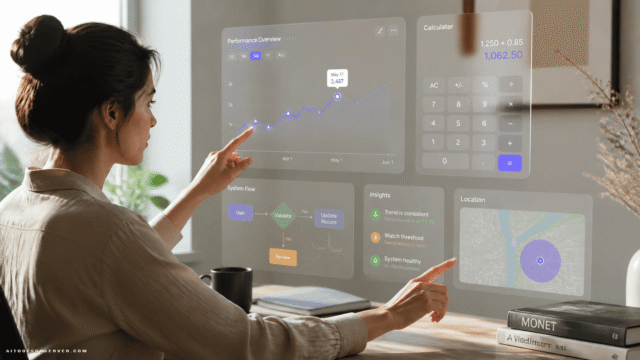
Smart workplace tools: less guessing, more operational context
Cisco also expanded capabilities inside Cloud Control, especially around workplace operations.
Two pieces stand out:
- Experience Metrics now links network and device health with floor plans, Wi‑Fi coverage, and occupancy data
- Workplace Insights tracks office usage over time and compares bookings with actual occupancy
This shifts workplace analytics from “the device is offline” to “this problem affects a high-use space and is hurting real work.” That is a much better way to prioritize fixes.
For companies still figuring out hybrid work, the occupancy-versus-booking view is also practical. It helps answer a question many office leaders still dodge: are people using the space you are paying for, or just reserving it out of habit?
Dialog CX is Cisco’s bigger bet
The customer experience piece may be the most ambitious part of the launch.
Cisco has introduced Dialog, an agentic platform for customer experience. The idea is to move beyond isolated interactions and toward ongoing, personalized customer relationships. Instead of ending work when a chat or call ends, AI agents continue coordinating across people, systems, and other agents until the issue is actually resolved.
That is a meaningful framing shift.
Most CX automation still behaves like a very eager front desk. It greets, routes, maybe answers simple questions, then hands the mess to someone else. Dialog appears positioned as something more persistent, with access to customer history, enterprise data, and operational procedures.
Cisco also says the platform can onboard AI agents using existing handbooks, knowledge bases, and operating procedures. If that works well in practice, it could lower the effort required to turn existing support documentation into operational AI behavior.
Safety and observability get first-class billing
Cisco is also leaning hard into governance, which makes sense for enterprise buyers who have seen enough “just plug in an LLM” demos to develop a twitch.
Webex AI Agents built on this foundation operate within guardrails from Cisco AI Defense, while telemetry and observability are powered by Splunk.
That is not the flashiest part of the announcement, but it may be the part that matters most in larger deployments. Agentic AI sounds helpful until someone asks:
- What did the agent do?
- Why did it do it?
- Can we monitor it?
- Can we stop it from doing the weird thing again?
Security and observability are not exciting. Neither is compliance. Neither is explaining to leadership why an autonomous workflow improvised in production.
The bigger pattern: Cisco wants AI to be infrastructure
This launch suggests Cisco is not treating AI as a feature layer bolted onto conferencing. It is trying to make AI part of the operating fabric across collaboration, customer experience, and physical workplaces.
That strategy has a logic to it. Meetings, offices, support teams, and enterprise systems already overlap. If AI has to move between all of them, context matters more than novelty.
The tradeoff is also clear: the broader the platform vision, the harder execution becomes. Buyers should watch whether Cisco can make these pieces feel unified rather than adjacent.
Why this matters for AI tool buyers
For teams evaluating enterprise AI tools, Cisco’s update is a reminder to look past the demo moment.
Useful questions to ask:
- Does the AI keep context across workflows, or only within a single interaction?
- Does it fit the collaboration tools your organization already uses?
- Can IT see what is happening and prioritize issues by business impact?
- Can customer-facing agents act across systems, or only talk about acting?
- Will workplace data help make better real-estate and room decisions, or just generate prettier dashboards?
Those questions separate “AI-powered” from “actually useful on Tuesday.”
What to watch next
The near-term signals are fairly straightforward.
Watch how native Google Meet support affects Cisco’s hardware appeal in mixed-tool environments. Watch whether RoomOS 27 and AI device controls make smart rooms simpler rather than fussier. And watch whether Dialog can prove that agentic CX means more than a longer automation chain with a nicer name.
The practical takeaway: if you are comparing enterprise collaboration or customer experience AI tools, Cisco is now making a broader platform pitch. The smartest move is to judge it less by the phrase “agentic AI” and more by whether it reduces friction across meetings, support, and workplaces without creating a new layer of enterprise chaos.










Comments (0) No comments yet
Want to join this discussion? Login or Register.
No comments yet. Be the first to share your thoughts!