


What Electric Saul does
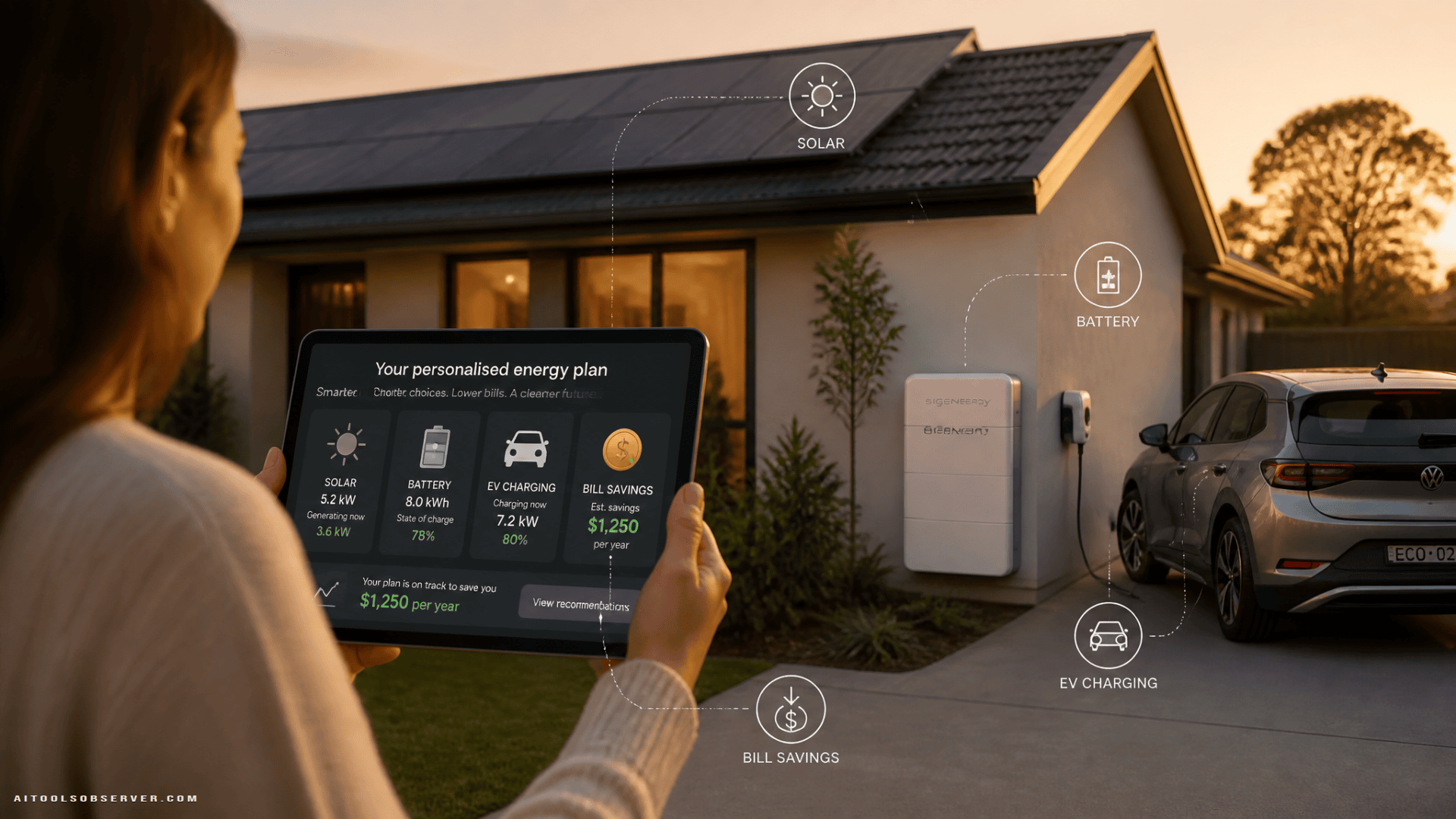
The tool acts as an AI-powered home electrification advisor. Based on the available description, it helps users understand what to electrify first, what upgrades may cost, how much they might save, and what government support could be relevant.
Its scope appears broad enough to cover many of the big-ticket household decisions, including:
- solar panels
- home batteries
- hot water systems
- heating
- induction cooking
- electric vehicles
- general home energy upgrades
That matters because electrification decisions are rarely isolated. A family considering rooftop solar may also be thinking about an EV, heating replacement, or whether an ageing gas appliance should be swapped out now or later.
Why this launch is worth watching
There is no shortage of energy advice online. The problem is that much of it is fragmented, generic, or too technical for ordinary household planning.
Electric Saul seems designed to narrow that gap. Rewiring Australia says it translates complex engineering and energy research into plain-speaking, actionable advice. In practice, that makes the tool less about abstract climate or technology messaging and more about a concrete household planning workflow.
This is where the launch becomes interesting. Instead of asking users to piece together answers from installers, comparison articles, rebate pages, and spreadsheets, the tool aims to provide a more structured starting point for decision-making.
Personalisation is the core feature
The main differentiator is not simply that Electric Saul uses AI. It is that the tool is described as delivering recommendations tailored to a household’s home, vehicle, location, existing appliances, and energy goals.
That level of personalisation is important because household electrification has many local and situational variables. Advice that makes sense for a detached home with an older hot water system may not fit an apartment resident, a regional household, or a family planning to buy an EV soon.
If the tool works as intended, its value is less “AI chatbot for energy” and more “planning assistant for a specific home.”
Built for scale, but grounded in local expertise
According to the launch context, Electric Saul combines Rewiring Australia’s pilot program learnings and expert guidance from Dr. Saul Griffith and other authoritative sources with Google’s AI infrastructure.
That combination is notable. Rewiring Australia already had community electrification work and a network of local groups, but scaling household-specific advice across millions of homes is difficult through community channels alone. An AI advisor offers a way to extend that expertise nationally without requiring every household to find and consult a specialist manually.
For launch coverage, that is the key operational signal: this is not just a content site or calculator. It is framed as a scalable advisory layer built from existing electrification knowledge.
Where it could be useful in real life
Electric Saul appears most useful at the messy middle of the buying journey: after awareness, before commitment.
A few practical scenarios stand out:
- A household wants to lower bills but does not know whether to start with solar, hot water, or heating.
- A homeowner is preparing to talk to installers and wants a clearer shortlist of options first.
- A family is replacing appliances over time and needs a staged electrification plan rather than an all-at-once overhaul.
- An EV-curious household wants to understand how vehicle choices connect to broader home energy upgrades.
In each case, the real utility is not just a recommendation, but a clearer sequence of decisions.
For readers following adjacent clean energy tooling, Solar + Battery Atlas offers another example of AI being applied to practical energy decisions.
The pricing signal matters
Electric Saul is free, and that changes the accessibility of the product significantly.
For a tool aimed at ordinary households dealing with cost-of-living pressure, free access removes a major barrier. It also suggests the product is designed as a public-interest guidance tool first, rather than as a premium optimisation service for highly engaged energy consumers.
That does not guarantee perfect recommendations, but it does improve the odds that more households will actually try it before making expensive upgrade decisions.
What to keep in mind
As with any AI-based advisor, the sensible approach is to treat the output as decision support, not as the final word.
Home electrification choices still involve installer quotes, product availability, local conditions, home constraints, and household budgets. The strongest use case for a tool like this is likely preparation: helping people ask better questions, compare options more clearly, and enter installer conversations with a more informed plan.
That framing also aligns with the product description, which suggests Electric Saul helps users prepare for discussions with installers and tradespeople rather than replacing them.
Why this fits the broader AI tools landscape
From an AI tools perspective, Electric Saul is a useful example of applied AI in a narrow, high-friction domain. It does not promise general intelligence or broad productivity gains. Instead, it targets a specific decision problem with enough complexity to benefit from structured, personalised guidance.
That makes it more interesting than many generic launch announcements. The product is focused, the audience is clear, and the use case is practical: help Australian households make better electrification decisions that may lower bills over time.
Who should pay attention
This launch is most relevant for:
- Australian households exploring energy upgrades
- sustainability and clean energy observers
- policymakers and community energy groups interested in scalable guidance tools
- AI product teams watching domain-specific consumer advisory use cases
For founders and operators, there is also a broader lesson here. One credible use of AI is not replacing expertise, but packaging it into a form that people can actually use at decision time.
Takeaway
Electric Saul appears to solve a real adoption bottleneck: too many electrification decisions are expensive, technical, and poorly sequenced for ordinary households to navigate confidently. By offering free, personalised guidance on solar, batteries, EVs, and appliance upgrades, it gives Australians a clearer starting point for cutting energy bills and planning what to electrify next.








Comments (0) No comments yet
Want to join this discussion? Login or Register.
No comments yet. Be the first to share your thoughts!