



The Problem Worth Solving

Last year, Ember modelled 12 locations to demonstrate that solar-plus-battery systems can already deliver reliable, high-uptime power across very different parts of the world. Useful. But 12 locations doesn’t give policymakers or investors the granular coverage they need to act.
The real question wasn’t can 24/7 solar work — it was where does it matter most, who benefits, and which fossil investments are already exposed?
Answering that properly meant scaling from 12 locations to 5,000. And then layering in population data, electricity access, grid reliability, and planned fossil capacity. That’s a lot of data to wrangle before you’ve even thought about the interface.
Enter AI — As a Workflow Accelerator, Not a Shortcut

Ember’s Futures team didn’t hand the keys to an AI and walk away. The approach was more surgical than that.
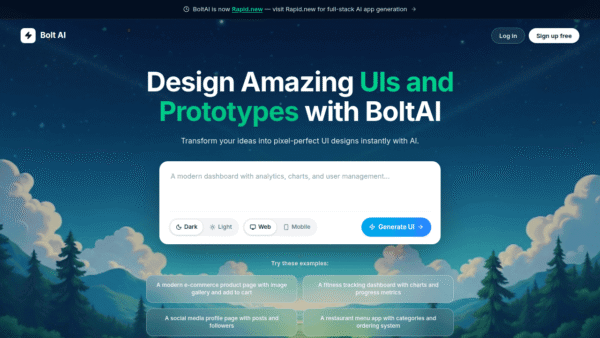
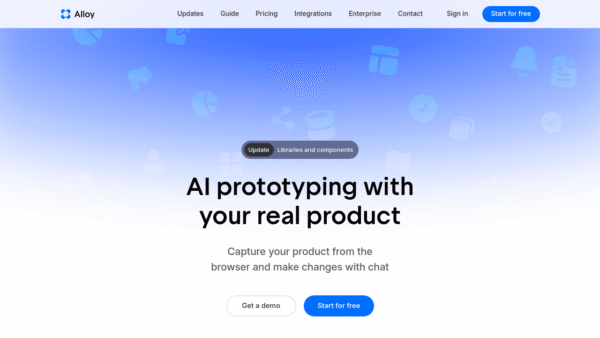
They used AI to accelerate the time-consuming data workflows — the kind of repetitive, mechanical work that eats hours without adding analytical value. Then they used AI to prototype the user interface, translating their methodology into an interactive web tool without requiring extensive custom coding from the start.
The human-validated data models stayed firmly at the center. AI handled the scaffolding; Ember’s analysts handled the substance.
“We’re exploring how AI can speed up the process for creating useful, high-quality data tools to bring the latest data to the hands of decision-makers shaping the electrotech revolution.”
— Daan Walter, Principal
What the Atlas Actually Shows
Scale the modelling to 5,000 global locations and some striking patterns emerge fast.
Solar is basically everywhere. Solar on suitable land could generate roughly 125 times today’s global electricity use. More than 90% of people live where local solar potential is at least 10 times current demand.
Storage closes the reliability gap. Nine in ten people live in places where solar-plus-battery systems can reliably supply more than 80% of annual electricity demand. In the sunniest regions, uptime reaches 99%.
The cost argument is already won for most. Four in five people can access 80%-uptime solar-plus-battery power for under $100/MWh. For half of humanity, it’s under $80/MWh.
The opportunity concentrates where grids are weakest. Around 760 million people still lack electricity. Close to 2 billion have unreliable grids. Most of that unmet demand sits in sunny regions where solar-plus-battery already beats planned fossil generation on cost.
Planned fossil capacity is increasingly exposed. Of roughly 850 GW of planned coal and gas capacity, about 590 GW sits in regions where solar-plus-battery can already deliver 80%-uptime power for under $100/MWh. That’s a stranded asset risk hiding in plain sight.
The economics keep improving. By 2030, falling costs in line with IEA and BNEF projections could push 80%-uptime solar-plus-storage below $80/MWh for over 75% of people — and below $100/MWh for nine in ten.
The Prototype-First Logic
Here’s the strategic insight buried in Ember’s workflow: AI doesn’t just save time — it de-risks innovation.
The old path looked like this: define the concept → secure funding → build the full tool → discover what users actually needed → rebuild. Expensive. Slow. Occasionally humbling.
The new path: define the data sources and methodology → instruct AI to visualise it as an interactive tool → validate the data → publish the beta → collect real feedback → iterate or kill it fast.
Fail fast is a startup cliché. For a climate think tank trying to get decision-relevant data into the hands of policymakers before fossil infrastructure gets locked in, it’s a genuine strategic advantage.
What “Ember-Approved” Still Requires
AI accelerates the prototype. It doesn’t replace the production process.
When a prototype earns its way to a full Ember data tool, it goes through a rigorous pipeline that AI can’t shortcut:
User-Informed Design
Tools get tested against the actual needs of the intended audience — not assumed ones.
Data Architecture and Validation
Datasets and methodologies get integrated into Ember’s core databases, with rigorous validation and ongoing maintenance baked in.
High-Quality Production
Ember’s front-end developer codes the final interface, informed by data visualisation experts, data architects, and policy specialists working in concert.
Targeted Outreach and Training
The tool reaches its audience through direct outreach, digital promotion, and top-tier media — and users get equipped to generate real insight from it, not just screenshots.
The key ingredients of an Ember data tool haven’t changed. What AI changes is the route to delivery.
Limitations Worth Naming
The Solar + Battery Atlas is still a beta. Ember is explicit about that.
The prototype invites feedback precisely because the gap between “technically working” and “genuinely useful for a policymaker in Jakarta or Nairobi” is real and worth closing carefully. Moving to a full build requires funding, partnerships, and the full production process described above.
AI-assisted prototyping is fast. Trustworthy, decision-grade data tools still take time — and that’s the point.
The Takeaway
Ember’s experiment with the Solar + Battery Atlas is a clean illustration of what AI actually does well in analytical workflows: it compresses the distance between concept and testable prototype, without requiring you to bet the whole budget on an untested idea.
The solar-plus-battery economics are already compelling for most of humanity. The question is whether the right people can access that insight fast enough to act on it.
Faster prototyping, it turns out, is its own kind of climate strategy.












Comments (0) No comments yet
Want to join this discussion? Login or Register.
No comments yet. Be the first to share your thoughts!