


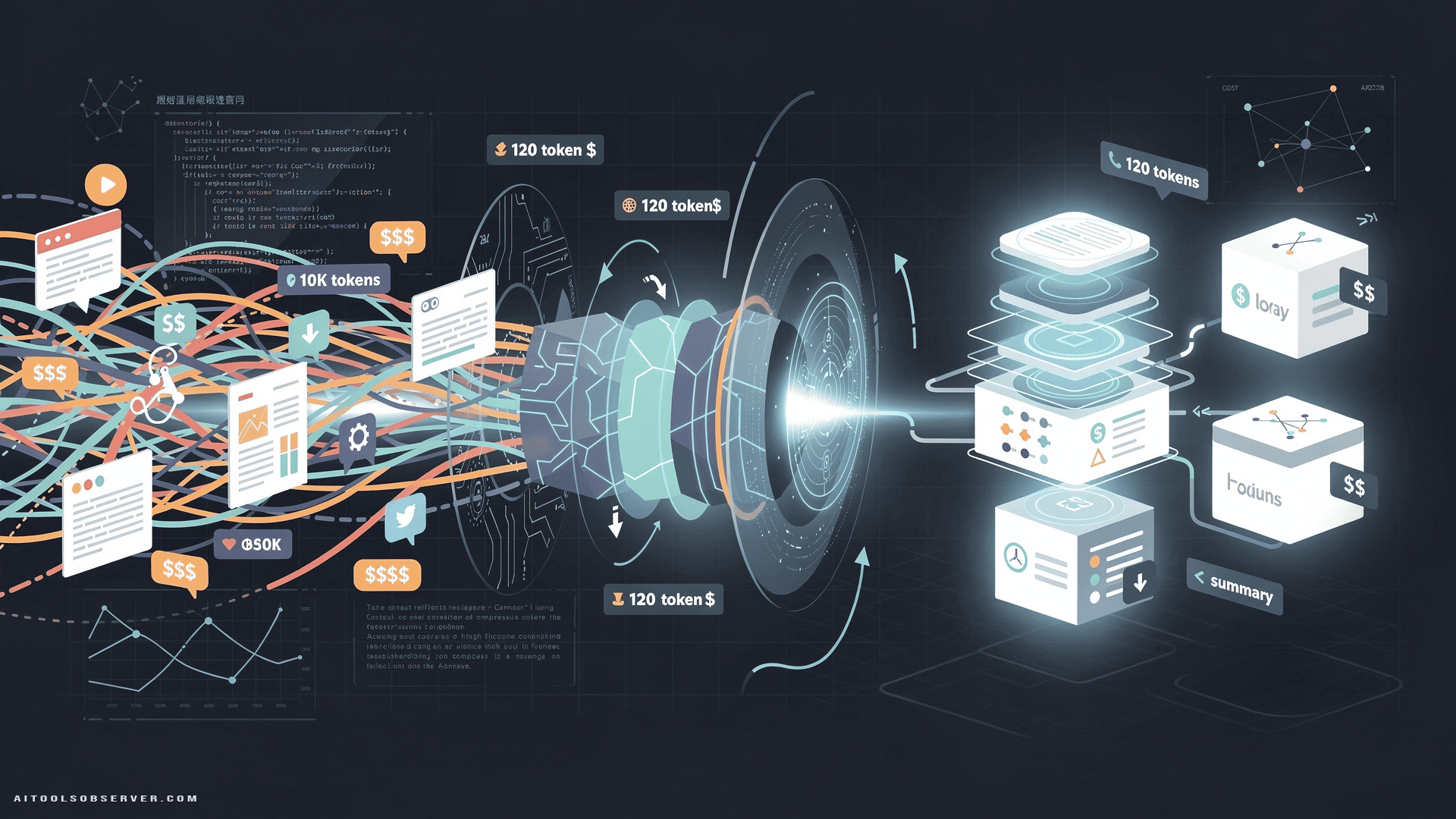
The Problem: AI Is Getting Smarter and More Expensive at the Same Time

Here’s the uncomfortable truth nobody in the AI hype cycle loves to say out loud: newer, more capable models cost more to run, not less. The old promise — that scale would drive costs down — is running headfirst into reality.
Corporate AI budgets are starting to feel it. Developers are being told to slow down. And the token bill keeps climbing.
That’s the opening Engram is walking through.
What Engram Actually Does

Engram calls itself the “learned memory” of AI — a term borrowed from neuroscience, where an engram is a physical trace of memory stored in the brain.
The pitch is elegant: instead of feeding a model massive amounts of context every single time (expensive, slow, often redundant), Engram’s system learns an organization’s specific workflows, terminology, and patterns. It anticipates what’s needed and delivers smarter responses with far less token overhead.
The company claims its models can match or outperform frontier labs using up to 100 times fewer tokens. That’s a bold number. But with Microsoft, Notion, and legal AI startup Harvey already on the client roster, it’s not an unchallenged one.
The Funding and the Backers
Engram raised $98 million from a lineup that reads like a greatest-hits of AI-era venture capital: General Catalyst, Kleiner Perkins, and Sequoia. Andrej Karpathy — OpenAI co-founder, recently joined Anthropic — is also in.
Kleiner partner Leigh Marie Braswell framed it plainly: “You’ve got this explosion of data, explosion of cost. Engram comes in and basically maps out your organization and offers orders of magnitude cheaper output.”
The funding will go toward compute and talent. For a 13-person team, there’s a lot of runway to build on.
The “Genius Stranger” Problem
CEO Dan Biderman has a compelling origin story — and a sharper-than-average mental model for what’s broken in AI today.
He calls it the “genius stranger” problem: AI is impressively intelligent, but its memory is shallow and situational. Every conversation starts mostly from scratch. More context helps, but stuffing models with context is exactly what drives costs up.
Biderman’s background in computational neuroscience (PhD, Columbia) and time at Stanford’s AI lab shaped his conviction that the fix isn’t just more data — it’s smarter memory architecture.
His goal: build the layer of intuition that humans develop over time, and that current models simply don’t have.
What This Means If You’re Buying or Building AI Tools
Engram isn’t trying to replace GPT-4 or Claude. Biderman is upfront that his models aren’t “absolutely better” than frontier labs across the board. They’re specialists — optimized for organizational context, not general brilliance.
That distinction matters for anyone evaluating AI tooling right now:
If your use case is repetitive, context-heavy, and organization-specific — legal workflows, internal knowledge management, structured customer interactions — a memory-optimized layer like Engram could meaningfully cut costs without sacrificing output quality.
If you need broad, generalist capability, frontier models still win. But you’ll pay for it.
The smarter play for most enterprises is probably a hybrid: frontier models where you need them, specialized memory layers where you don’t.
The Bigger Signal
Engram’s raise is part of a quieter but important shift in the AI infrastructure conversation. The first wave was about capability — what can AI do? The current wave is about efficiency — what does it cost, and can we make it sustainable?
Startups that solve the cost problem without sacrificing quality are going to find a very receptive market. Enterprise buyers are no longer just asking “does it work?” They’re asking “what’s the bill?”
Engram is betting the answer to that question is their entire business model. At $98 million in funding and less than a year old, the market seems inclined to agree.
Token costs are the new cloud bills — everyone’s paying them, nobody loves them, and the startup that cracks efficiency at scale will have a very large room to grow into.









Comments (0) No comments yet
Want to join this discussion? Login or Register.
No comments yet. Be the first to share your thoughts!