


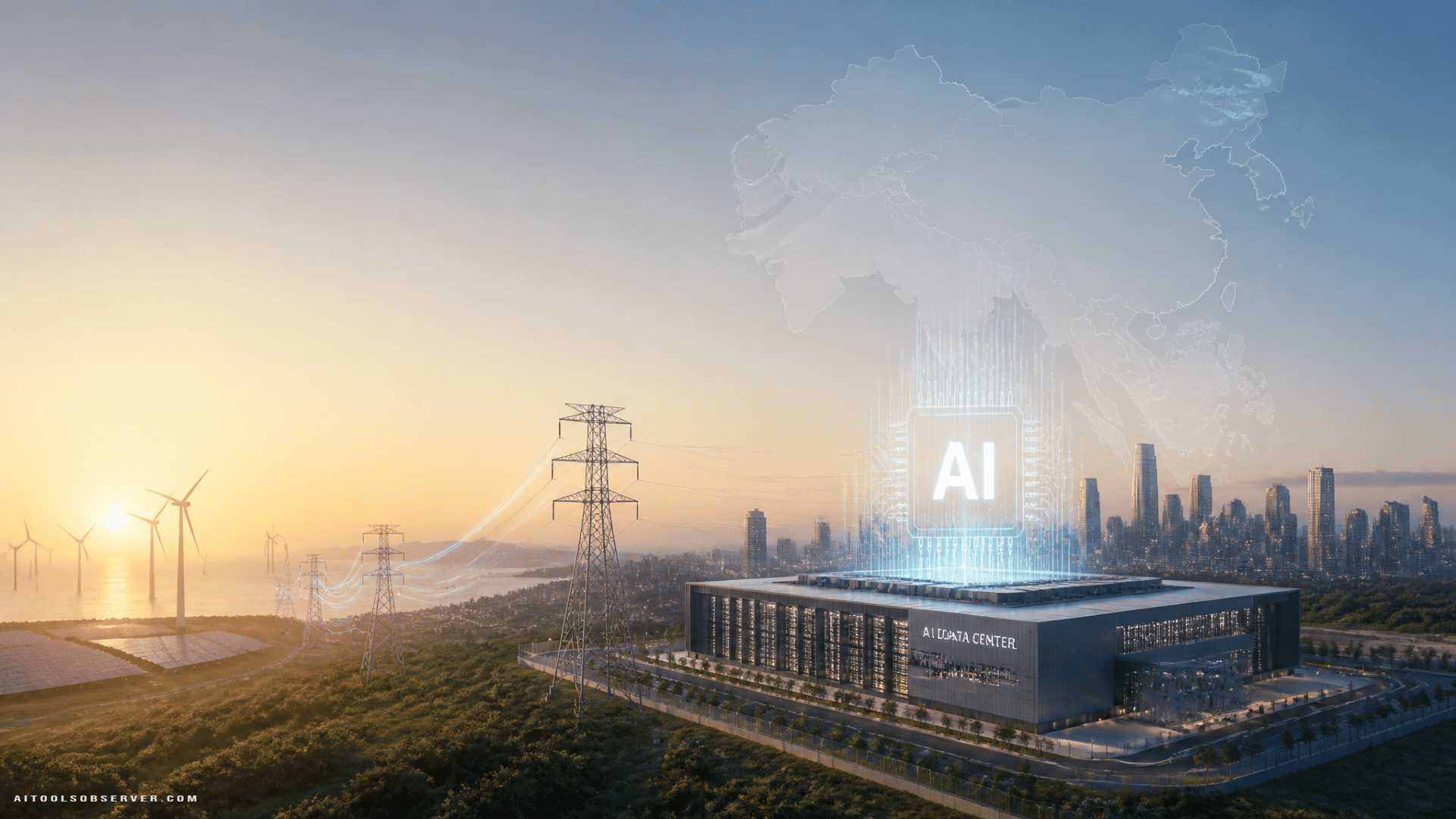
The “Bragawatt” Problem
Data center power demand across Asia-Pacific is expected to roughly double by 2030. The announcements are everywhere. The actual megawatts, less so.
There’s a useful term for this: bragawatts. Impressive headline figures that move slowly, if at all, from press release to power socket. Asia delivered only around 38% of its announced data center capacity in 2024—one of the widest plan-to-delivery gaps of any market globally.
Malaysia and India, two countries with the most to gain from a digital infrastructure boom, are feeling this most acutely. Johor has banned new Tier 1 and 2 data center construction over water infrastructure concerns. India’s grid delivery lags are running well behind its capacity targets.
Why Grids Are the Real Bottleneck
Renewables are being built. That’s the good news. The problem is that renewable generation tends to be located far from demand centers and produces power intermittently. Without transmission upgrades and storage, those clean electrons don’t reliably reach a server rack.
Grid and storage investment in Southeast Asia appears to be running at roughly a quarter of what analysts estimate is needed annually through 2050. That’s not a rounding error—it’s a structural shortfall.
The U.S. offers a preview of what happens when grid buildout lags demand. Up to half of planned U.S. data center projects may not come online on schedule. In early 2026, dozens of projects worth over $100 billion were blocked or delayed—matching the entire previous year’s total.
Asia is already on a similar trajectory, just with less grid infrastructure to start from.
The Market Structure Problem Nobody Talks About
Here’s where it gets structural. Most Asian electricity systems still operate on a traditional model: state-owned utilities as single buyers, administratively set retail tariffs, and limited third-party trading.
That setup doesn’t give renewable energy investors the long-dated price signals they need to commit capital confidently. Without forward contracts and transparent pricing, grid investment stalls. And without grid investment, data centers wait in interconnection queues.
Investors in Europe and the U.S. take liquid electricity markets for granted. In much of Asia, those markets barely exist.
Commodity markets are already pricing the announced build-out rather than the executable one. Copper prices have stayed elevated on data center construction assumptions. Transformer costs are running at two to three times pre-2020 levels. If interconnection queues stretch the way they have elsewhere, the gap between announced and delivered capacity could produce a boom-bust cycle that metals markets would recognize from the last decade.
Where Progress Is Happening
It’s not all stalled queues and bragawatts. Some markets are moving.
- Japan’s power futures market is reportedly the fastest-growing electricity derivatives market globally.
- India’s IEX exchange now runs day-ahead and term-ahead power markets.
- Electricity has been flowing commercially from Laos through Thailand and Malaysia to Singapore since 2022.
These are early signals of what deeper Asian power markets could look like—instruments that let generators, industrial users, and investors hedge and price electricity with the same confidence they bring to other commodities.
The direction is right. The pace is the question.
What This Means for the AI Tools Ecosystem
This isn’t just an energy story. It’s a compute story.
Training frontier AI models concentrates enormous power demand into a handful of locations. Inference pushes low-latency facilities into dense urban hubs. Both require reliable, affordable, and increasingly clean electricity at scale.
Every quarter that Asian operators wait on grid connections is another quarter where compute, talent, and capital could migrate elsewhere—toward markets where electricity is cheaper, more predictable, and easier to contract.
For anyone tracking where AI infrastructure is being built, and where the next generation of AI tools will be trained and served from, electricity market depth is now a variable worth watching alongside chip supply and data center announcements.
The AI build-out Asia wants requires power markets that give capital the confidence to build ahead of demand, not scramble to catch up with it. Right now, the markets aren’t there yet—and the gap is showing up in delivery rates, not just policy documents.











Comments (0) No comments yet
Want to join this discussion? Login or Register.
No comments yet. Be the first to share your thoughts!