



Why It Evades Detection
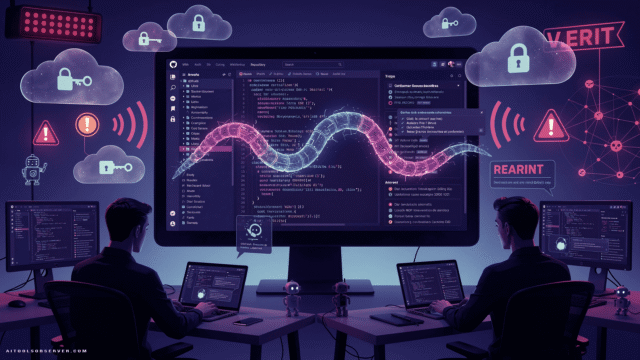
Splitting the payload across four unremarkable files is the point. Automated scanners and sandboxes typically check files individually. None of the four pieces triggers an alert on its own. Together, they’re a working infostealer delivery system.
Hiding the code in a plain .txt file rather than an executable gives it what Netskope calls a “defense-evasion advantage.” It’s a low-tech trick that works precisely because the tooling isn’t looking for it.
The Blockchain Twist
SmartLoader doesn’t hardcode a command-and-control server address. Instead, it resolves the address at runtime from the Polygon blockchain — a technique known as EtherHiding — by querying a smart contract through public RPC providers.
Before checking in, it takes a screenshot of the victim’s desktop and sends an encrypted beacon with the loader ID, device identifier, public IP, and OS version. It also hits ip-api.com first to collect geolocation data, likely to help the attackers filter for high-value targets.
The blockchain approach means if a server gets blocked, the attackers simply update the smart contract value. Every infected machine picks up the new address automatically, with no changes to the malware itself. Similar evolving tactics appear in This Week’s Cyber Threats: AI Evasion, JS Backdoors.
A Second Stage With Its Own Obfuscation
The server responds with a task list instructing SmartLoader to download a second-stage script, dist.lua, which comes bundled with its own LuaJIT interpreter and DLL.
The second stage uses different obfuscation tooling (linked to MoonSec) but mirrors the first stage closely — same XOR key for traffic encryption, same geolocation check, same EtherHiding technique with additional RPC fallbacks.
Netskope found the second-stage files hosted across two GitHub accounts created five days apart in July 2026, both serving identical payloads. Both have since been reported for takedown.
The final payload is a mix of infostealers, including a NodeJS-based strain Netskope first flagged in April 2026.
Who’s Being Targeted
The campaign has hit organizations in North America, Asia, and Southern Europe. Financial services, banking, and technology are the most affected sectors — which tracks, given that developers in those industries are exactly the kind of people cloning AI tool repos.
The Practical Takeaway
The attack works because it exploits developer habits, not developer ignorance. Cloning a repo that looks legitimate, from a contributor you recognize, in a category you trust, is normal behavior.
A few things worth doing now:
- Verify repo provenance carefully — check the account creation date, star history, and commit activity before cloning anything AI-related
- Treat ZIP archives from repos with extra suspicion, especially ones containing
.dll,.exe, and.batfiles together - Don’t assume a familiar name means a safe repo — Claude, ComfyUI, and similar names are exactly what attackers are betting you’ll trust
The AI tooling ecosystem moves fast, and that speed is being used against the people building with it. For another developer-targeted example, see Fake AI Guides Hide AsyncRAT in Multi‑Stage Malware.












Comments (0) No comments yet
Want to join this discussion? Login or Register.
No comments yet. Be the first to share your thoughts!