


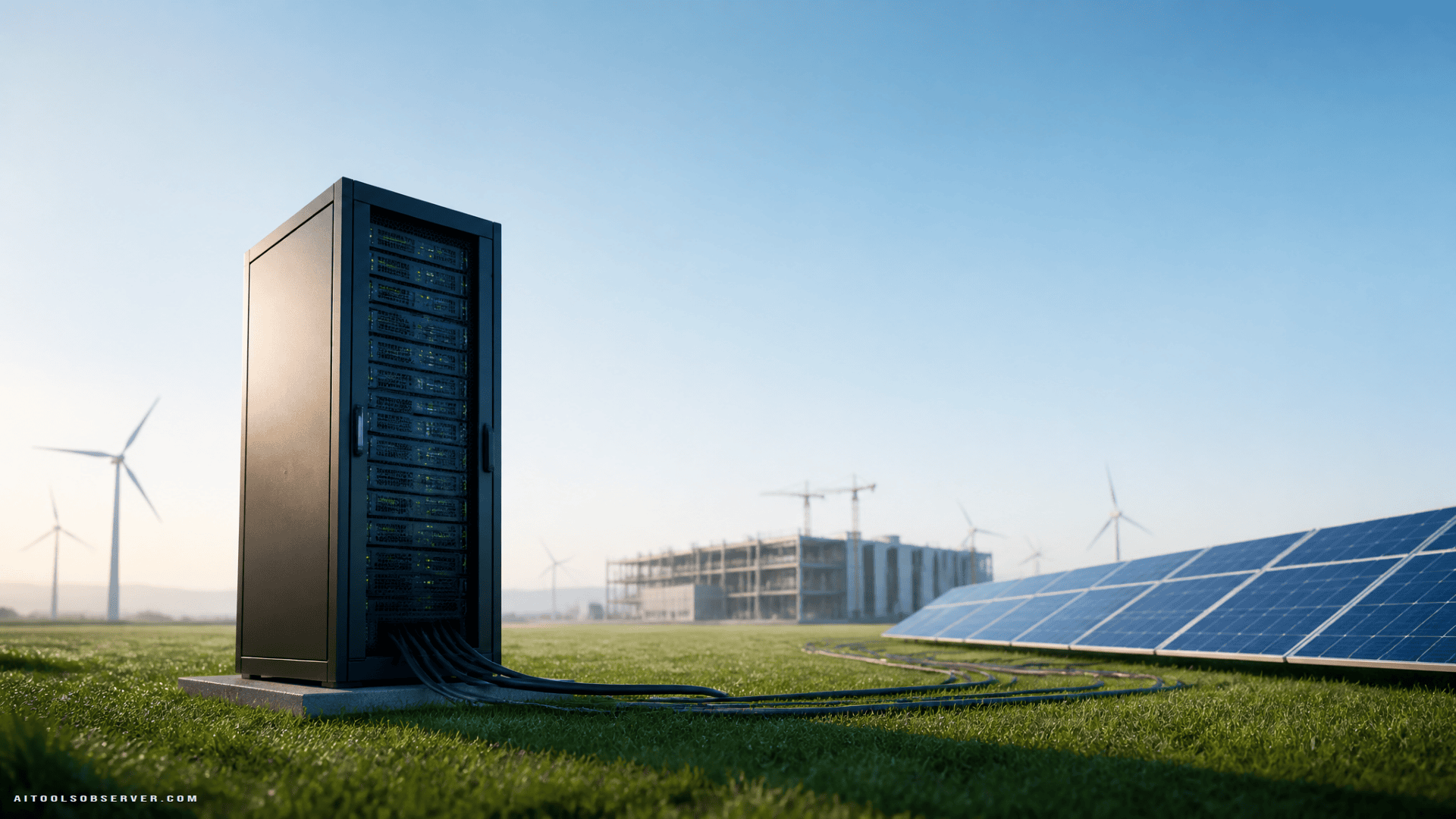
The Compute Footprint Problem
AI’s energy appetite isn’t a fringe concern. Training large models and running inference at scale requires significant electricity, water cooling, and land. As AI adoption accelerates, so does the demand for new data center capacity.
For climate-focused policymakers, this creates a tension: the same technology being positioned as a productivity revolution is also a growing emissions source. That’s the gap progressives are now trying to legislate into.
A New Crop, A Broader Scope
Several progressive Democrats who won House primaries in 2026 have explicitly linked AI infrastructure to climate policy. Colorado’s Melat Kiros, who unseated a longtime incumbent, called AI “the missing component” in climate legislation. New Jersey’s Adam Hamawy called for passing the Green New Deal outright, framing it around renewable energy and job transitions.
The Sunrise Movement—long the Green New Deal’s most visible champion—has also broadened its framing. The group is now asking what a Green New Deal looks like when it has to address data centers, AI-driven job displacement, and the energy demands of a compute-heavy economy.
That’s a meaningful shift. The original Green New Deal was about fossil fuels, housing, and social equity. The updated version appears to be reaching for something more systemic.
The Moratorium Proposal
The sharpest policy edge in this conversation is a proposed federal moratorium on new AI data center construction. Several of the incoming progressives support it. Most congressional Democrats do not.
This is where the internal party tension becomes visible. House Minority Leader Hakeem Jeffries has called climate change a crisis but has not endorsed the Green New Deal—and specifically said a data center moratorium is “not a position that I’ve articulated at this moment.”
That’s a careful non-answer, which usually means: not now, maybe never, let’s talk about affordability instead.
Why This Matters for the AI Tools Ecosystem
For anyone building, buying, or evaluating AI tools, this policy conversation has real downstream implications:
- Infrastructure costs could rise if data center construction faces new regulatory friction
- Energy sourcing requirements could push cloud providers toward renewable commitments faster than market incentives alone would
- Compliance overhead for AI companies could increase, particularly for those operating large-scale training infrastructure
- Procurement decisions at the enterprise level may start factoring in a vendor’s energy footprint as a risk variable
None of this is law yet. But policy signals at this stage tend to shape investment decisions, vendor roadmaps, and procurement criteria well before legislation passes—if it ever does.
The Underlying Tension
There’s a genuine tradeoff here that doesn’t resolve cleanly. AI tools are being deployed to help with climate modeling, grid optimization, and energy efficiency. The same technology that strains the grid is also being used to manage it.
Blanket moratoriums don’t capture that nuance. Neither does ignoring the energy footprint entirely.
The more useful question—one that neither side is fully answering yet—is what accountable AI infrastructure looks like. What energy standards, transparency requirements, or renewable sourcing mandates would actually move the needle without freezing beneficial development?
The Practical Takeaway
If you’re tracking AI tools and infrastructure, start watching energy policy the same way you watch compute pricing. The two are converging.
Progressive Democrats may or may not have the votes to pass a Green New Deal for AI. But they have enough visibility to make data center energy consumption a mainstream policy issue—and that alone will influence how AI infrastructure gets built, regulated, and priced over the next several years.
The compute crisis and the climate crisis are no longer separate conversations. The smarter move is to stop treating them that way.
















Comments (0) No comments yet
Want to join this discussion? Login or Register.
No comments yet. Be the first to share your thoughts!