



What Actually Happened

The ad is straightforward enough: Scorsese talks about the perennial challenge of translating a director’s internal vision into something a cast and crew can actually work from. He frames FLUX as a solution — a bridge between imagination and production. “I’m interested in the intersection of technology and storytelling,” he said, “and seeing how that can push the bounds of creativity.”
The ADG heard something different. From their perspective, Scorsese wasn’t describing a creative tool. He was describing a replacement.
The union’s statement accused him of “turning his back on the human artists who throughout his career have helped him create his most memorable works” — and of advocating for technology that “circumvents the input” of art directors, graphic artists, scenic artists, set designers, and production designers who have been doing exactly this work for decades.
Why the Timing Stings

This isn’t just symbolic friction. The ADG is dealing with a genuine crisis.
Union membership dropped from 3,492 in 2022 to 2,966 in 2025 — a loss of over 500 members in three years. In 2024, the guild paused a training program for young professionals because unemployment in their covered crafts had become so severe. A 2024 study commissioned by the Animation Guild and The Concept Art Association identified ADG members as among the workers most threatened by generative AI.
So when one of cinema’s most celebrated directors films an ad promoting AI storyboarding tools, it doesn’t land as a philosophical debate. It lands as a gut punch.
The Deeper Argument
The ADG’s statement didn’t just push back on job displacement — it went further, calling the whole premise a “betrayal of the collaborative nature of cinema.”
That phrase is doing a lot of work. It reframes the conversation from efficiency to ethics. The union’s position is that generative AI tools are built on work likely taken from artists without consent, and that using them to replicate those artists’ professional contributions isn’t innovation — it’s extraction.
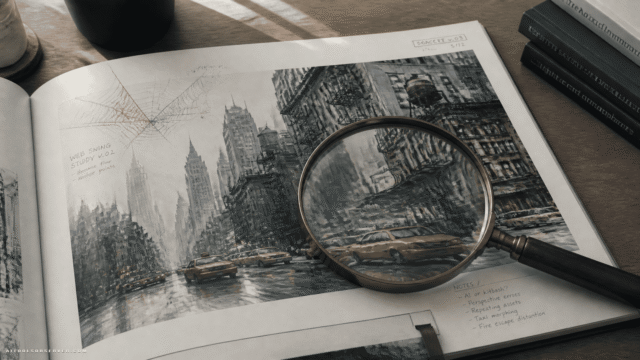
Scorsese, notably, has long drawn his own storyboards. He knows what this craft looks like from the inside. That context makes his endorsement feel less like a tech-curious outsider and more like a defection.
What This Means for AI Tools in Creative Industries
Black Forest Labs and its FLUX model are now at the center of a very public labor dispute — which is either a PR problem or a proof of relevance, depending on how you read the room.
For AI tool builders targeting creative workflows, this moment is instructive. The resistance isn’t coming from people who don’t understand the technology. It’s coming from people who understand exactly what it does — and who it replaces. That’s a harder objection to dismiss with a demo.
For directors, producers, and studios quietly evaluating AI storyboarding tools, the ADG’s response signals that adoption won’t be frictionless. Union contracts, jurisdictional language, and collective bargaining agreements are all in play. The legal and labor landscape around AI-generated visual development is still being written.
The Takeaway
Scorsese wanted to talk about the intersection of technology and storytelling. The ADG made sure the conversation also included the people who’ve been standing at that intersection for decades — without the advisor title or the startup equity.
Generative AI in storyboarding isn’t going away. But neither is the question of who gets credit, who gets paid, and whose work trained the model in the first place. The smarter move for any AI tool in this space isn’t to win the argument. It’s to figure out how to be useful without being a weapon.
That’s a harder product to build. It’s also the only one with a long-term future in Hollywood.








Comments (0) No comments yet
Want to join this discussion? Login or Register.
No comments yet. Be the first to share your thoughts!