


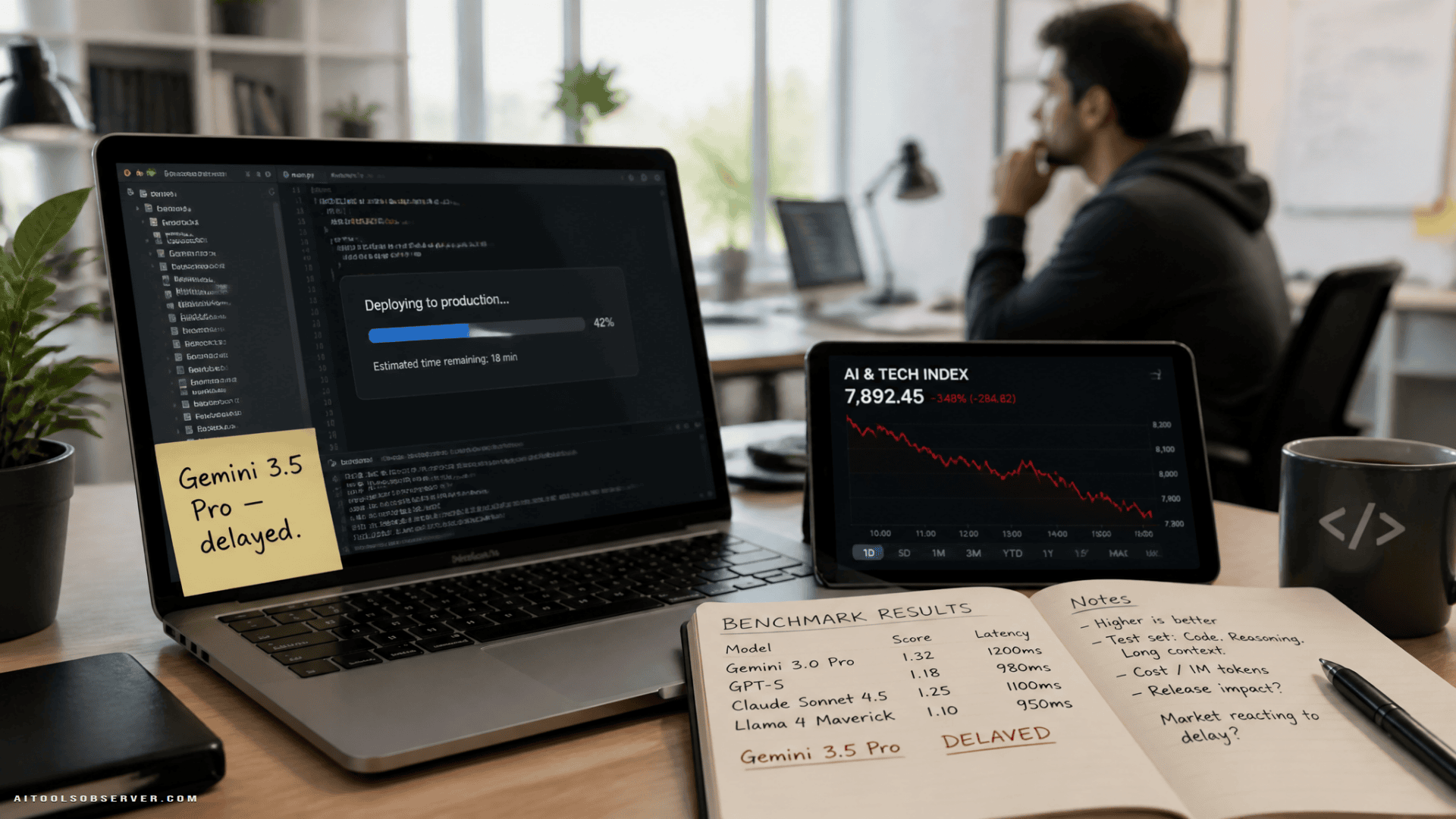
Coding Is the Battleground, and Google Is Falling Behind
Code generation has quietly become the most commercially important benchmark in the AI model race. Enterprises are evaluating models based on how well they write, debug, and refactor code. Developers are choosing tools based on which model actually ships working software faster.
That’s the context that makes this delay sting. While Google works to close the gap, rivals have been shipping:
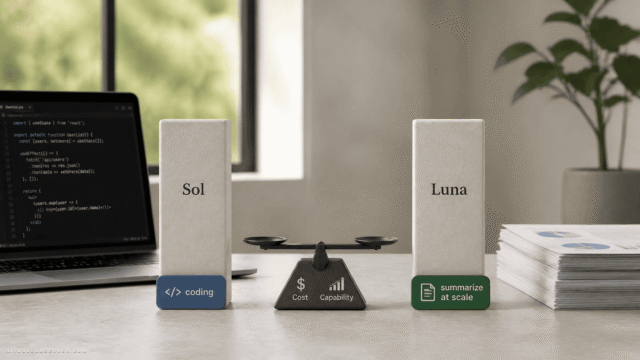
- OpenAI released GPT-5.6 Sol, which its CEO described as 54% more token-efficient on agentic coding tasks — a direct pitch to cost-conscious enterprise buyers.
- Meta debuted Muse Spark 1.1, positioned by its AI chief as the company’s strongest model yet for agentic and coding work.
- Chinese AI labs like Z.ai are releasing capable open-weight models that developers can access freely through the open-source ecosystem.
Google isn’t standing still, but the timing is rough. Every week of delay is a week competitors are onboarding developers and locking in enterprise contracts.
What Google Actually Said
An Alphabet spokesperson pushed back on the narrative, telling CNBC the company is “shipping quickly across a wide range of models while keeping them highly cost-effective for customers.” They confirmed that Gemini 3.5 Pro is currently being tested with partners, alongside an upgraded Flash model and other unreleased models.
That’s a measured response, but it doesn’t change the market reality: the model wasn’t broadly available when Google said it would be, and the stock moved accordingly.
Why This Matters for Enterprise Buyers
If you’re evaluating AI coding tools for your team or organization right now, this delay is practically relevant in a few ways.
Don’t anchor your roadmap to Gemini 3.5 Pro. If you were waiting on it to make a tooling decision, the timeline is unclear. Build your evaluation process around what’s available today.
Benchmark on your actual use cases. Token efficiency claims from OpenAI and capability claims from Meta are marketing until you test them on your codebase. Agentic coding performance varies significantly depending on language, task complexity, and context window usage.
Watch the cost-performance angle closely. Both OpenAI and Google are now explicitly framing their models around cost-effectiveness, not just raw capability. That signals the enterprise market is pushing back on pricing, and competition is starting to drive rates down.
The Bigger Picture
This delay is a reminder that leading in AI isn’t just about announcing models — it’s about shipping them at the quality level the market expects. Google has significant infrastructure, distribution, and enterprise relationships. But in the coding race specifically, Anthropic’s Claude, OpenAI’s GPT lineup, and now Meta’s Muse Spark are all competing hard for the same developer mindshare.
The gap between a model announcement and a reliable production release is where trust gets built or lost. Right now, Google is navigating that gap in public.
The Practical Takeaway
If you’re a developer or enterprise buyer making AI tool decisions in the next 30 to 60 days, don’t wait for Gemini 3.5 Pro. Evaluate what’s shipping now — GPT-5.6 Sol and Muse Spark 1.1 are both available and actively being positioned for coding and agentic workflows. Run your own benchmarks, compare costs at your expected usage volume, and make the call based on current performance, not future promises.
Google will likely close the gap. But the AI tools market doesn’t pause while they do.




Comments (0) No comments yet
Want to join this discussion? Login or Register.
No comments yet. Be the first to share your thoughts!