



Gemini 3.5 Flash Is Already Here — Pro Is Next

The headline model is Gemini 3.5 Flash, and it’s rolling out now to all users. Google CEO Sundar Pichai called it a “game changer” internally — which is exactly what every CEO says, but the underlying specs are worth paying attention to.
Flash is optimized for speed and cost efficiency, running at roughly half the price of comparable frontier models. More importantly, it’s purpose-built for agentic workloads — meaning it can spin up multiple autonomous agents simultaneously and sustain multi-hour sessions without hand-holding.
Gemini 3.5 Pro is still in internal testing and expected next month. Think of Flash as the workhorse; Pro will be the heavy lifter.
Spark: The 24/7 Agent That Catches What You Toss

The most consumer-facing announcement is Gemini Spark — an always-on AI agent that lives in Google’s cloud and works across Workspace apps like Gmail and Docs.
Google VP Josh Woodward described the experience as “tossing things over your shoulder” and having Spark catch them. That’s a deceptively good mental model. It’s not a chatbot you query. It’s a background operator you delegate to.
Early testers are using it for party planning, inbox monitoring, and tracking school schedules. Broader Chrome integrations are coming this summer, which will let Spark reach into third-party apps and websites — a significant expansion of its action surface.
Access is rolling out carefully: trusted testers first, then a beta for AI Ultra subscribers next week.
Antigravity Gets Rebuilt as an Agent Platform

Google has been trailing Anthropic’s Claude Code and OpenAI’s Codex in the developer tools space. Antigravity is their answer — and it’s been significantly reimagined.
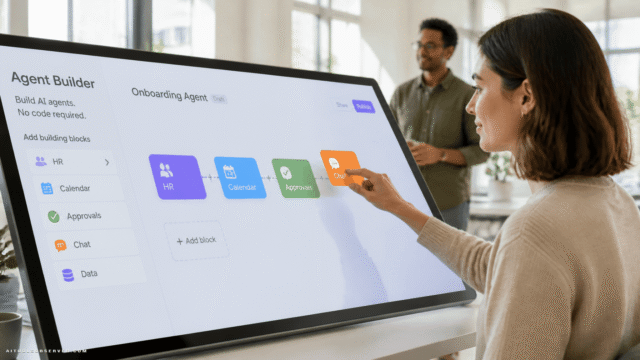
The new Antigravity isn’t just a coding assistant. Google DeepMind CTO Koray Kavukcuoglu framed it as “a platform to develop and manage teams of autonomous AI agents.” One agent builds a website. Another generates brand assets. A third handles product planning. They work in parallel.
It’s available as a standalone desktop app and via the command line — a clear signal that Google wants Antigravity to be a serious development environment, not a browser tab you forget about.
The Gemini App Gets a Visual Overhaul

All these agentic capabilities needed a new home, and the Gemini app is getting one. The redesign is called Neural Expressive — new animations, updated colors, and haptic feedback that makes interactions feel more tactile and alive.
Responses will now include more visuals: timelines, images, and data visualizations surfaced contextually rather than on demand. It’s a shift from text-first to meaning-first presentation.
The Daily Brief feature is the sleeper hit here. It pulls from your inbox, calendar, and tasks to generate a personalized morning summary — and it’s framed explicitly as an on-ramp to understanding what agents can actually do for you. Available this week for AI Plus, Pro, and Ultra subscribers in the US.
Android 17: When the OS Becomes an Intelligence System

Google isn’t just updating its AI apps. It’s rewiring Android itself.
Android 17 is being positioned not as an operating system but as an intelligence system — a phrase that sounds like marketing until you look at what’s actually changing.
Gemini Intelligence
Agentic AI is now baked into Android at the OS level. You can ask Gemini to find a highly rated dentist, book the appointment, and pull your driver’s license info when a form needs it. That’s not a chatbot feature. That’s ambient automation.
Chrome Auto Browse

Coming in June, Chrome Auto Browse lets Gemini take over browser-based tasks on your behalf — booking appointments, locating out-of-stock items, planning events. The browser becomes an agent’s workspace, not just yours.
Intelligent Autofill
Autofill has existed forever. What’s new is the intelligence behind it. Gemini can now populate complex fields — passport numbers, license plates — across apps and Chrome with a single tap. Same UX surface, dramatically smarter engine underneath.
Material Expressive
The visual design language is also evolving. Gemini is designed to recede into the background and surface only when relevant, with clear visual cues when it’s thinking, listening, or working. Less distraction. More signal.
What This Stack Actually Means

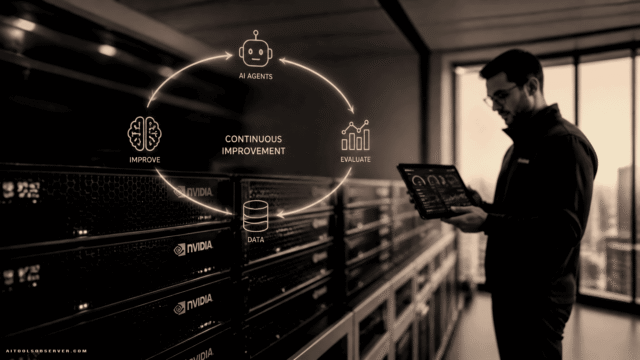
Google is making a coherent architectural bet: that the next competitive frontier isn’t model quality alone — it’s agentic depth. How many tasks can the AI handle end-to-end? How long can it run unsupervised? How seamlessly does it integrate into the tools people already use?
Gemini 3.5 Flash handles the speed and cost layer. Spark handles the ambient delegation layer. Antigravity handles the developer and multi-agent orchestration layer. Android 17 handles the OS-level integration layer.
That’s not a product launch. That’s a stack.
Whether it executes as smoothly as the keynote suggests is a different question — one that beta users will answer over the next few weeks. But the direction is clear, and it’s the right one.
The AI tools that win from here won’t be the ones that answer best. They’ll be the ones that do most.











Comments (0) No comments yet
Want to join this discussion? Login or Register.
No comments yet. Be the first to share your thoughts!