


The Core Problem It’s Solving
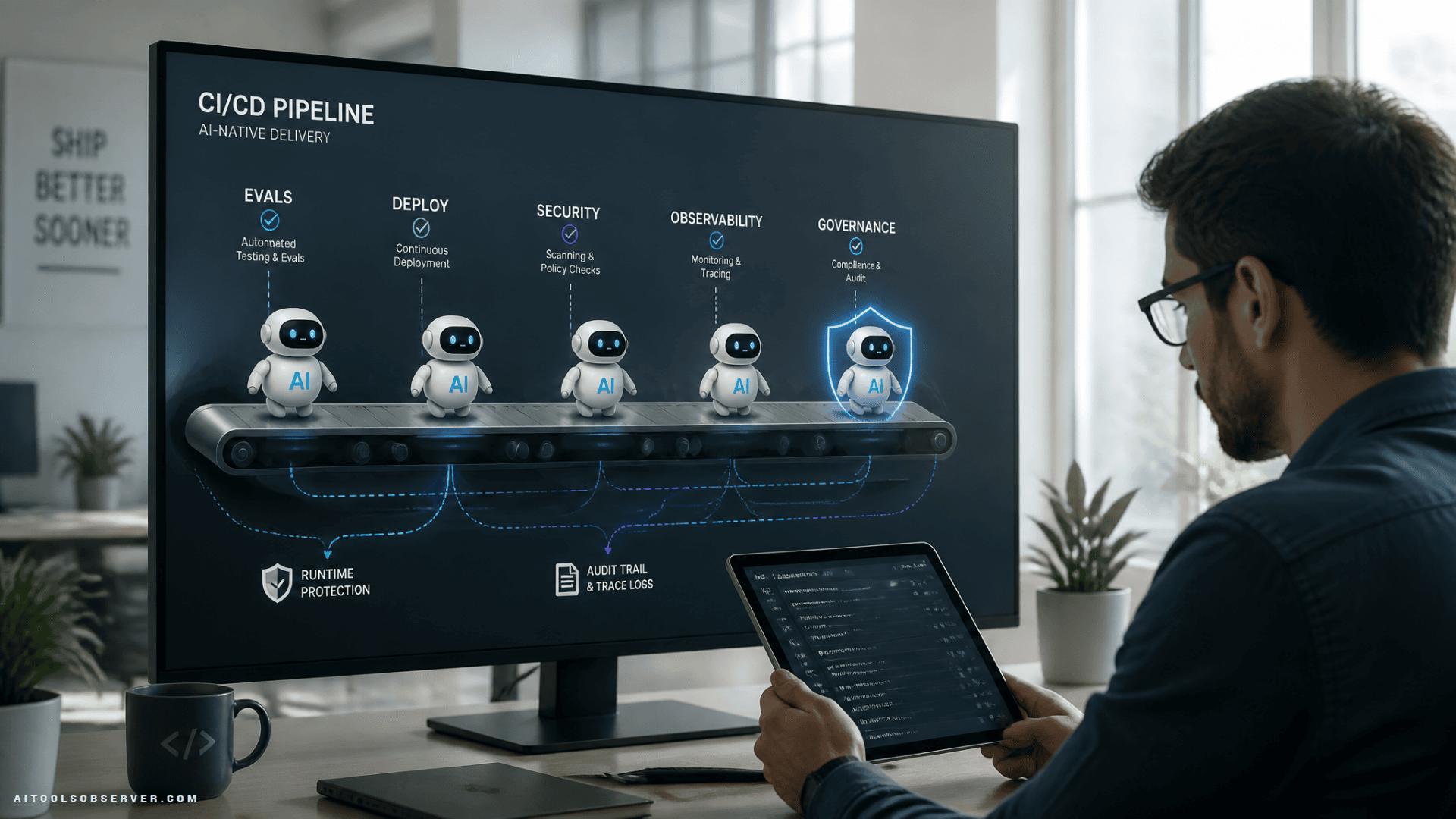
Traditional CI/CD pipelines were built for deterministic software — code that does the same thing every time you run it. AI agents don’t work that way. Each invocation involves autonomous decisions about which tools to call, in what order, with what inputs. You can’t test that once and call it done.
The result is that most enterprise teams trying to ship agents end up duct-taping together separate evaluators, security scanners, runtime monitors, and audit tools. It works, sort of, until it doesn’t — and maintaining that patchwork is a quiet tax on every team involved.
What Agent DLC Actually Includes
Harness isn’t introducing entirely new concepts here — and to their credit, they say so directly. The value is consolidation. Agent DLC pulls several purpose-built capabilities into a single DevOps-native stack:
- AI Evals — Define evaluation datasets and quality gates that run automatically when an agent or model changes, catching regressions before they reach production.
- Agent Deployments — Managed agent runtimes with support for third-party platforms like Amazon Bedrock AgentCore, so existing release processes don’t need to be rebuilt.
- AI Configs — Runtime prompt and model management with instant rollback, no redeployment required.
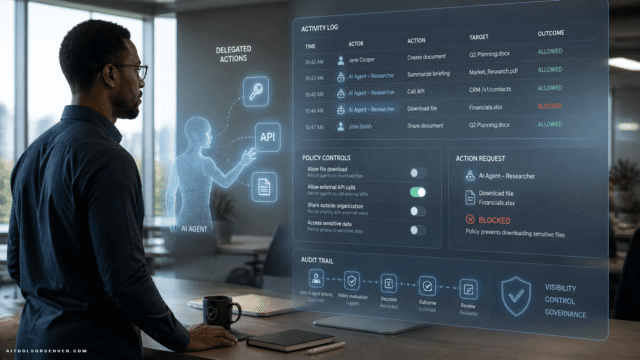
- Agent Security — Scans models and skills for misconfigurations, generates a bill of materials per agent, tests for adversarial inputs, and acts as a runtime firewall against prompt injection and data exfiltration.
- AgentTrace — Traces agent actions at the run and session level, capturing execution telemetry to surface bottlenecks and compare output quality. The foundational layer is being released under an open-source license.
- Asset Catalog — Auto-discovers and registers agents, skills, and plugins inside the Harness Internal Developer Portal to prevent tool sprawl.
Why the CI/CD Framing Matters
The strategic bet here is that developers will adopt agent governance faster if it lives inside workflows they already use. Rather than asking teams to learn a separate agentic operations platform, Agent DLC slots into existing pipelines with familiar controls and governance rules.
That’s a reasonable bet. Adoption friction is real, and “it works like your current CI/CD” is a much easier sell to an engineering org than “here’s an entirely new system to operate.”
Who This Is Actually For
Agent DLC is clearly aimed at enterprise engineering teams that are under pressure from leadership to ship AI agents but are nervous — reasonably — about what happens when those agents start making autonomous decisions in production systems.
It’s less relevant for teams experimenting with agents in sandboxed or low-stakes environments. The governance, audit trails, and security scanning are most valuable when the stakes of a bad agent decision are high.
The Practical Takeaway
If your team is stuck in the “we have agents in staging but can’t justify putting them in production” loop, the bottleneck is usually some combination of missing evals, unclear rollback paths, and no audit trail. Agent DLC appears to address all three in one place — which is a more useful starting point than assembling the same stack yourself from scratch.








Comments (0) No comments yet
Want to join this discussion? Login or Register.
No comments yet. Be the first to share your thoughts!