


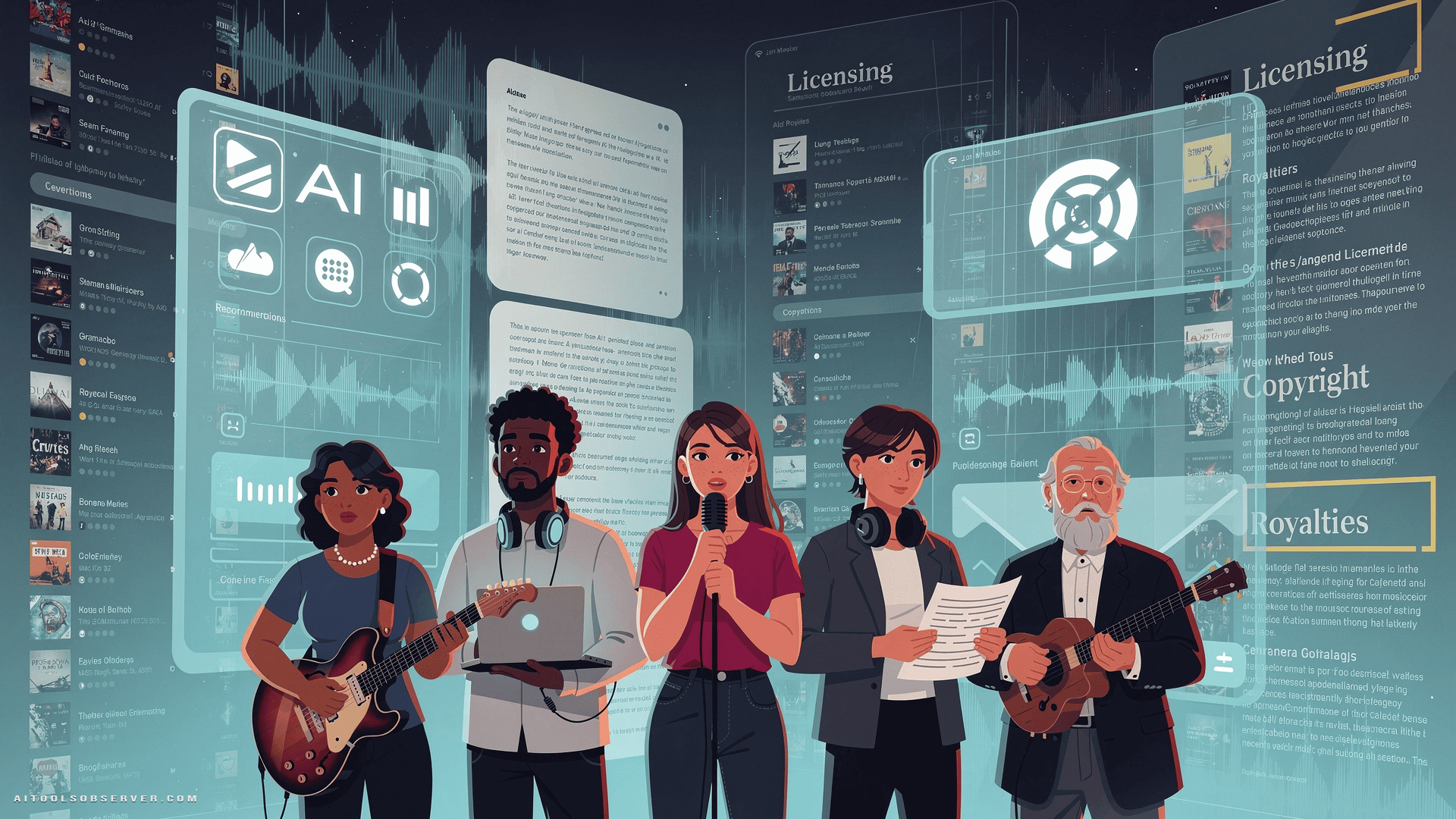
The Discovery That Changed the Conversation

For years, the debate around AI and music copyright lived mostly in courtrooms and op-eds. Now it’s personal.
SZA checked the tool and found 238 of her songs in the datasets — some potentially unreleased. Her response on Instagram was unambiguous: “I’m certain some unreleased. If your a musician and you support this degenerate shit? Your disgusting.” She also raised a sharper point about whose music gets scraped most: “I AINT HEARD A WHITE AI SONG YET.. why so disproportionate? We have no protection in legislature medical or creative. The easiest to steal from.”
That’s not just anger. That’s a structural critique.
Producer Kenneth Blume (fka Kenny Beats) called out Suno directly, writing, “I can’t imagine going into work daily knowing you are stealing from countless struggling musicians.” DJ Sabrina the Teenage DJ connected the dots differently — noting that accusations of her music “sounding like AI slop” only started after Suno began using datasets containing 22 of her tracks.
The irony there is almost too on the nose.
What the Datasets Actually Are

Reisner’s report covered four datasets. Three of them directed users to songs via YouTube and Spotify links — often accessed through automated scraping methods that bypass logins, ads, and monetization mechanisms. That’s not a gray area. That’s a direct violation of both platforms’ terms of service.
The fourth dataset drew from the Free Music Archive, which at least operates in a more permissive licensing space.
Some companies — Google and Stability among them — have acknowledged using these datasets. But which developers actively pulled from which databases remains murky. That opacity is, arguably, the whole problem.
The Legal Landscape Is Getting Crowded
This isn’t just a Twitter (or Bluesky) moment. The lawsuits are stacking up.
Suno and Udio, two of the most prominent AI music platforms, were previously sued by major labels. Warner later settled with Suno via a licensing deal — which tells you something about where the industry sees this heading. Earlier this month, the American Federation of Musicians filed suit against Universal and Warner over how those labels allowed AI companies to use their catalogs.
So now you have artists suing labels. Labels suing AI companies. Labels also signing deals with AI companies. It’s a three-way tug-of-war where the rope keeps changing hands.
Not Everyone Is Outraged — and That’s Worth Noting
Producer Hudson Mohawke offered a colder read. “Since when has either the entertainment or tech industry been ‘fair’ or ‘moral’?” he wrote on Instagram, pointing out that his own songs had been illegally released or sampled without clearance for years. “Maybe you can scrape back some of the $$ maybe you can’t. Them’s the breaks.”
It’s a cynical take — but not an irrational one. The music industry has a long history of exploiting artists before the law catches up. AI is just the newest mechanism.
The difference this time is scale. Twenty-one million songs isn’t a bootleg. It’s infrastructure.
Why This Matters for the AI Tools Ecosystem
For anyone tracking AI tool adoption, this moment signals something important: transparency is becoming a competitive variable.
Artists and rights holders are now actively checking whether their work appears in training data. Detection tools exist. Lawsuits are filed. Licensing deals are being struck. The era of “scrape first, negotiate later” is running out of runway.
AI music platforms that proactively disclose their training sources — or build licensing pipelines from the start — will have a structural advantage as regulation tightens. Those that don’t are accumulating legal and reputational debt.
The question isn’t whether accountability is coming. It’s which tools will be standing when it arrives.
The Takeaway
A detection tool revealed 21 million scraped songs. Artists found their unreleased work in the pile. Lawsuits multiplied. Labels cut deals. And the conversation shifted from abstract ethics to documented evidence.
The AI music space is talented, fast-moving, and genuinely impressive. It’s also built, in significant part, on a foundation that millions of musicians never consented to.
That’s not a vibe problem. That’s a business model problem — and the industry is only beginning to reckon with it.










Comments (0) No comments yet
Want to join this discussion? Login or Register.
No comments yet. Be the first to share your thoughts!