



What’s Actually Happening Here
Cadence has introduced two AI super agents: InnoStack and AuraStack. Based on available context, InnoStack is already being integrated into real-world chip design workflows — including a collaboration with Rapidus Corporation. AuraStack extends the AI agent approach into PCB design and advanced packaging.
Together, these tools suggest Cadence is trying to make AI-native design flows the default across the full hardware stack — not just silicon, but packaging and board-level design too.
That’s a meaningful expansion of scope.
Why the “Super Agent” Framing Matters
Calling these tools “super agents” isn’t just marketing language. It signals a shift in how Cadence wants customers to think about EDA software — less as a collection of point tools, and more as an integrated, AI-driven workflow that handles increasing amounts of design complexity autonomously.
For chip designers, that framing has real implications:
- Faster iteration cycles if agents can handle routine optimization tasks
- Reduced manual handoffs between silicon, packaging, and PCB design stages
- Tighter integration across the design stack, which raises switching costs
The productivity argument is the core pitch. If customers see measurable gains relative to alternatives, Cadence’s pricing power holds. If they don’t, the moat weakens.
This is part of a broader move toward agentic AI inside complex enterprise workflows.
The Competitive Pressure Is Real
Cadence’s position isn’t unchallenged. Open-source EDA tools have been improving steadily, and some large semiconductor companies have been investing in in-house design tooling. These aren’t hypothetical threats — they’re active trends that put pressure on any premium EDA vendor.
The honest read is this: InnoStack and AuraStack support Cadence’s AI narrative, but they don’t eliminate the competitive risk on their own. What matters is whether customers adopt these agents broadly enough to make AI-native design flows the industry standard — and whether Cadence can sustain that adoption against free or internally built alternatives.
What the Revenue Projections Imply
Cadence’s growth narrative appears to require roughly 13.5% annual revenue growth to reach projected targets by 2029. That kind of growth rate assumes strong, sustained uptake of AI tools across silicon, packaging, and PCB design — not just pilot programs or early adopter wins.
The Rapidus collaboration is a concrete data point in favor of that thesis. But a single high-profile integration doesn’t confirm broad market adoption. The more telling signal will be how quickly mid-tier chip designers and system companies integrate these agents into standard workflows.
The Open-Source EDA Variable
This is the tension that deserves the most attention for anyone tracking Cadence’s competitive position.
Open-source EDA tools have historically lagged commercial offerings on advanced process nodes and complex design rules. But that gap has been narrowing. If agentic AI capabilities start appearing in open-source toolchains — or if hyperscalers and large fabless companies build proprietary alternatives — Cadence’s pricing leverage could erode faster than the optimistic revenue projections assume.
Cadence’s best defense is making its AI agents genuinely indispensable: deeply integrated, continuously improving, and tied to proprietary IP that’s hard to replicate. Whether InnoStack and AuraStack achieve that level of stickiness is still an open question.
How to Think About This as an AI Tools Observer
For anyone tracking the AI tools ecosystem — not just the investment angle — Cadence’s move illustrates a broader pattern worth watching:
Established software platforms are using agentic AI to deepen workflow lock-in, not just add features.
This is different from bolting a chatbot onto existing software. Agentic design tools that operate across the full hardware stack represent a structural shift in how complex engineering workflows get automated. If it works, it raises the bar for any competitor trying to displace an incumbent.
The practical question for chip design teams evaluating their toolchain: are the productivity gains from AI-native workflows large enough to justify staying with — or switching to — a platform like Cadence? That calculation will drive adoption more than any product announcement.
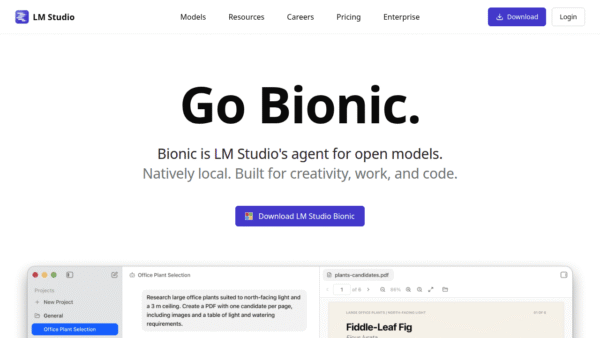
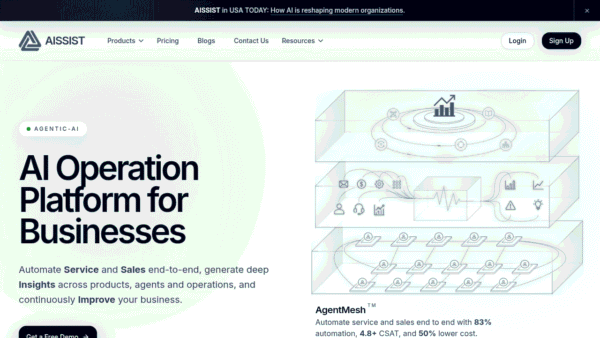
For a broader category view, compare how agentic AI tools are being positioned across software markets.
The Useful Takeaway
Cadence’s InnoStack and AuraStack launches are a credible strategic move, not just a narrative refresh. The integration with Rapidus gives the AI agent story a real-world anchor. But the competitive moat these tools create depends entirely on adoption depth and whether customers find them meaningfully better than open-source or in-house alternatives.
Watch for signals of broad adoption across mid-market chip designers — that’s the metric that will confirm or challenge the growth thesis. A single flagship collaboration is a start, not a verdict.











Comments (0) No comments yet
Want to join this discussion? Login or Register.
No comments yet. Be the first to share your thoughts!