


What WorkBuddy Actually Does
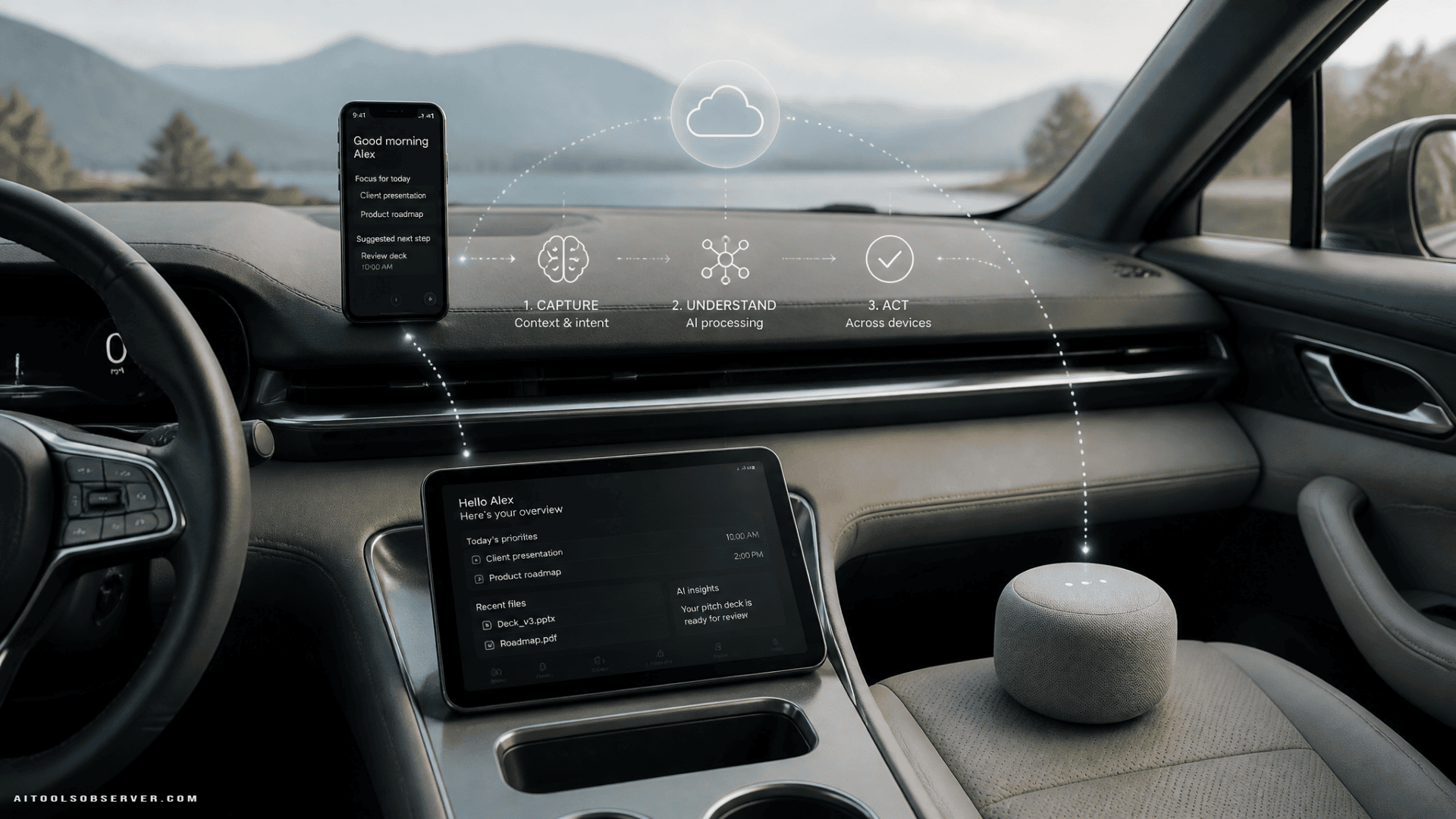
WorkBuddy is not a chatbot layered on top of existing tools. It is positioned as an agentic AI system: it interprets a user’s objective, breaks it into multi-step workflows, calls purpose-built tools and skills, and returns completed, ready-to-use outputs—documents, reports, presentations, code.
According to the announcement, WorkBuddy operates across both local on-device processing and a cloud sandbox environment, with cross-device sync. The platform reportedly serves 12 industries and includes over 140 AI advisors and 22,000+ skills and plugins.
For users, the practical interface is natural language. You describe what you need—draft a report, organize data, automate a recurring task—and WorkBuddy handles the execution within the conversation thread.
The Flyme Ecosystem Context
Flyme AIOS is already anchored by Super Aicy, its existing AI assistant. WorkBuddy is being built on top of that foundation, not replacing it. The integration extends agentic capabilities across the full device surface that Flyme currently covers.
That surface is broader than most people may realize:
- Smartphones running Flyme OS
- AI devices in the Flyme hardware ecosystem
- Vehicles via Flyme Auto, ECARX’s in-vehicle deployment layer
ECARX’s broader stack includes multi-screen cabin interaction, mobile-IoT-vehicle connectivity, core middleware, and UI/UX frameworks. WorkBuddy slots into this as the workflow execution layer—the part that turns instructions into completed work.
Why the Vehicle Integration Is Worth Watching
In-vehicle AI has largely been limited to voice commands, navigation, and media control. Extending an agentic workflow tool into that environment raises a different set of questions: what tasks make sense to initiate while driving, how outputs are delivered safely, and how enterprise-grade automation interacts with a moving vehicle context.
The announcement does not detail how the in-vehicle experience will be scoped or constrained compared to smartphone use. That specificity will matter when the rollout becomes available to users.
What This Means for the Broader Market
ECARX reports its technology is deployed in approximately 12 million vehicles worldwide, with partnerships across 18 automakers and 28 vehicle brands. If WorkBuddy reaches even a fraction of that installed base, it represents a meaningful distribution channel for agentic AI tooling outside the typical enterprise software context.
For AI tool observers, this integration is a concrete example of agentic AI moving beyond the browser and desktop—into operating systems that govern how people interact with vehicles and connected devices throughout their day.
The practical question for enterprise users and fleet operators is whether cross-device sync and cloud execution hold up consistently across those very different environments. That is where the value proposition will either prove itself or reveal its limits.











Comments (0) No comments yet
Want to join this discussion? Login or Register.
No comments yet. Be the first to share your thoughts!