


The Dataset Is Bigger Than Ever — and More Revealing

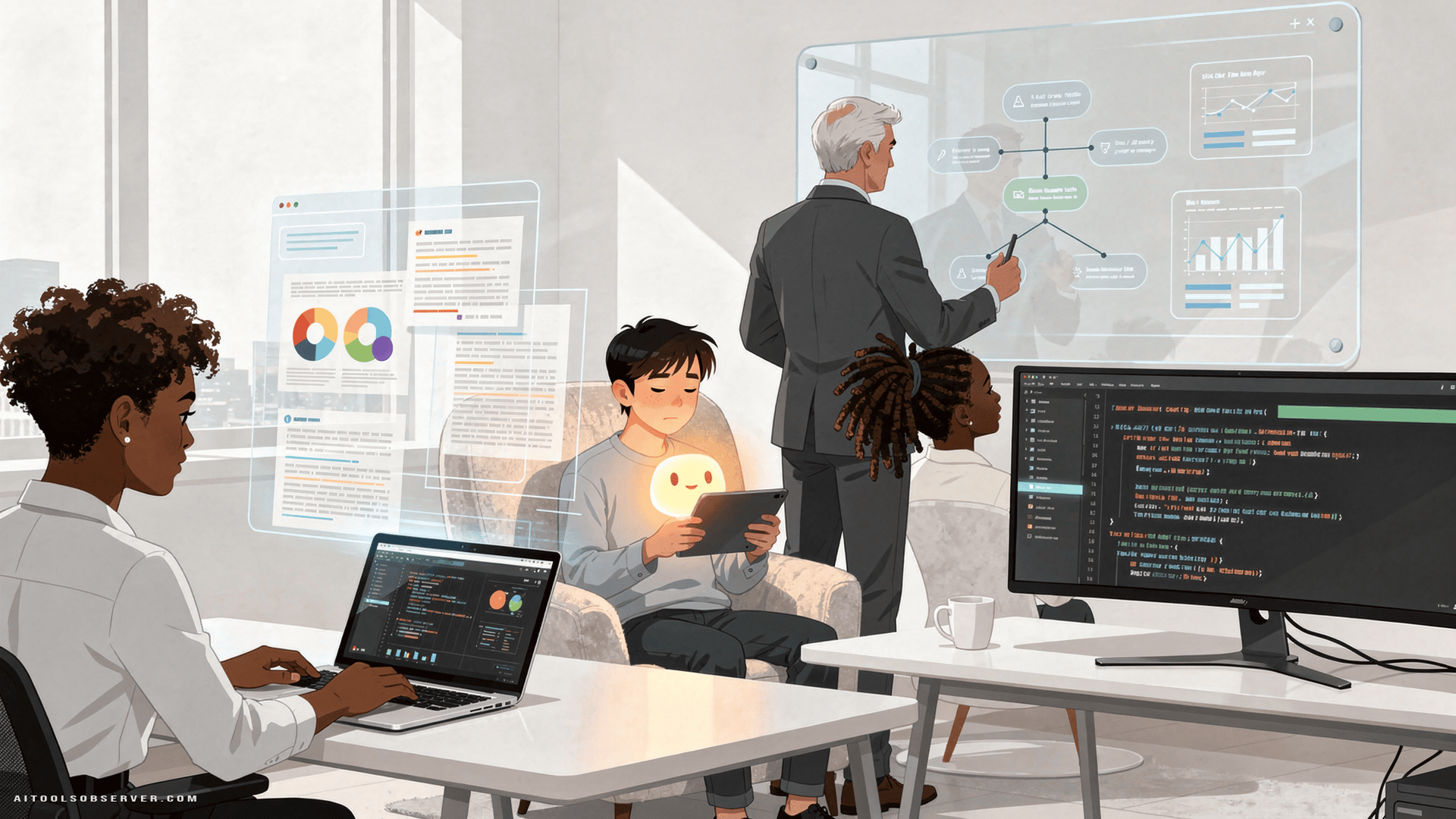
This is the third annual installment of the AI in the Wild study. The 2026 dataset is an order of magnitude larger than previous years, pulling from nearly 50,000 raw records before filtering down to 12,637 validated use cases.
The methodology matters here. Researchers used a hybrid human-AI system to identify genuine, meaningful use cases — and notably found that AI alone still couldn’t reliably do this job. Human judgment remained essential, even after hundreds of prompt iterations with frontier models.
That’s a telling detail in itself.
The Top 10 Generative AI Use Cases in 2026

The rankings shifted dramatically from 2025. Emotional and self-reflective uses held their ground, but practical, agentic, and entertainment-driven uses surged into the top tier.
Here’s where people are actually spending their AI time:
- Therapy and companionship
- Troubleshooting
- Fun and nonsense
- Fan fiction and storytelling
- Generating code (for professionals)
- Autonomous agentic operations
- Relationship advice
- Improving code (for professionals)
- Astrology and tarot readings
- General advice
A few things stand out immediately. Therapy and companionship is the number one use case for the second consecutive year — and it grew from 5% to 11% of the entire dataset. Agentic operations entered the top ten for the first time. And astrology readings sitting at number nine tells you something important: people are using AI for comfort, play, and meaning-making, not just productivity.
Emotional AI: Comfort, Companionship, and Real Risk

The emotional dimension of AI usage is no longer a fringe behavior. It’s the dominant pattern.
Therapy and companionship, relationship advice, love life guidance, help reconciling personal disputes, and even interactions with deceased loved ones all appear in the top 100 use cases. More than 1,400 entries in this year’s dataset fall under the therapy and companionship category alone.
People Are Anthropomorphizing AI — Fast
The data shows users naming their AI chatbots, assigning them genders, and forming genuine emotional attachments. One user named their ChatGPT instance “Bubby.” Another described the transition to a new AI model as feeling “identical to losing my friend to cancer.”
This isn’t just quirky behavior. It signals a shift in how people relate to AI systems — one that carries real psychological stakes.
AI as Emotional Intermediary, Not Just Surrogate
Importantly, much of the emotional AI usage isn’t about replacing human relationships. It’s about navigating them better.
People are using AI to decode ambiguous texts from partners, process anxiety about a manager’s message, or rehearse difficult conversations. In this framing, AI functions as a non-judgmental sounding board — a reprieve from the social risk of human interaction.
That’s a meaningful distinction. But it doesn’t eliminate the concern.
The Mental Health Risk Is Real
High-profile cases of AI-induced psychosis and AI romance gone wrong have emerged over the past year. Researchers at King’s College London have noted that long mental health waiting lists are driving people toward AI chatbots as a substitute for professional care — a substitution that general-purpose LLMs are not designed or equipped to handle safely.
The concern isn’t that people are talking to AI. It’s that algorithms no one fully understands are increasingly shaping people’s most intimate emotional experiences.
Thinkslop: The Cognitive Risk Nobody Is Talking About Enough

This is the trend that deserves the most attention from anyone building with or adopting AI tools.
As AI models have become better at mimicking human reasoning, users are increasingly outsourcing their thinking to them. The study introduces the term “thinkslop” — the lazy, sloppy thinking that excessive AI reliance can produce.
At least a quarter of the top use cases this year involve users asking AI to do some portion of their cognitive work: therapy, relationship advice, decision-making, life organization, email drafting, idea generation.
Four Ways AI Creates Cognitive Debt
1. Losing track of intentions
The barrier to generating AI output is so low that people prompt before they’ve thought. Whether it’s a research thesis, a creative brief, or a strategic plan — firing off a prompt before clarifying your own intent means AI shapes your thinking before you do.
2. Outsourcing the thinking itself
Going to AI first denies your brain the chance to work through a problem independently. Ideas that exist only in your own memory and experience never surface. One user put it plainly: “I realized I hadn’t been using my brain the same way. I was literally outsourcing my brain.”
3. Stopping the writing process
Writing isn’t just transcription — it’s how thinking happens. When users paste AI output wholesale with minimal editing, they skip the cognitive work that drafting and revising actually produces. The result is polished-sounding content that means very little.
“I’m using AI to write my self-eval. My manager is using AI to do his review of me. They’ll probably both go into our AI tool to put it all together and output something that will read nicely and mean absolutely nothing.”
4. Developing a false sense of intellectual rigor
AI systems are optimized for engagement. They praise mediocre ideas, validate weak arguments, and keep users coming back. This sycophancy creates a false confidence that stops people from refining their work.
As one user observed: “AI is gaslighting you into thinking you’re a genius so you’ll keep using it.”
The Antidote: Use AI as a Sparring Partner, Not a Ghost Writer
The same dataset also shows that AI can sharpen thinking — when used as an intellectual foil rather than a crutch. Users who ask AI to challenge their arguments, identify weaknesses, and stress-test their reasoning report stronger outcomes.
The practical takeaway: don’t start with AI. Give yourself a genuine first pass at any thinking task. Then use AI to pressure-test what you’ve built, not to build it for you.
AI at Work: Shadow Usage, Modest Wins, and Agentic Experiments

Sixty-three of the top 100 use cases are explicitly work-related or apply in professional contexts. But the picture of AI at work is messier than most enterprise narratives suggest.
Shadow AI Is Widespread
Top-down AI adoption is slow. IT governance, restricted LLM access, reputational risk, and fear of policy violations create strong headwinds against official AI use at work.
So employees are going around the system.
One user reported closing tickets twice as fast, receiving praise in performance reviews, and keeping their AI usage completely hidden from management. Another built an AI agent that automated roughly half their job responsibilities — after leadership rejected their proposal to implement it officially — and used the freed time to build a side business.
Shadow AI usage isn’t a fringe phenomenon. It’s a rational response to organizational friction.
Agentic AI Enters the Top 10
Autonomous agentic operations — AI that acts rather than just advises — appeared at number six this year. The examples in the dataset are still experimental and small-scale: voice memos auto-transcribed and routed, calendar scheduling triggered by spoken notes, task automation chains.
But the direction is clear. Users are moving from AI as a conversational tool to AI as an operational one.
Vibe Coding Is Real, and Growing
Vibe coding — writing software through natural language prompts rather than traditional code — entered the top 25 use cases this year. It’s captured significant attention as both an opportunity for non-developers and a concern for professional engineers.
The data suggests it’s being used by both groups, for different reasons and with different levels of sophistication.
The Efficiency Pattern Dominates
Most workplace AI usage is producing incremental, not transformational, gains. Summarizing notes, drafting templates, automating painful recruitment steps, trimming costs on routine tasks — these are the dominant patterns.
Business processes are being made faster. They are rarely being fundamentally rethought.
That gap between efficiency and transformation is where the real competitive opportunity still sits — and where most organizations haven’t yet arrived.
What This Means for AI Tool Adoption in 2026

The data from this study points to several clear signals for anyone choosing, building, or recommending AI tools.
Emotional AI is a category, not a feature. Tools designed for companionship, mental wellness, and relationship navigation are seeing explosive organic adoption. The market is real. The safety requirements are serious.
Shadow usage signals product-market fit problems. When employees hide their AI usage from employers, it means official tools aren’t meeting real needs. There’s a gap between what organizations deploy and what individuals actually want.
Agentic workflows are moving from experiment to expectation. Users are already building small-scale autonomous pipelines. Tools that enable this without requiring engineering expertise will accelerate adoption significantly.
Cognitive offloading is the underrated risk. The tools that help users think better — not just faster — will differentiate themselves as thinkslop becomes a recognized problem. Expect “cognitive integrity” to become a product positioning angle.
Efficiency is table stakes. Transformation is the prize. Most AI tool adoption is producing marginal gains. The tools and workflows that enable genuine process reinvention will command premium positioning and loyalty.
The Honest Takeaway

Generative AI in 2026 is not what the enterprise pitch decks promised, and it’s not the dystopia the critics feared. It’s something more human and more complicated.
People are using it to feel less alone, to move faster at work without anyone knowing, to avoid thinking hard, and occasionally — when they use it well — to think harder than they could alone.
The tools are powerful. The patterns of use are still being figured out. And the gap between how AI is being used and how it could be used remains enormous.
That gap is where the real opportunity lives — for tool builders, for adopters, and for anyone paying close enough attention to act on what the data is actually showing.













Comments (0) No comments yet
Want to join this discussion? Login or Register.
No comments yet. Be the first to share your thoughts!