


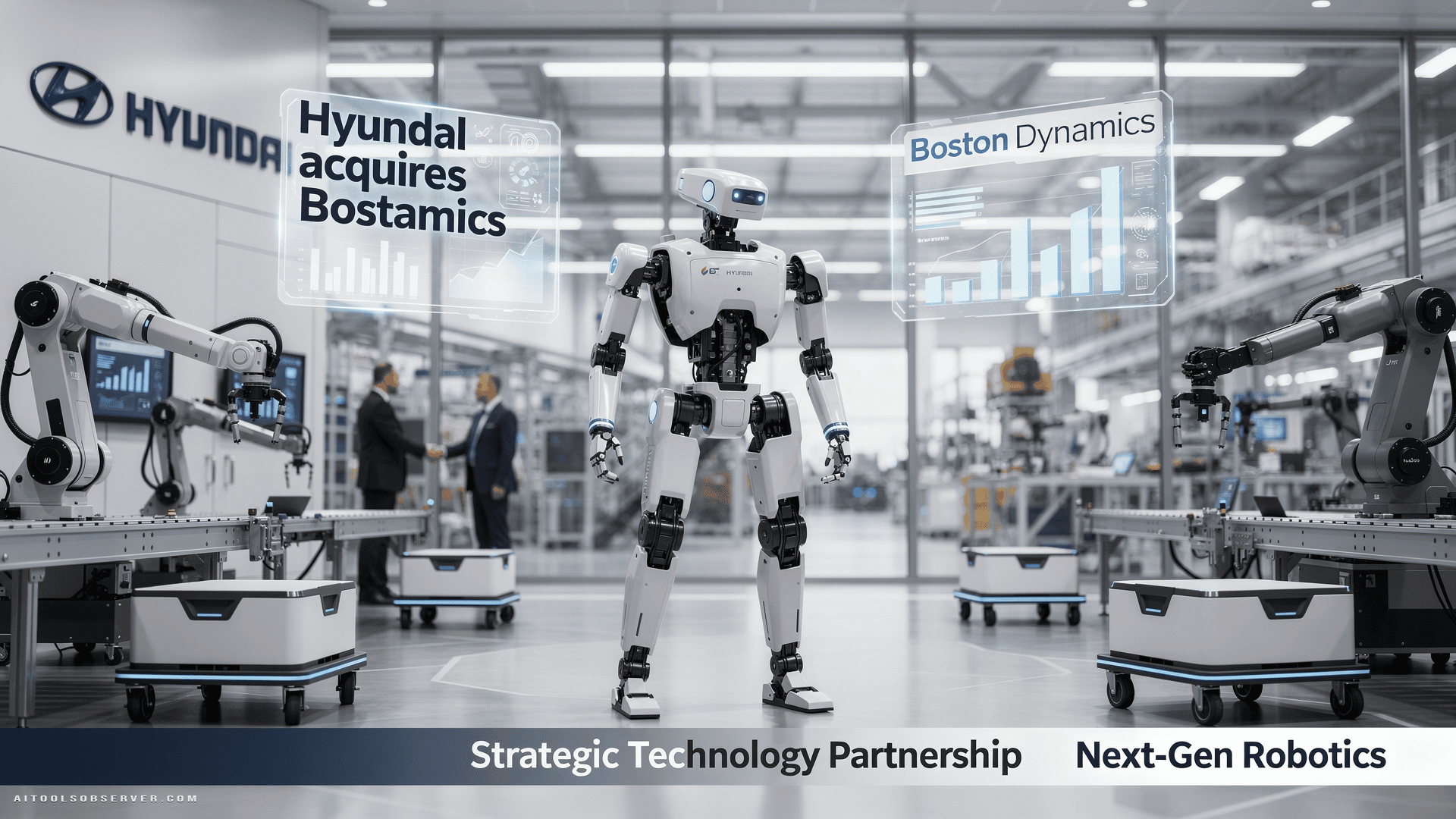
From YouTube Sensation to Factory Floor

Boston Dynamics spent a decade making robots that were genuinely impressive and commercially confusing. Atlas backflips went viral. Spot eventually found a real market. But humanoid robots in actual factories? That was always the harder question.
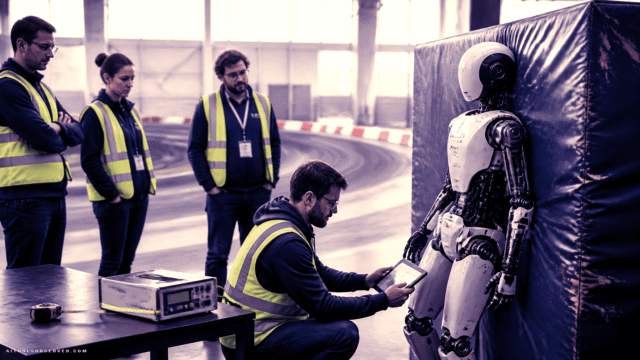
It’s becoming a real one. At CES in January 2026, Hyundai and Boston Dynamics put the electric Atlas on stage — walking, standing, being remotely piloted. The stagecraft was fine. The deployment plan was the actual news: Atlas is expected to begin work at Hyundai’s EV plant near Savannah, Georgia, by 2028.
That’s not a concept. That’s a schedule.
Why Full Ownership Changes the Equation

Hyundai’s position here is genuinely unusual. It doesn’t need to pitch Atlas to a first customer. It is the first customer.
It owns the factories. It owns the vehicle programs. It owns the robotics company. And through Hyundai Mobis, its components arm, it has a hand in actuator production for Atlas — keeping critical hardware inside the group’s own industrial orbit.
That’s the difference between a robotics side bet and a manufacturing capability. One gets a demo video. The other gets a production line.
The plan, as reported from CES, starts with parts sequencing at Hyundai’s Metaplant in Georgia, then scales toward heavier operations by 2030. Controlled, measurable, and deliberately unglamorous. Exactly the right approach.
The Bar Is High — and It Should Be
Boston Dynamics CEO Robert Playter has been refreshingly direct about what Atlas actually needs to achieve. According to Business Insider, that means learning new factory tasks in a day or two and hitting 99.9% reliability before it earns a real spot on the floor.
That’s a demanding standard. It’s also the honest one. A humanoid robot competing in a space where traditional automation already exists has to be genuinely better, not just more interesting.
Hyundai’s controlled deployment gives Atlas the best possible environment to clear that bar — known tasks, known layouts, and a parent company that measures success in production uptime, not conference applause.
The Field Is Not Waiting
Boston Dynamics isn’t running this race alone.
Tesla has pivoted part of its Fremont factory narrative toward Optimus. Figure AI is running humanoid trials inside BMW plants. Unitree has made low-cost humanoid robots impossible to dismiss. None of them carry Boston Dynamics’ depth in locomotion research — but they don’t need to win on that dimension. They need to win on cost, reliability, and fit for specific jobs.
That’s why Hyundai’s vertical integration matters. Atlas doesn’t have to beat every rival in every market. It has to work inside Hyundai plants first, where the variables are controlled and the proof point is real. Win there, and Hyundai gets both a robotics platform and a commercial case study at the same time.
SoftBank Exits — But Not From Robotics
For Masayoshi Son, $325 million is a rounding error compared to where his attention has moved. SoftBank is reportedly forming Roze AI, a new venture targeting AI-powered physical infrastructure — data centers, energy, construction — with a rumored $100 billion valuation target and a potential public listing this year.
That’s the context for the exit. SoftBank isn’t abandoning robotics as a concept. It’s repositioning toward robots as infrastructure layer, not product company. Boston Dynamics has hard engineering problems and a slower revenue curve. Son now wants the buildout.
The $325 million gets redeployed into a much larger AI infrastructure bet. It’s a clean trade, strategically speaking.
What Actually Changes Now
The ownership structure was always a detail. The deployment timeline is the real story.
By 2028, Atlas is supposed to be doing actual work in Georgia — not walking across a stage in Las Vegas. If Hyundai can turn that into repeatable manufacturing value, this acquisition reads less like a tidy corporate cleanup and more like the moment Hyundai stopped borrowing a robotics future and decided to own one outright.
The humanoid race is real. The contestants are serious. And Hyundai just made its position unambiguous.










Comments (0) No comments yet
Want to join this discussion? Login or Register.
No comments yet. Be the first to share your thoughts!