


What changed at Ignite 2026
The headline announcements cover several layers of the enterprise AI stack:
- Copilot Workspaces for shared human-agent collaboration
- Agent 365 Business Analytics for tracking AI spend and business value
- Expanded model access through Foundry, including third-party models
- New enterprise-focused models such as Decision 1.1, Code 2, and Cyber 2 Flash
- General availability of Microsoft Perception for security operations
- General availability of Horizon DB on Azure
- Ongoing work on AI governance through the AI Transparency Initiative
Taken together, the updates suggest Microsoft wants to solve a familiar enterprise problem: AI pilots often succeed in demos but struggle when teams need shared context, measurable ROI, policy controls, and production-grade data access.
Copilot Workspaces moves AI from solo use to team coordination
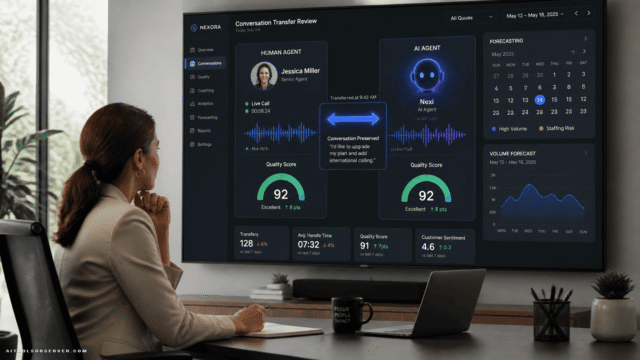
Copilot Workspaces is positioned as a collaborative environment where employees and AI agents work toward shared goals using common context.
This matters because many current AI workflows are still individual. One person prompts an assistant, gets an output, and then manually passes work to colleagues or other systems. That model does not scale well for cross-functional work such as campaign planning, sales operations, security reviews, or product documentation.
If Microsoft’s framing holds, Workspaces could reduce one of the biggest inefficiencies in enterprise AI: context loss between people, tools, and tasks. A shared human-agent collaboration environment is not just a usability feature. It is a governance and execution feature, because shared context is easier to monitor, audit, and improve than fragmented chat threads.
For AI adopters, the main question is practical: does this improve real team workflows, or does it simply add another layer on top of existing collaboration tools? The answer will likely depend on how tightly Workspaces connects with everyday enterprise systems and how much control teams have over permissions, memory, and task boundaries.
Agent 365 Business Analytics targets the AI ROI problem
One of the more useful announcements is Agent 365 Business Analytics, which Microsoft is positioning as a way to track AI spending and connect it to business outcomes.
That is a direct response to a growing enterprise pain point. Many organizations can measure AI usage, but fewer can clearly explain whether that usage is producing meaningful operational value. AI budgets are becoming real line items, and finance teams want more than anecdotal productivity wins.
The description suggests Agent 365 Business Analytics is meant to function like an ERP-style layer for AI activity. In plain terms, it aims to give companies visibility into:
- what they are spending on AI
- where agents are being deployed
- what outcomes those deployments are generating
- where optimization is needed
For buyers, this may be one of the most consequential updates. Strong models attract attention, but systems that connect cost to value often determine which AI tools survive procurement review.
Foundry becomes more important as model choice expands
Microsoft also expanded model access through Foundry, including availability of OpenAI’s GPT-6.2 and Meta’s latest models based on the provided context.
This is strategically important because enterprises increasingly want optionality. They do not want to rebuild workflows every time model preferences change. A platform that offers access to multiple model families can reduce switching friction and support more use-case-specific deployment.
The practical implication is straightforward: Microsoft is not only selling its own AI environment, but also trying to become the control plane through which enterprises select, test, and deploy models. That is a strong position if customers care more about orchestration, governance, and integration than about allegiance to a single model provider.
For teams comparing platforms, this raises a useful evaluation question: is the platform helping you choose the right model for each task, or steering you toward one default path?
New models show a focus on enterprise-specific work
The company also announced general availability of Microsoft Decision 1.1 and introduced Code 2 and Cyber 2 Flash.
Even without detailed benchmarks, the naming and positioning are revealing. Microsoft is emphasizing domain-oriented models tied to business decisioning, coding, and cybersecurity rather than presenting AI as one general-purpose layer for everything.
That matters because enterprise AI adoption often improves when tools are aligned with concrete job functions. Coding teams, security teams, and operations teams do not evaluate AI systems by the same standards. Cost efficiency, response speed, controllability, and domain fit can matter more than broad benchmark performance.
Security gets first-class treatment with Microsoft Perception
Microsoft Perception is now generally available and is described as bringing together red, blue, and green AI agent teams to deliver security outcomes at machine speed while keeping human oversight in the loop.
This reflects a broader trend in enterprise AI: autonomous capability is attractive, but few security teams want fully opaque automation in sensitive environments. Security leaders typically want speed and scale without surrendering review authority.
The useful signal here is not just that Microsoft launched another security product. It is that the company is framing AI security as a coordinated, multi-agent system with human oversight built in. That is much closer to how enterprise security organizations actually operate.
Horizon DB addresses the data layer behind enterprise agents
Horizon DB may be one of the less flashy announcements, but it could be one of the most important for production AI systems.
Microsoft said its distributed PostgreSQL database is now generally available on Azure, with integration into Fabric intended to help enterprise agents reason across live transactions and large historical datasets in real time. The reported performance positioning versus self-managed PostgreSQL is notable, but the larger point is architectural.
Enterprise agents are only as useful as the systems they can reliably access. If AI tools cannot work against current transactional data and historical business records with acceptable speed and control, many advanced workflows remain theoretical.
Horizon DB appears positioned to support a common enterprise requirement:
- transactional reliability
- scale across distributed workloads
- compatibility with familiar database patterns
- tighter connection between operational data and analytics
For teams building AI-heavy internal systems, this is the layer to watch closely. Collaboration tools and model marketplaces get attention, but data access and query performance usually determine whether an agent can be trusted in real workflows.
Governance is becoming part of the product story
Microsoft also highlighted its AI Transparency Initiative, which is said to involve more than 40 organizations working toward open standards for accountable, independently verifiable, and safe-by-design AI.
This is worth noting because governance is no longer a side conversation. It is becoming part of the product evaluation checklist, especially in large organizations where legal, compliance, risk, and IT all influence AI purchasing decisions.
The key takeaway is not that governance language appeared in the keynote. It is that Microsoft is trying to make trust, oversight, and ownership central to its enterprise AI narrative. Satya Nadella’s stated priorities reinforce that framing: keep human ambition at the center, ensure organizations retain ownership of their intelligence and learning, and build trust in AI systems.
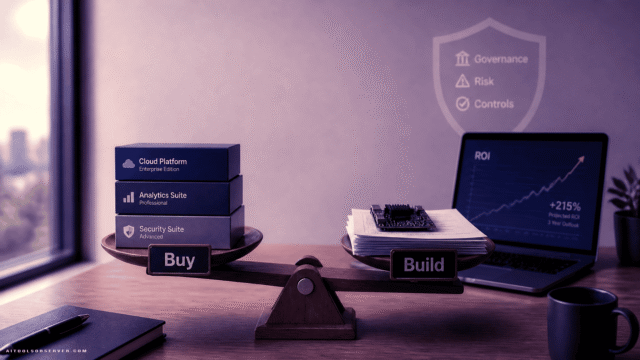
What this means for AI tool buyers
Ignite 2026 suggests Microsoft is competing on stack completeness, not only model capability.
That changes how buyers should evaluate the announcements. The most relevant questions are less about headline intelligence and more about operating fit:
- Can teams collaborate with AI in shared, controlled environments?
- Can finance and operations measure AI value against spend?
- Can developers and security teams use purpose-built models where they matter?
- Can enterprises access multiple models without rebuilding workflows?
- Can agents work against live and historical data safely and fast enough for production use?
- Can governance and oversight be applied without slowing everything down?
These are not abstract concerns. They are the practical filters separating AI experimentation from enterprise adoption.
The broader market signal
The broader signal from Microsoft’s announcements is that enterprise AI is maturing into an infrastructure contest. Standalone assistants still matter, but the larger opportunity appears to be in owning the environment where models, agents, data, analytics, and controls come together.
For competitors, that raises the pressure to offer more than point solutions. For customers, it means tool comparison needs to move beyond feature lists and into stack-level thinking.
Useful takeaway
If you are evaluating enterprise AI platforms, Ignite 2026 offers a simple lens: do not judge the stack by the model alone. Look at collaboration, observability, security, data access, and governance as one system.
Microsoft’s latest moves suggest that enterprise AI buying is shifting from “which assistant should we try?” to “which operating environment can we trust at scale?” That is a better question, and now it is the one that matters most.









Comments (0) No comments yet
Want to join this discussion? Login or Register.
No comments yet. Be the first to share your thoughts!