



The Problem: AI Ambition Without Execution Is Just Noise
Santander’s Chief Data & AI Officer, Ricardo Martín Manjón, framed the challenge clearly: moving from AI ambition to AI execution.
That gap is where most large organizations get stuck. They invest in tools, run pilots, and generate internal buzz — but struggle to translate any of it into measurable business impact.
Santander’s answer was to stop spreading thin and focus on three priorities:
- Making the bank faster, safer, and more efficient through process automation
- Using AI to open new revenue streams
- Helping people embed AI into daily work
The logic is deliberately simple: focus on fewer things, measure impact, and scale what works across the group.
The Setup: A Multi-Provider AI Architecture

One of the most important decisions Santander made was architectural. Rather than betting on a single AI vendor, they built a secure, multi-provider strategy.
The Core Stack
Microsoft Copilot handles everyday productivity across the organization — summarizing documents, preparing analysis, improving internal workflows, and supporting Microsoft 365 experiences powered by leading AI models.
For more specialized capabilities, Santander layers in:
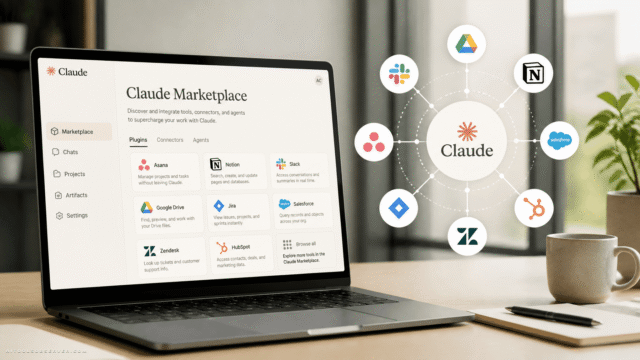
- OpenAI’s ChatGPT
- Anthropic’s Claude
- Google’s Gemini
- G42 for AI-enabled banking solutions
- Various startups and technology partners
This isn’t tool sprawl. It’s deliberate diversification — matching the right model to the right use case while keeping everything inside secure, controlled environments.
Critically, Santander does not share customer data externally to train third-party models. Every AI-enabled process operates within defined ethical, legal, cybersecurity, and risk frameworks.
Real-World Use Cases: Where AI Is Actually Working
The numbers are compelling. But the use cases are where the strategy becomes concrete.
Process Automation at Scale

Santander has more than 280 process automation agents in production across credit, fraud, KYC, and operations.
In Brazil, AI is handling card fraud claims with approximately 95% faster processing, up to 90% automation, and an error rate below 1%. That’s not incremental improvement — that’s a fundamentally different process.
Financial Crime Detection
Openbank’s AI models process around 100,000 anti-money laundering alerts per year. Investigations that previously took hours now complete in minutes.
This is the kind of operational leverage that directly affects risk exposure and compliance costs — two areas where banking executives pay close attention.
Customer Service Transformation
In the UK, Santander is rolling out AI in voice channels to handle card-related queries. The target: resolve around 240,000 calls — roughly 40% of annual volume — through self-service.
The projected impact:
- 26,000 hours saved for customers
- 45,000 hours returned to service teams for complex work
The same capability is being deployed in Spain across both Santander and Openbank, designed to feel natural rather than robotic.
Smarter Customer Onboarding
In Spain, machine learning and real-time data are being used at the onboarding stage to assess credit card eligibility from day one. The goal is to make offers more timely and relevant — turning a traditionally slow process into an immediate, data-driven decision.
AI as a Growth Engine, Not Just a Cost Cutter
This is where Santander’s strategy separates from most enterprise AI narratives.
Efficiency is table stakes. The more interesting play is growth.
Payments and Cross-Border Commerce
Getnet, Santander’s payments arm, is using AI to improve experiences for international customers — including dynamic currency conversion when customers pay abroad. Better conversion rates for merchants, better experience for customers.
Agentic Commerce: The Next Frontier
Santander is already positioning for what comes next. As AI agents begin assisting customers through search, comparison, and purchasing decisions, payments infrastructure needs to adapt.
Santander was the first bank in Europe to test payments with AI agents alongside Mastercard, and the first in Latin America to do so with Visa.
That’s not a footnote. That’s a strategic positioning move in a market that doesn’t yet fully exist — but will.
Scaling to 185,000 Employees: Access Is Just the Starting Point
Until recently, around 40,000 Santander employees were actively using AI tools. In June 2026, the bank extended AI access to all 185,000 employees worldwide.
But Manjón was direct about what this actually requires: access alone doesn’t create an AI-first culture.
What Real Adoption Looks Like
Santander is investing in:
- Training and practical guidance on what AI can and can’t do
- Communities of learning where employees share real examples
- Responsible use frameworks covering how to check outputs and apply AI appropriately
The metric that shows this is working: 17,000 people are using AI in software development, and 40% of code is now developed by AI as of June 2026.
That’s not a vanity metric. That’s a structural shift in how engineering work gets done.
What Makes This Strategy Replicable
Santander’s approach has a clear pattern that other organizations can learn from.
Local execution, global scaling. Solutions start in one country or function, prove impact, then get replicated across the group. Brazil’s fraud automation doesn’t stay in Brazil — it becomes a template.
Measure everything. The €35 million Q1 figure isn’t marketing. It’s a management discipline. When you measure AI value in euros, you force honest conversations about what’s actually working.
Don’t wait for perfect. Santander is scaling solutions that work, not waiting for solutions that are perfect. The 280+ automation agents in production aren’t all flawless — they’re functional and improving.
Governance isn’t optional. The multi-provider strategy only works because it sits inside clear security and ethical frameworks. Without that, scale becomes a liability.
Limitations Worth Acknowledging
No case study is complete without honest caveats.
Santander’s scale is an advantage most organizations don’t have. The ability to build a proprietary multi-provider AI infrastructure, deploy 280 automation agents, and invest in group-wide training programs requires resources that smaller institutions simply can’t match.
The €1 billion target also spans three years. Q1’s €35 million is a strong start, but the trajectory needs to hold through market shifts, regulatory changes, and the inevitable friction of large-scale technology adoption.
And while the employee access expansion is significant, changing how 185,000 people actually work is a cultural challenge as much as a technical one. The training and community programs are the right response — but that work is slow and ongoing.
The Takeaway for AI Tool Evaluators
Santander’s case study isn’t just a banking story. It’s a blueprint for how large organizations should think about AI at scale.
The key decisions that made this work:
- Set a measurable target — not “become AI-first” but “generate €1 billion in value”
- Build a multi-provider architecture — don’t lock into one vendor for everything
- Start with high-impact, repeatable use cases — fraud, compliance, customer service
- Scale what works — local proof, global deployment
- Invest in people, not just tools — access without adoption is wasted spend
If you’re evaluating AI tools for your organization, the Santander model offers a useful lens: don’t ask which tool is best in isolation. Ask which combination of tools, governance structures, and adoption programs will actually move your numbers.
That’s the difference between AI ambition and AI execution.










Comments (0) No comments yet
Want to join this discussion? Login or Register.
No comments yet. Be the first to share your thoughts!