



From Single Tasks to Sustained Workflows

For the past two years, AI agents have mostly handled discrete, bounded tasks. Answer a question. Summarize a document. Generate a draft. Useful, but limited.
That model is changing fast.
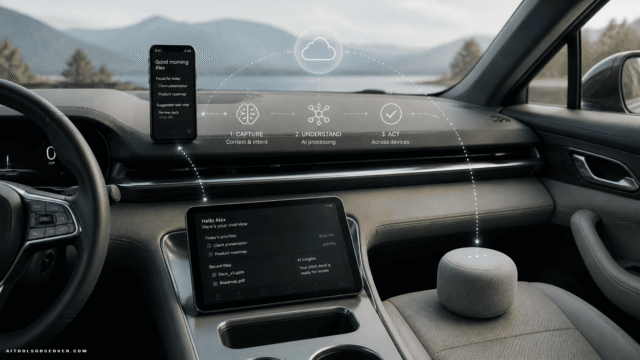
Derek Waldron, JPMorgan’s chief analytics officer, put it plainly in an exclusive interview with CNBC: “We’ve entered now the era of long-running autonomous agents.” These aren’t tools that run for two or three minutes. They run for an hour or two — managing multi-step workflows across disparate software systems without a human in the loop.
This is the shift from AI as assistant to AI as digital worker.
What Makes Long-Running Agents Actually Work

The technical leap here isn’t just raw model intelligence. Waldron pointed to a concept he calls “intellectual coherence” — the ability of an AI system to stay on task, reason through complexity, and maintain context over an extended period.
Think of it less like a smart autocomplete and more like a team manager.
“Just like how people function, team managers can parse out a problem and delegate activities, and teams can run for a lot longer to do more complex things,” Waldron said.
Three capabilities are making this possible right now:
- Code generation — agents can write and execute logic on the fly
- Browser control — agents can navigate web interfaces autonomously
- Desktop software interaction — agents can work directly inside the tools employees already use
These aren’t theoretical. Tools like Anthropic’s Claude Code have already shown what long-running agents look like in the wild. JPMorgan’s deployment signals that the technology is close to clearing the security and governance hurdles that have kept it out of regulated industries.
The Revenue Angle Nobody Is Talking About Enough
Most AI coverage in finance focuses on cost reduction. Fewer headcount. Leaner back-office operations. That framing is incomplete.
Waldron made a point worth highlighting: AI is increasingly boosting revenue-generating roles, not just cutting overhead.
Here’s the concrete example. In JPMorgan’s private banking division, AI systems now screen market activity, client positions, and research overnight. Bankers arrive with the analysis already done. The result? A 20% increase in gross sales. And Waldron believes individual bankers could eventually expand their client coverage by as much as 50%.
That’s not efficiency. That’s growth.
“For enterprises to win with AI, it’s not about cutting the maximum number of jobs,” Waldron said. “It’s all about trying to create a sustainable competitive advantage.”
This reframe matters for how companies — and the AI tools they choose — get evaluated going forward.
The Security Gap Is Closing
Long-running agents haven’t been deployed at scale inside large enterprises yet. The reason is straightforward: security and governance concerns are real, especially in regulated industries like banking.
But Waldron was direct about the timeline: “We will have those in 2026.”
And the trajectory beyond that is ambitious. He described a progression where agents remain coherent for “multiple hours, then days, then weeks.” That’s not science fiction — it’s a roadmap.
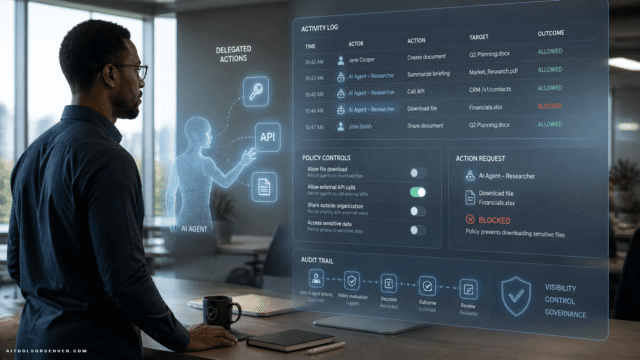
For AI tool builders and enterprise buyers, this is the window. The companies that solve agent security, auditability, and compliance integration right now will be the ones embedded in workflows when long-running deployment becomes standard.
What This Means for the AI Tools Ecosystem
JPMorgan’s shift has a direct implication that Waldron stated without softening: the moat around certain software vendors is shrinking.
The bank is now asking a harder question before buying any tool — can we build this in-house? With AI dramatically lowering the cost and complexity of custom software development, the answer is “yes” more often than it used to be.
“The moat around certain types of software companies is most certainly diminished versus where it was in the past,” Waldron said.
This creates real pressure on traditional SaaS vendors, particularly those selling workflow automation, analytics, and back-office tooling to financial services firms. If a bank with JPMorgan’s resources can replicate your core functionality with an internal AI agent, your differentiation needs to be something deeper than features.
For the broader AI tools market, this signals a bifurcation:
- Commodity tools — anything that can be replicated by a capable AI agent — face commoditization pressure
- Specialized tools — those with proprietary data, deep integrations, or domain-specific trust — hold their ground
The Workforce Question
Jamie Dimon has been transparent: some jobs will be displaced. JPMorgan is preparing to retrain and redeploy affected employees.
But Waldron’s framing adds nuance. The goal isn’t maximum displacement — it’s maximum competitive advantage. That distinction matters for how companies communicate AI strategy internally and how they structure adoption.
The banks and enterprises that treat AI as a headcount reduction exercise will likely underperform those that use it to expand what each employee can accomplish.
What to Watch Next
JPMorgan’s 2026 deployment is a leading indicator, not an outlier. Here’s what it tells us about where the broader market is heading:
Agent duration will become a key benchmark. Just as context windows became a competitive metric for LLMs, “how long can your agent run coherently?” will become a standard evaluation criterion for enterprise AI tools.
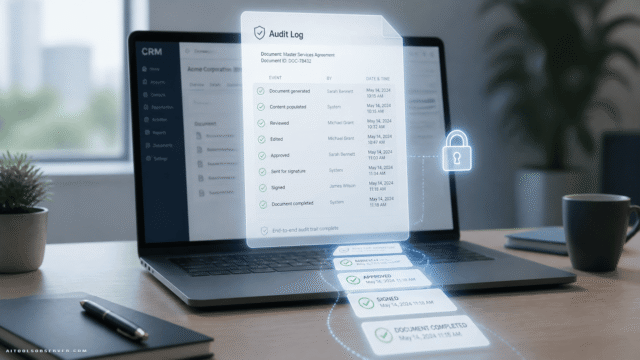
Security and governance tooling will accelerate. The gap between what agents can do technically and what enterprises will actually deploy is a governance gap. Tools that close it — audit trails, permission controls, anomaly detection for agents — are about to see serious demand.
Build vs. buy decisions are shifting. Any AI tool vendor selling into large enterprises needs to answer the question: what do we offer that a well-resourced internal team with AI can’t replicate?
The Bottom Line
JPMorgan isn’t experimenting with AI anymore. It’s deploying infrastructure.
Long-running autonomous agents represent a qualitative shift in what enterprise AI can do — from answering questions to managing workflows, from saving minutes to running for hours. The security hurdles are real but temporary. The productivity and revenue upside is already measurable.
For anyone evaluating AI tools in 2026, the question is no longer whether agents will transform enterprise workflows. It’s whether the tools you’re choosing today are built for the agent era — or the one that just ended.








Comments (0) No comments yet
Want to join this discussion? Login or Register.
No comments yet. Be the first to share your thoughts!