


The Playbook Is Borrowed, the Stakes Are New
The crypto PAC Fairshake pioneered this model. Back a bipartisan slate of candidates who are friendly to your industry, flood primaries with cash, and watch favorable legislation move faster than it otherwise would.
AI companies are running the same play, just with higher urgency. As Brad Carson of Public First Action put it, powerful AI models are generating real concern across the political spectrum — and “you can’t just release them into the wild with no government concern.” That’s a rare sentiment that apparently unites pro-Trump and anti-Trump voters alike.
Josh Vlasto of Leading the Future frames it as a timing problem: regulation needs to happen now, while the technology is still in early adoption, before the window to shape it closes.
Two PACs, One Goal, Different Maps
On the surface, Leading the Future and Public First Action look like rivals. They’ve spent against each other in the same races, including the Manhattan Democratic primary. They’ve traded jabs in interviews.
But the actual policy gap between them is narrower than the spending war suggests.
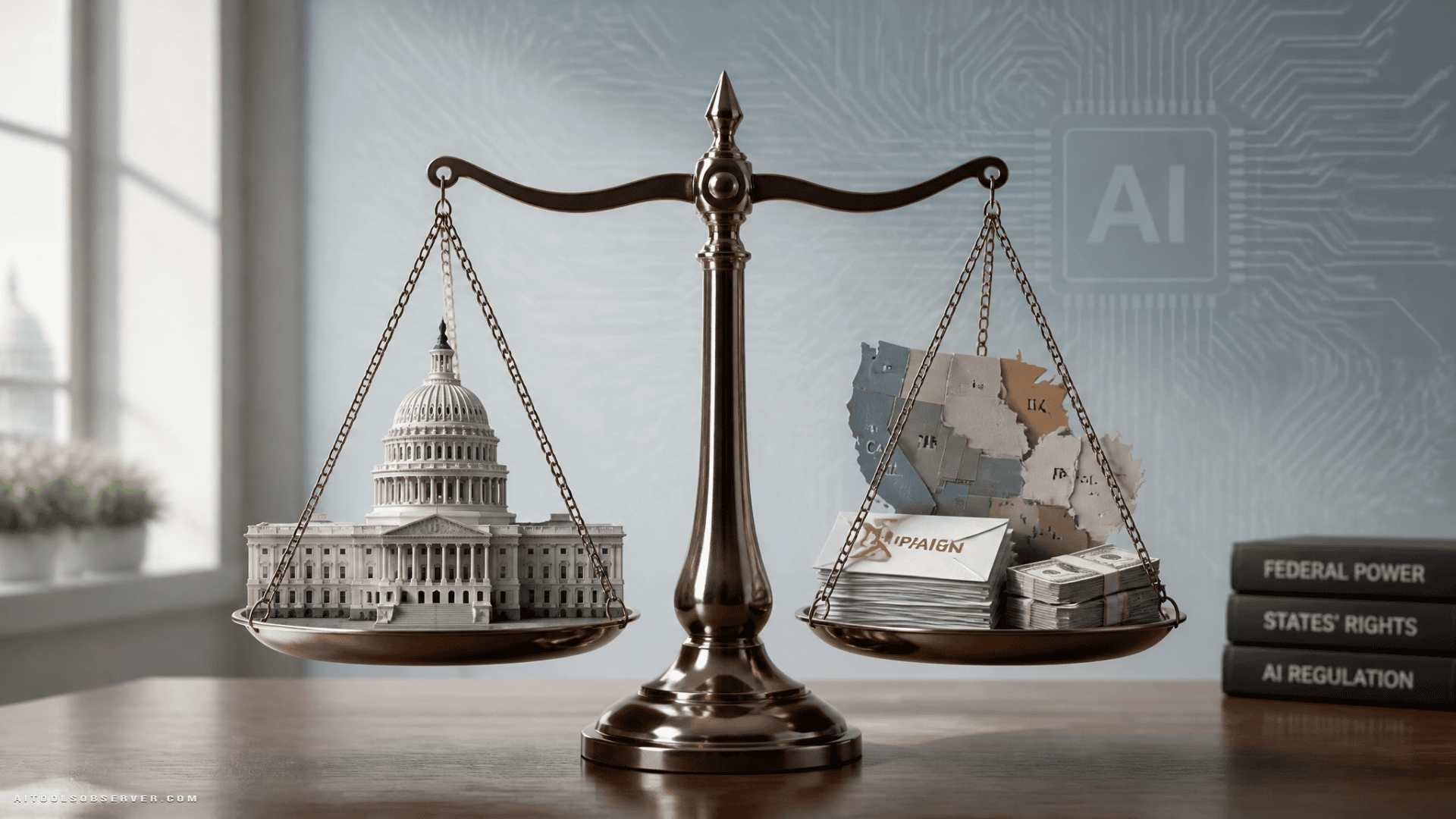
Both support some form of AI guardrails. Both agree children need online protections. The real fault line is a classic Washington tension: federal preemption vs. state authority.
- Leading the Future wants a broad national framework — one consistent standard across all 50 states. It backed New York’s RAISE Act after the bill was weakened to reduce penalties and reporting requirements for AI companies.
- Public First Action is more comfortable with states moving independently, though Carson acknowledges that a strong federal approach would make preemption constitutionally reasonable.
The nuance matters. Leading the Future spent roughly $8 million opposing Alex Bores — one of the architects of the original, stricter RAISE Act — while simultaneously supporting the final, softened version of the same law. That’s not contradiction; that’s precision lobbying. For a deeper look at how this played out in one key district, see the AI super PAC proxy war in NY-12.
Congress Is Listening, Slowly
Republicans in the House have tried multiple times to preempt state AI laws and haven’t succeeded yet. House Majority Leader Steve Scalise has called state-level AI laws an innovation drag. Rep. Ted Lieu, co-chair of the House Democrats’ AI commission, notes there’s bipartisan resistance to preempting state laws without replacing them with something meaningful.
Actual legislation crossing the finish line in 2025 looks unlikely given the limited legislative calendar. But both parties have signaled AI regulation is a priority — which means the 2026 midterms are effectively a proxy vote on what that regulation will look like.
What This Means for the AI Ecosystem
For anyone building, buying, or deploying AI tools, this spending war has direct downstream consequences.
The outcome of the federal-vs-state debate will determine whether AI companies face one compliance framework or fifty. It will shape liability rules, transparency requirements, and what “safe” AI deployment actually means legally.
Leading the Future’s donors include Andreessen Horowitz, OpenAI co-founder Greg Brockman, Palantir co-founder Joe Lonsdale, and Perplexity. Public First Action received $20 million from Anthropic (restricted to public education, not political spending), plus employee donations from OpenAI, Google, DeepMind, and X.
That’s essentially the entire frontier AI industry placing bets on who gets to write the rules.
The Useful Takeaway
Watch the preemption debate more than the dollar amounts. Whether Congress passes a federal AI standard that overrides state laws — or fails to — will define the compliance landscape for every AI product sold in the U.S. for years.
The $200 million is the headline. The fine print on federal preemption is what actually matters to anyone building or choosing AI tools right now.







Comments (0) No comments yet
Want to join this discussion? Login or Register.
No comments yet. Be the first to share your thoughts!