



The Thesis in One Sentence
JFrog wants to be the system of record for every artifact that moves through a software pipeline — and now it is extending that ambition directly into the AI coding agent layer.
The company’s new JFrog Platform plugin for Anthropic’s Claude Code is not a marketing gesture. It is a deliberate architectural move that embeds JFrog’s supply chain controls into the moment code is being generated, not merely after it lands in a repository. For enterprise buyers increasingly anxious about AI-generated code quality and provenance, that timing matters enormously.
What the Claude Code Integration Actually Does

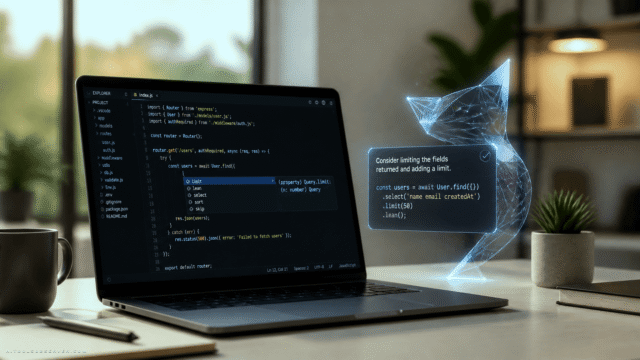
At its core, the integration connects JFrog’s artifact management and security scanning capabilities to Claude Code‘s agentic workflow. When an AI coding agent proposes a dependency, generates a package reference, or pulls a library, JFrog’s controls can intercept and validate that artifact against known vulnerability data, license policies, and organizational governance rules.
This closes a gap that has quietly worried enterprise security teams since AI coding assistants went mainstream. Developers using tools like Claude Code can generate syntactically correct, functionally plausible code that still introduces compromised or non-compliant dependencies. JFrog’s plugin inserts a governance checkpoint at the source rather than downstream in CI/CD pipelines.
The practical implication is significant. Enterprises no longer have to choose between developer velocity enabled by AI agents and the supply chain hygiene their security teams demand. JFrog is positioning itself as the bridge.
Alignment With the AI Security Catalyst
Analyst upgrades and JFrog’s recent index inclusion have already reflected optimism around the company’s AI supply chain positioning. The Claude Code integration is the clearest product-level evidence yet that this positioning has operational substance behind it.
JFrog’s narrative projects $909.4 million in revenue and $109.5 million in earnings by 2029. Reaching those numbers requires the AI supply chain and security segments to become genuine growth engines, not peripheral features. A plugin that makes JFrog indispensable to enterprise AI coding workflows is exactly the kind of sticky, high-value touchpoint that supports that trajectory.
The Competitive Pressure This Creates
The integration also raises the competitive stakes. Larger cloud vendors and established cybersecurity platforms are not standing still on AI governance tooling. If Microsoft, Google, or a major security vendor ships a comparable artifact governance layer natively within their own AI coding ecosystems, JFrog’s differentiation narrows quickly.
The question for investors is not whether JFrog’s move is smart — it clearly is — but whether the company can execute fast enough and deeply enough to build switching costs before better-resourced competitors replicate the capability. That execution risk is real and should not be discounted simply because the strategic direction is sound.
Valuation: Where Optimism Becomes Fragile

JFrog’s current price sits close to the analyst-derived fair value of approximately $80.75, which itself is built on forecasts that assume sustained large enterprise deal momentum and successful AI product adoption. That alignment between price and fair value is not reassuring — it means the market has already priced in a considerable portion of the upside.
A premium valuation in a growth software company functions as a magnifier in both directions. Strong execution on AI supply chain deals could justify further multiple expansion. A single quarter of large enterprise deal slippage, or a security product that fails to gain traction at scale, could compress the multiple sharply.
The Claude Code integration is a positive signal, but it does not eliminate this asymmetry. It shifts the probability distribution slightly in JFrog’s favor without removing the tail risk that comes with any richly valued software name dependent on large, lumpy enterprise contracts.
What Enterprise AI Adopters Should Watch
For practitioners evaluating AI tooling rather than the stock, the JFrog-Claude Code integration points to a broader pattern worth tracking. The next competitive frontier in enterprise AI adoption is not which coding assistant generates the best code — it is which governance layer earns the trust of security and compliance teams at scale.
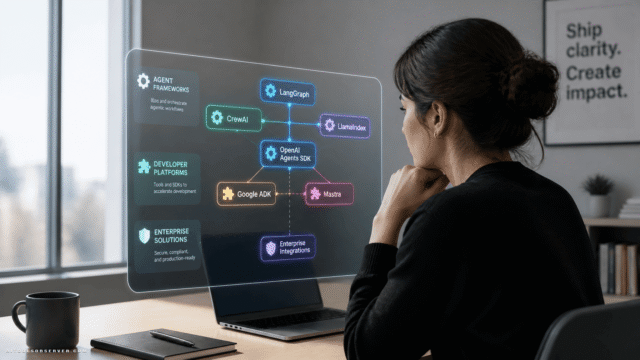
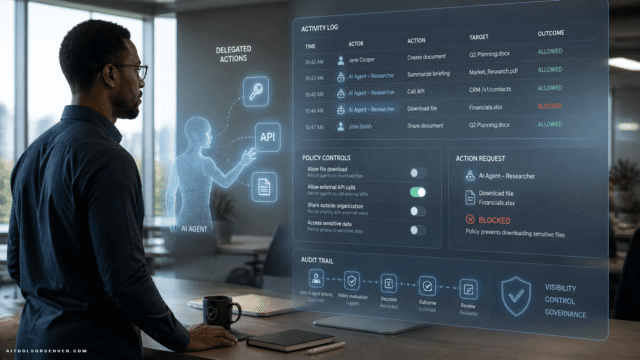
Artifact management, dependency validation, and agent governance are becoming first-class concerns in enterprise AI stacks. Tools that solve these problems at the workflow level, rather than as afterthought audit layers, will accumulate significant organizational inertia.
JFrog is making a credible early claim on that territory. Whether it holds that claim depends on execution speed, partnership depth with AI platform providers, and the ability to convert integration visibility into measurable security outcomes that enterprise buyers can quantify.
The Takeaway
JFrog’s Claude Code plugin is more than a product announcement — it is a signal about where enterprise AI governance is heading and who intends to own it. The integration strengthens the bull case by demonstrating that JFrog’s supply chain controls can operate natively inside AI agent workflows, not just around them.
The investment thesis, however, remains a high-conviction, high-risk proposition. The fair value estimate leaves little margin for execution stumbles, and the competitive window for establishing durable differentiation in AI governance tooling will not stay open indefinitely.
Observe the product roadmap closely. The next twelve months of enterprise deal flow and security product adoption will determine whether JFrog’s AI supply chain bet pays out — or whether the premium valuation becomes the story.











Comments (0) No comments yet
Want to join this discussion? Login or Register.
No comments yet. Be the first to share your thoughts!