


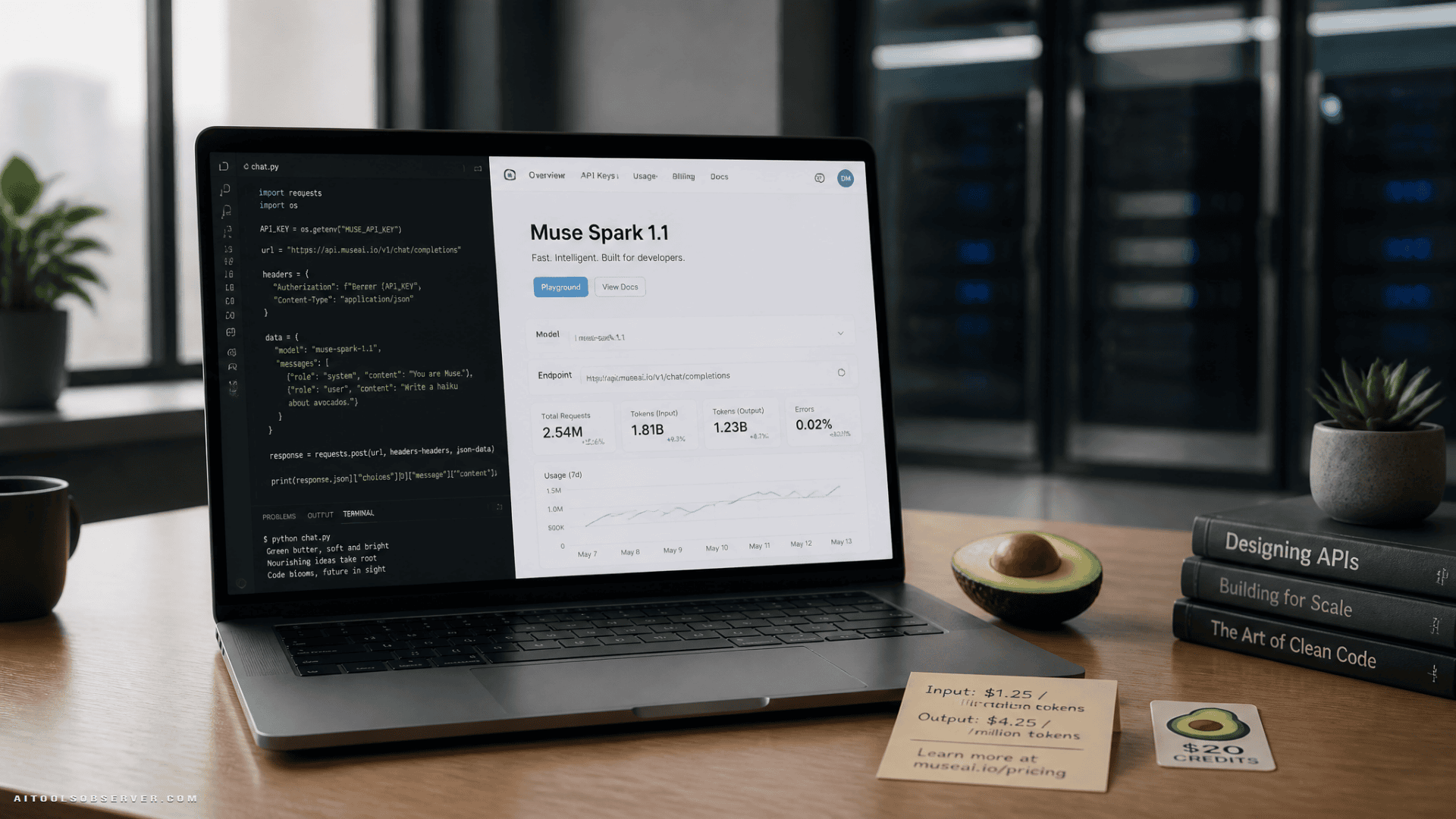
The Pricing Play
Alexandr Wang, Meta’s chief AI officer, described the model’s pricing as “very aggressive and attractive.” The numbers: $1.25 per million input tokens, $4.25 per million output tokens, with $20 in free credits for every new API account.
That’s a deliberate signal. Meta isn’t just releasing a model — it’s trying to make switching costs low enough that developers will at least run a test.
Whether the performance justifies the switch is a separate question. Wang said Muse Spark 1.1 outperformed rivals on tasks involving third-party coding tools and services, though independent benchmarks will matter more than internal claims.
Why Coding, Why Now
The logic behind focusing on coding is straightforward: coding capability is the foundation of agentic AI. If a model can reliably write, debug, and interact with external tools, it can power the kind of autonomous, multi-step agents that the industry has been excited about since early 2026.
Wang put it plainly — you have to build coding capabilities in service of broader agentic capabilities. Muse Spark 1.1 was trained specifically to work well with the popular developer harnesses and frameworks already in use, which is a practical choice if the goal is adoption over novelty.
Access: Controlled, Not Open
The API is live via a developer portal in public preview, but access isn’t instant. New users join a waitlist. Early partners already have access. And for now, Meta is keeping the model on its own infrastructure — not available on third-party platforms like OpenRouter.
That’s a notable constraint. OpenRouter became popular precisely because developers want flexibility in how they route and manage models. Keeping Muse Spark 1.1 off those platforms limits reach, at least initially.
The Open Source Question
Meta built its AI reputation on Llama and open-source releases. Muse Spark is proprietary — a meaningful strategic shift.
Wang says Meta remains “committed to open source” and that an open-source variant of Muse Spark is in development. No timeline was given. For now, the commercial model comes first.
This tension — open-source credibility versus the need to monetize — is one Meta will have to manage carefully. Developers who chose Meta’s ecosystem because of Llama may not automatically follow it into a paid, closed model.
What’s Next
Wang confirmed Meta is training a more powerful model internally code-named Watermelon. Muse Spark 1.1’s code name was Avocado. The fruit-based naming convention is, apparently, a theme.
Meta also released Muse Image this week — a model for image generation aimed at creators and advertisers — suggesting the company is building out a broader model portfolio, not just chasing one use case.
The Practical Takeaway
If you’re a developer currently paying OpenAI or Anthropic rates for coding or agentic workflows, Muse Spark 1.1 is worth evaluating — especially with $20 in free credits to start. The pricing is competitive on paper, the agentic focus is real, and Meta has the infrastructure to back it.
The catch: waitlisted access, no third-party platform support yet, and benchmarks that are still largely self-reported. Watch for independent evaluations before committing a production workflow. But as a second option to test in parallel? The cost of trying is low.








Comments (0) No comments yet
Want to join this discussion? Login or Register.
No comments yet. Be the first to share your thoughts!