


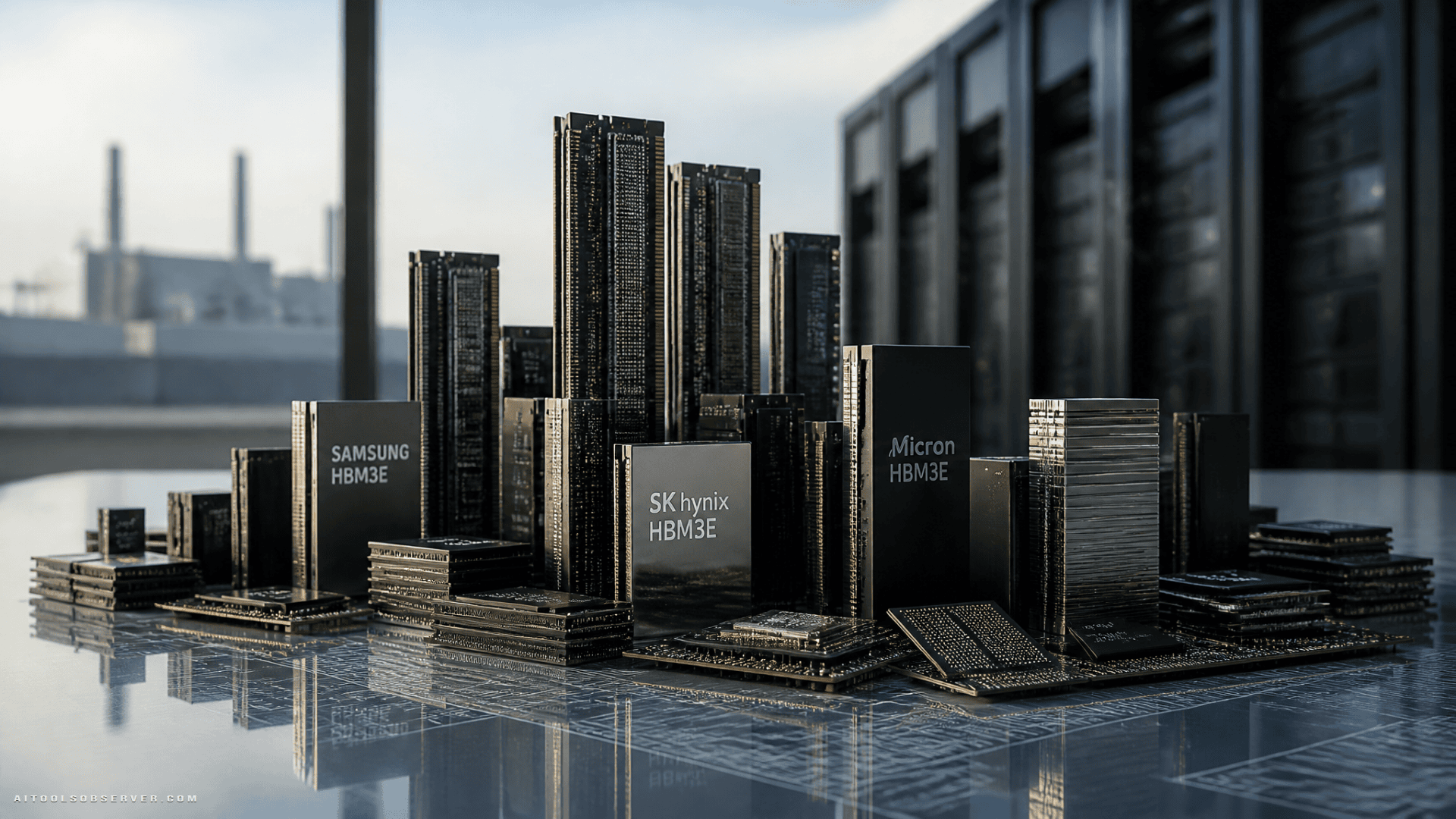
Memory Moved Up the Value Chain
For decades, memory was a spec on a purchase order. Buyers shopped on price. Suppliers competed on cost. Margins were thin, timing was everything, and the industry lurched between feast and famine.
AI changed the procurement logic. Training large models and running inference at scale requires memory that’s fast, dense, and power-efficient — and it needs to be designed with the processor, not bolted on afterward. That shifts memory from a commodity input to a co-engineered component.
Mehrotra put it plainly: Micron is now working with customers “earlier and earlier in their development cycle.” That’s a different relationship than winning a bid on price.
The Demand Signal Is Unusually Clear
One of the more striking details from Mehrotra’s comments: data-center customers currently want roughly 50% more supply than Micron can commit to delivering.
That’s not a soft demand signal. That’s a hard constraint on AI infrastructure buildout.
To lock in visibility on that demand, Micron has been signing long-term supply agreements — 16 five-year deals announced during its most recent earnings call, with more signed since. In a business historically exposed to spot-market volatility, multi-year commitments are a meaningful structural shift.
The Infrastructure Bet Is Enormous
The scale of Micron’s manufacturing investment reflects how seriously the company is taking this moment. A massive fabrication site is under construction near Micron’s Boise, Idaho headquarters — part of a planned $250 billion commitment to U.S. manufacturing and research.
The Boise site alone will eventually house two fabs, each roughly the size of ten football fields. The first is expected to begin producing wafers in mid-2027.
That’s a long-horizon bet, not a reaction to a single product cycle.
Beyond Data Centers
Mehrotra’s demand thesis doesn’t stop at hyperscalers. He sees autonomous vehicles, robotics, and AI-enabled consumer devices as the next wave of memory-intensive applications — each requiring more capacity, higher performance, and tighter integration than their predecessors.
“Memory today is essential,” he said. “That’s why I call it the strategic infrastructure of the AI era.”
What This Means for the AI Tools Ecosystem
For anyone building on or evaluating AI infrastructure, the memory constraint is worth tracking. If Micron can’t meet current demand, that has downstream effects on GPU availability, data center capacity, and ultimately the cost and accessibility of AI compute.
The tools you use to run inference, fine-tune models, or deploy agents all sit on top of this hardware layer. When that layer is constrained, everything above it feels it eventually.
The boom-and-bust memory cycle may not be dead — but it’s clearly operating under new rules. And for now, the bust part looks a long way off.
















Comments (0) No comments yet
Want to join this discussion? Login or Register.
No comments yet. Be the first to share your thoughts!