



Why HBM Supply Matters Right Now
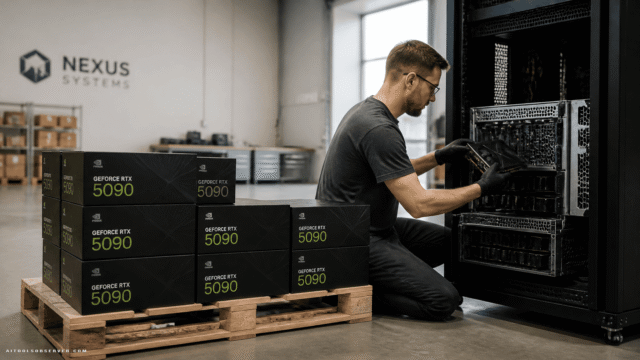
HBM is not a commodity component. It is a technically demanding, capacity-constrained product, and SK Hynix is widely regarded as the leading producer. As AI model training and inference workloads have scaled, demand for HBM has outpaced supply—creating a bottleneck that limits how quickly GPU systems can be manufactured and deployed.
Nvidia’s move to lock in supply directly addresses that risk. As Raj Mirpuri, Nvidia’s enterprise vice president, stated on a call with reporters: the agreement includes a co-development opportunity on next-generation SK Hynix AI memory, which Nvidia expects will help stabilize its HBM supply chain going forward.
What the Deal Actually Includes
The agreement is broader than a standard supply contract. Key components include:
- HBM supply commitment from SK Hynix to Nvidia, with co-development of next-generation memory
- Cloud infrastructure buildout by SK Telecom, an SK Hynix affiliate, using Nvidia’s Vera Rubin GPU systems
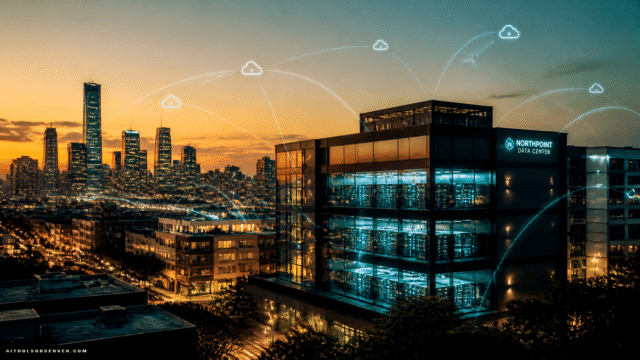
- 2 gigawatts of data center capacity targeted, implying hundreds of thousands of GPUs coming online
- Large-scale data centers expected to be operational in 2027
- $1 billion Nvidia investment into Naver, a Korean cloud company building data centers around Nvidia GPUs, with 200 megawatts of capacity planned
The Naver investment is notable: it signals that Nvidia is not simply selling hardware but actively financing the infrastructure ecosystem around its products.
Beyond the Hyperscalers
One of the more significant signals in this deal is who is involved. This is not a Google, Microsoft, or Amazon announcement. It involves a national government, a major telecom operator, and a cloud company operating at regional scale.
South Korean President Lee Jae Myung attended the San Francisco summit where the deal was announced. That level of government involvement reflects a broader pattern: AI infrastructure investment is becoming a matter of national industrial policy, not just corporate strategy.
SK Hynix itself listed on the Nasdaq earlier this month, in part to finance infrastructure developments of this scale. The company is South Korea’s second most valuable, and its deepening alignment with Nvidia positions it as a critical node in the global AI supply chain.
What This Means for the AI Tools Ecosystem
For teams and organizations evaluating AI infrastructure decisions, this deal has a few practical implications worth tracking.
Supply chain stability may improve—gradually. If Nvidia successfully secures HBM supply at this scale, it reduces the risk of GPU shortages cascading into cloud capacity constraints. That matters for anyone dependent on GPU-backed cloud services for inference or fine-tuning workloads.
Vera Rubin is becoming a real deployment target. The SK Telecom cloud buildout is specifically built around Nvidia’s Vera Rubin architecture. Organizations planning infrastructure decisions in 2026–2027 should factor Vera Rubin availability into their roadmaps.
Regional AI compute capacity is expanding. The Naver data center investment suggests that AI compute access is becoming less concentrated in a handful of US-based hyperscaler regions. For teams in Asia-Pacific markets, this could translate into lower-latency, more accessible GPU capacity within the next 18–24 months.
The deal does not resolve every constraint in the AI hardware supply chain. But it is a concrete, large-scale step toward reducing one of the most persistent bottlenecks in the current AI infrastructure cycle.










Comments (0) No comments yet
Want to join this discussion? Login or Register.
No comments yet. Be the first to share your thoughts!