


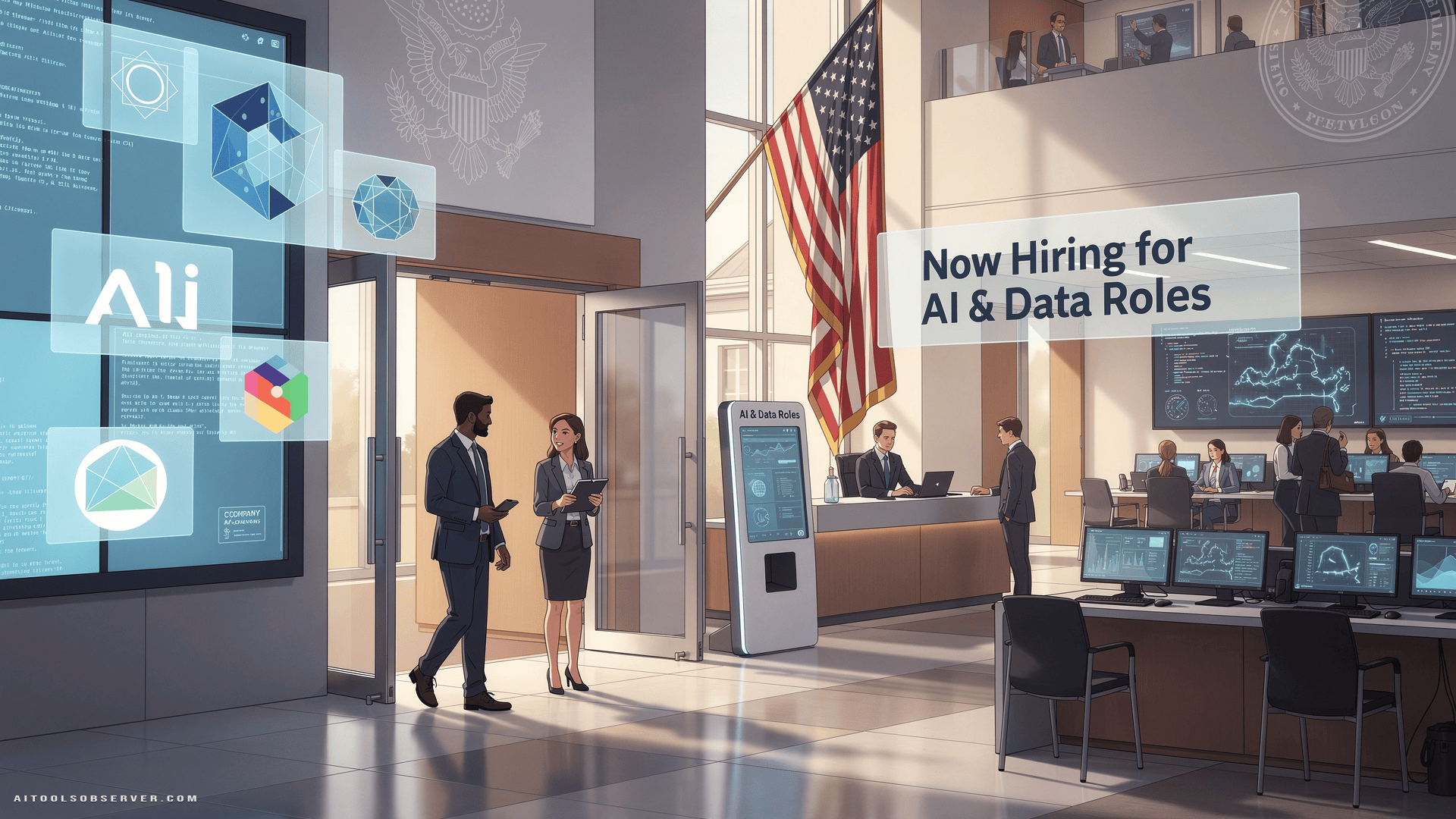
What Tech Force Actually Does

Tech Force isn’t a typical government contractor arrangement. The program is designed to move talent — not just money — between the private sector and federal agencies.
Partner companies contribute in three ways: training resources, programming, and actual employees nominated for temporary federal service. Eventually, those same companies are expected to create re-entry paths for Tech Force alumni returning to the private sector. It’s a two-way pipeline, not a one-time donation.
The program targets roughly 1,000 early-career hires serving two-year terms. As of last month, it had made around 200 hires and onboarded approximately 10. Progress is real, if not exactly blazing.
Scale AI and the National Security Angle

Scale AI’s spokesperson framed the partnership plainly: as AI becomes more central to national security and critical public infrastructure, the government needs people who actually understand it. That’s not spin — it’s a structural argument for why this program exists at all.
Moveworks Brings the Agentic AI Case
Bhavin Shah, founder of Moveworks (now part of ServiceNow), made the most concrete pitch of the bunch. His company’s agentic AI has resolved the vast majority of IT support requests autonomously inside large enterprises and cut resolution times nearly sevenfold. His point: that capability belongs inside government too.
It’s a compelling data point — and a preview of what federal agencies could look like if this talent pipeline actually delivers.
Cisco Keeps It Simple
Cisco pointed to an X post celebrating the partnership as a way to
help build the U.S. government’s talent pipeline and power innovation in the AI era.
Concise. On-brand. Not exactly illuminating — but the presence matters more than the quote.
The Irony in the Room
Here’s the context that makes this story more complicated than a straightforward win.
Since President Trump took office, the federal government has lost more than 16,500 people in IT roles alone. The administration eliminated 18F, reshaped the U.S. Digital Service into the U.S. DOGE Service, and ran incentivized departure programs that hollowed out technical teams across agencies. Former federal technologists have noted the irony of now scrambling to rebuild what was deliberately dismantled.
Tech Force is, in part, filling a hole that policy created.
The White House Is Now Watching the Clock
Two recent directives have put formal pressure on the program to move faster.
An executive order focused on AI security tasked Tech Force with expanding hiring and placement pathways for cybersecurity specialists within 60 days. A National Security Presidential Memorandum published the same week directed OPM to accelerate AI talent hiring using special hiring and pay authorities, as well as novel talent programs.
The program went from a nice-to-have to a White House mandate in the span of a week.
What to Watch Next
The first management-level private-sector worker — taking an unpaid leave of absence to join OPM — was expected to start last week. The agency hasn’t disclosed which company they’re coming from. That detail, when it surfaces, will signal a lot about which partners are actually serious.
For now, the program is gaining structural weight: more partners, more policy backing, and a clearer mandate. Whether it can convert that momentum into 1,000 placed technologists is the only question that ultimately matters.
The federal government’s AI talent gap is real, well-documented, and now officially a national security concern. Tech Force is the current answer — imperfect, still early, but increasingly hard to ignore. The private sector just showed up in force. The next move belongs to the agencies.
















Comments (0) No comments yet
Want to join this discussion? Login or Register.
No comments yet. Be the first to share your thoughts!