


The Memory Boom Was Always Borrowed Time
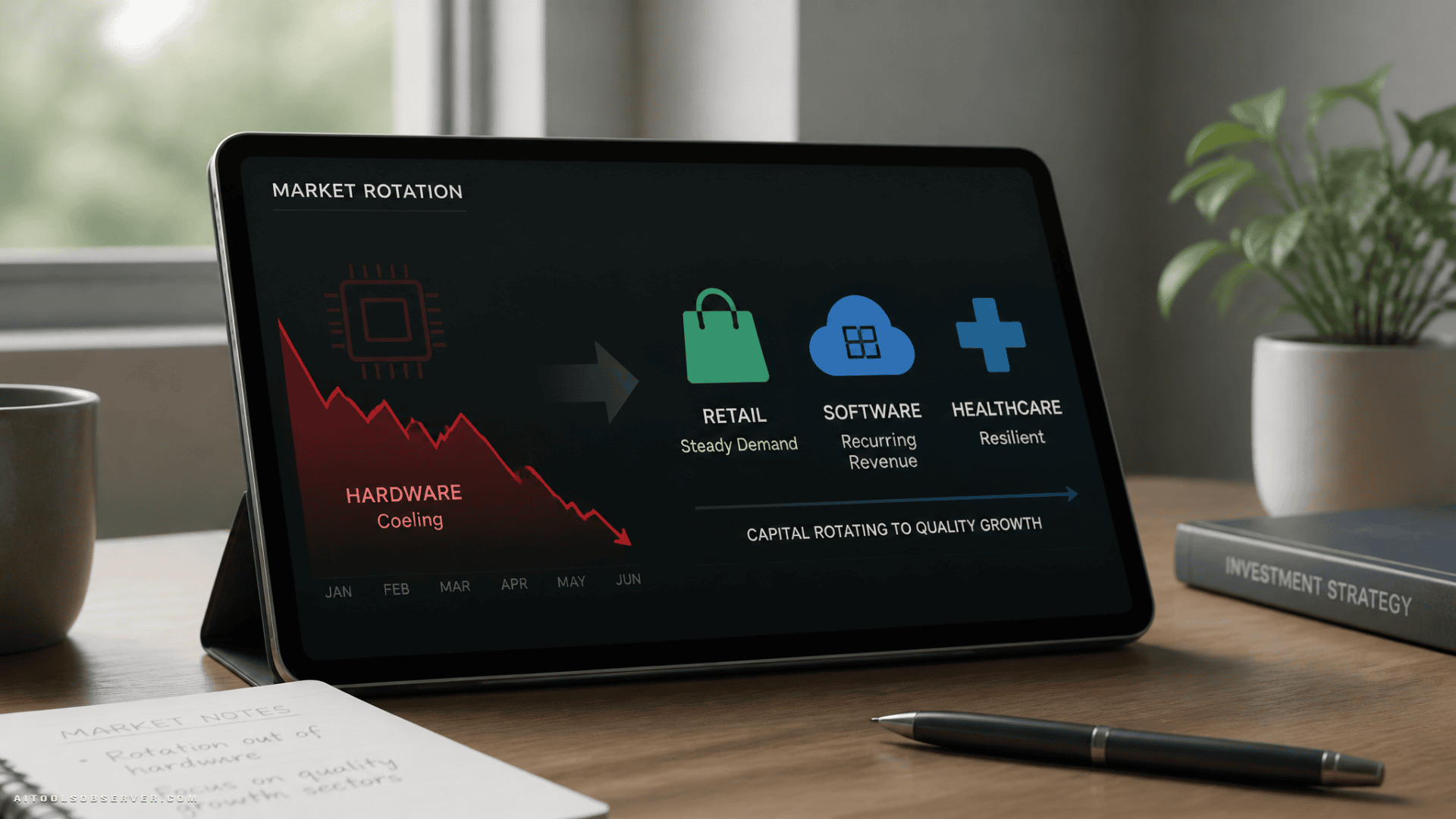
Stocks like Micron, Western Digital, Seagate, and Sandisk surged on a specific thesis: AI server buildouts created acute shortages of high-bandwidth memory, and those shortages handed manufacturers extraordinary pricing power. Investors priced in that windfall continuing indefinitely.
It did not. Western Digital, for example, reached an all-time closing high in mid-June — up over 330% for the year at that point — and then shed nearly 40% of its value in under six weeks. The pattern is consistent with previous semiconductor boom-bust cycles, where stock prices anticipate the end of a shortage well before the shortage actually resolves.
The underlying dynamic is straightforward: temporary supply constraints produce parabolic price moves, and parabolic price moves tend to correct once the market prices in normalization.
Where the Capital Is Going
The rotation is not a flight from equities. It is a repricing of which growth stories are durable versus which were contingent on a specific infrastructure buildout moment.
Three sectors are absorbing the redeployed capital:
- Retail — Costco and Walmart have been gaining ground, supported by consumer resilience and operational efficiency narratives that have nothing to do with GPU shipments.
- Enterprise software — ServiceNow and Salesforce are up roughly 11% and 16% month-to-date respectively. These are companies that were previously overlooked as infrastructure names captured attention, and they are now catching a bid as investors look for AI-adjacent growth with more predictable revenue profiles.
- Healthcare — Johnson & Johnson hit an intraday all-time high, partly driven by a favorable litigation settlement that removed a significant overhang. The move signals that investors are willing to reward clarity and resolved risk, not just AI exposure.
What This Means for the AI Tools Ecosystem
The rotation tells a specific story about where the market believes durable AI value is being created.
Infrastructure spending — data centers, memory, chips — was the first wave. That wave is not disappearing, but the easy repricing of those assets appears largely complete. The market is now asking a harder question: which companies are actually converting AI infrastructure into recurring, defensible business value?
Enterprise software companies like Salesforce and ServiceNow sit directly in that answer. They are building AI capabilities on top of existing customer relationships and workflow integrations. Their growth does not depend on the next data center contract; it depends on whether AI features drive retention and expansion within their installed base.
This is precisely the category of tool that AiToolsObserver tracks closely — software that embeds AI into real workflows rather than selling the infrastructure beneath them.
Nvidia and Intel as Exceptions
Not all infrastructure names are being abandoned. Nvidia and Intel are holding relatively better, and the distinction matters.
The argument for both rests on demand durability rather than shortage-driven pricing power. Nvidia’s position in AI training and inference is structural, not cyclical in the same way memory is. Intel’s recovery thesis is longer-dated and more complex, but it is similarly not dependent on a temporary supply imbalance resolving in its favor.
The market appears to be drawing a line between companies that benefited from a specific, time-limited constraint and companies whose competitive position is tied to ongoing AI adoption at the application layer.
The Practical Takeaway
If you are evaluating AI tools or tracking which software categories are gaining momentum, the rotation is a useful signal. Capital moving into enterprise software suggests that investors — who are, at minimum, informed about near-term business fundamentals — believe AI value creation is shifting from infrastructure to application.
That means tools that help businesses automate workflows, improve decision-making, or reduce operational costs are entering a period where they will face more scrutiny and more investment simultaneously. The ones with clear, measurable ROI will attract both enterprise buyers and market attention.
The infrastructure trade was about building the rails. The next trade appears to be about who is actually running trains on them.











Comments (0) No comments yet
Want to join this discussion? Login or Register.
No comments yet. Be the first to share your thoughts!