


The Core Problem Pega Is Solving
Most enterprise AI deployments are stuck in pilot purgatory. Organizations spin up AI agents, burn through tokens, and struggle to show meaningful ROI. Pega’s CTO Don Schuerman put it bluntly:
People are realizing that if you’re not careful, you can send agents off to burn a lot of tokens without them making a meaningful difference in the efficiency of your business.
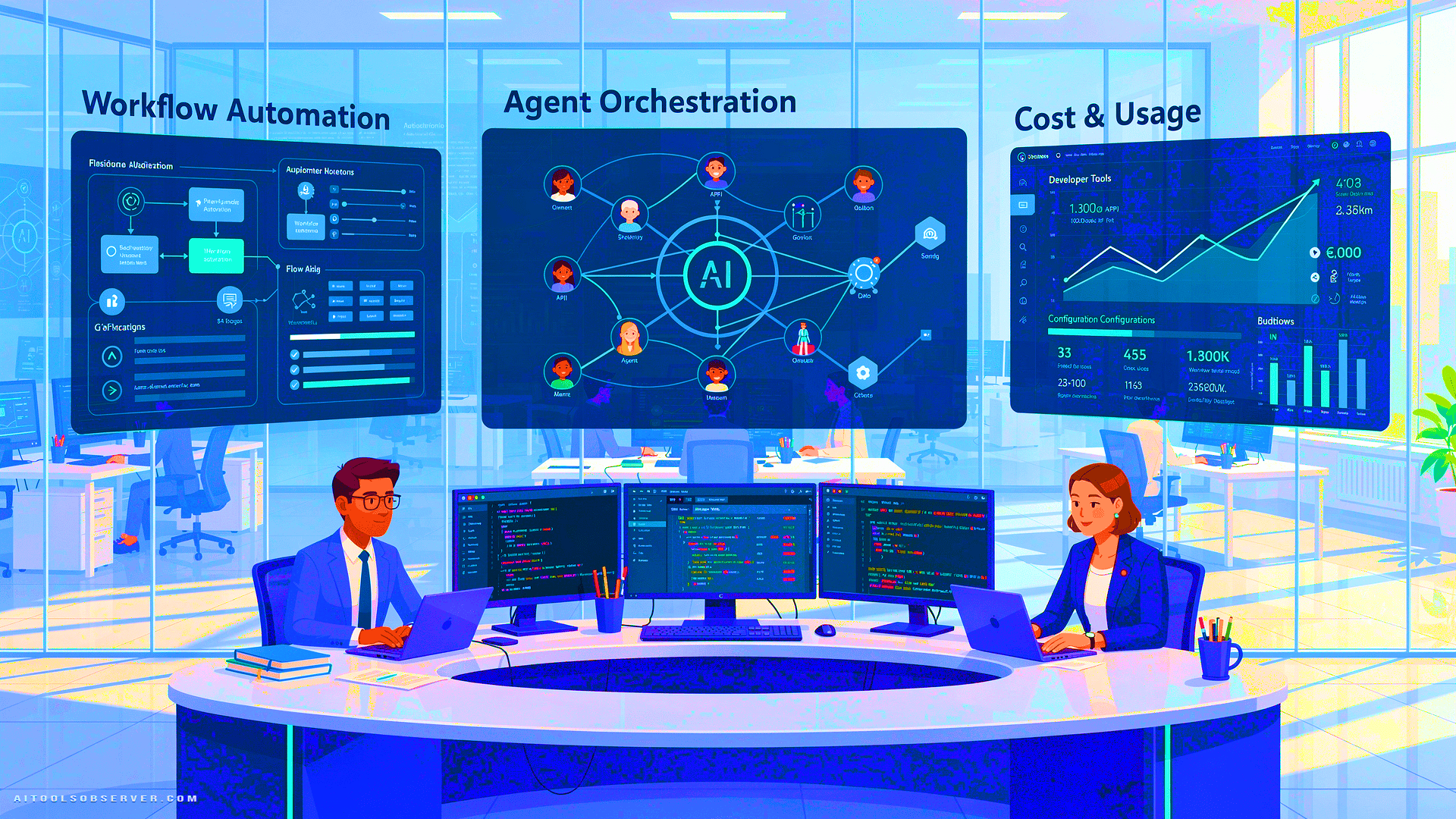
That’s the exact pain point Infinity ’26 is designed to address. Instead of leaning harder into prompt-driven, LLM-heavy architectures, Pega is doubling down on what it calls predictable AI — shifting reasoning to design time rather than runtime.
The logic is straightforward. Less runtime reasoning means fewer tokens consumed, more consistent outcomes, and lower operational risk.
Agent Orchestration Gets a Serious Upgrade

MCP Support Opens the Door to Cross-Platform Agents
The headline technical move is expanded support for the open Model Context Protocol (MCP). This allows third-party AI agents — built on Anthropic’s Claude, Google’s Gemini, OpenAI’s LLMs, or AWS AgentCore — to discover and execute Pega-managed workflows directly.
That’s a significant interoperability play. Enterprises running multi-vendor AI stacks can now route agents through Pega’s governance layer without rebuilding their entire architecture.
Chief Product Officer Kerim Akgonul framed it clearly:
The new MCP capabilities give organizations an easy way to connect their AI agents to their mission-critical processes to orchestrate predictable outcomes with predictable cost.
New Agent Services Built for Real Work
Pega also introduced two new agent services worth noting. The first is an agentic assignment agent that automatically contacts employees or customers when approvals or additional information are needed — removing a common bottleneck in approval-heavy workflows.
The second is a document-processing agent that can analyze, categorize, and extract information from documents, images, and PDFs. For industries like insurance, financial services, and healthcare, that’s not a nice-to-have — it’s table stakes.
Infinity Studio: A Redesigned Development Environment

Pega launched Infinity Studio, a rebuilt AI-powered development environment that merges capabilities from its Blueprint AI workflow design platform into a single workspace.
The platform integrates with GitHub Copilot, Claude Code, and OpenAI Codex, letting developers configure integrations, design workflows, and modify interfaces using natural-language instructions. It automatically generates implementation plans from Blueprint designs and exposes workflows via MCP interfaces.
This matters because the gap between business requirements and technical delivery is one of the most expensive problems in enterprise software. Infinity Studio is Pega’s answer to closing that gap faster, with less back-and-forth.
Building AI Skills Across the Organization
Pega isn’t just shipping tools — it’s also addressing the talent side of the equation. The company announced the Solution Designer Initiative, a training and credentialing program available through Pega Academy at no cost.
Early results from its Blueprint Delivered methodology are compelling: 50% faster discovery, 80% of projects going live within 90 days, and 30% less rework after initial design. Those numbers suggest the methodology has real traction, not just marketing polish.
The Tokenless Pricing Model: A Direct Challenge to the Status Quo
This is the move that will generate the most conversation.
Pega is abandoning token-based AI pricing entirely. Instead of charging per token consumed, customers will pay a flat fee per completed business case. The company estimates some customers could reduce AI costs by more than 20 times, depending on workflow complexity and scale.
CEO Alan Trefler didn’t mince words:
Enterprises are quickly waking up to the fact that tokenmaxxing is ridiculous: it can only lead to unsustainable costs and unpredictable results.
Tokenmaxxing — measuring productivity by tokens consumed rather than outcomes delivered — has become a real problem as AI adoption scales. Pega’s per-outcome pricing model is a direct structural response to that dynamic.
For enterprise buyers who’ve watched AI infrastructure costs balloon without proportional business value, this pricing shift is worth a serious look.
What This Means for Enterprise AI Buyers
Pega is making a coherent, differentiated bet. While competitors race to add more autonomous agents and more LLM integrations, Pega is arguing that deterministic workflows, governance controls, and outcome-based pricing are what actually move the needle at enterprise scale.
That’s not a flashy position. But it’s a practical one — and it maps directly to what procurement teams, compliance officers, and CFOs are asking for right now.
If you’re evaluating workflow automation or agentic AI platforms, Infinity ’26 raises the bar on what enterprise-ready should look like. The combination of MCP interoperability, a redesigned dev environment, and tokenless pricing gives Pega a genuinely distinct value proposition heading into the second half of 2026.
The real test will come when the Q3 release lands and customers start measuring those 20x cost reduction claims against their actual workloads. Watch that space closely.










Comments (0) No comments yet
Want to join this discussion? Login or Register.
No comments yet. Be the first to share your thoughts!