



The Numbers That Matter
Samsung’s Q2 operating profit came in at 89.5 trillion won — slightly ahead of analyst estimates — while revenue hit 171.5 trillion won, just a hair below expectations. Profit surged over 56% from the previous quarter alone.
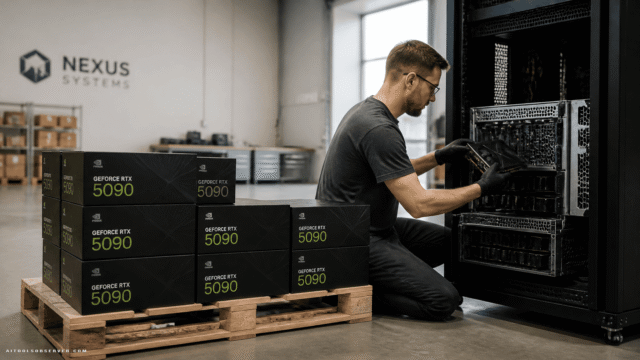
The driver is no mystery: AI server demand pushed DRAM and NAND to all-time high sales, and Samsung scaled up shipments of HBM4, its sixth-generation high-bandwidth memory built for advanced AI processors including Nvidia’s Vera Rubin platform. It also shipped the industry’s first HBM4E samples to major customers.
What’s Fueling the Demand
Samsung points to a few converging forces:
- AI infrastructure buildout continues at pace, with hyperscalers and data center operators spending heavily on memory-intensive workloads
- Agentic AI is adding a new layer of demand — autonomous AI systems require more persistent memory and faster data access than earlier inference workloads
- Enterprise SSDs are accelerating alongside server DRAM as AI pipelines need fast, reliable storage at every layer
The company also noted it has finalized supply agreements with five of the world’s top data center customers, with five more in late-stage talks. Multi-year agreements are becoming the norm as customers try to lock in capacity ahead of projected supply tightening in 2027.
The Tension Underneath the Record
Not everything is running hot. Samsung’s mobile and networks segment swung to a 700 billion won operating loss — squeezed by the same elevated component costs that are making the semiconductor side so profitable. The Galaxy S26 and A series drove solid revenue, but margins took a hit.
It’s a useful reminder that being a vertically integrated giant cuts both ways. The memory boom is real; the internal cost pressure is equally real.
What to Watch in H2
Samsung expects supply constraints to persist and tighten further into 2027. The company is expanding its Pyeongtaek fab and increasing memory capex to keep pace. It’s also standing up a dedicated robotics division under direct CEO oversight, signaling where it sees the next wave of AI-adjacent hardware demand.
For anyone tracking the AI tools and infrastructure stack, the practical takeaway is straightforward: the hardware layer underpinning AI services — the memory, the storage, the server infrastructure — is in a sustained demand cycle, not a spike. That has downstream implications for AI service pricing, availability, and the pace at which new model capabilities can be deployed at scale.
The picks-and-shovels trade is still very much open for business.











Comments (0) No comments yet
Want to join this discussion? Login or Register.
No comments yet. Be the first to share your thoughts!