



The Study: 4 Million Applications, One Uncomfortable Truth

Stanford’s research wasn’t a small sample or a thought experiment. Researchers tracked 3.4 million people submitting 4 million job applications across 1,700 job postings, 150 employers, and 11 industry sectors — all screened by a single third-party AI hiring vendor.
What they found should be required reading for every HR department in America.
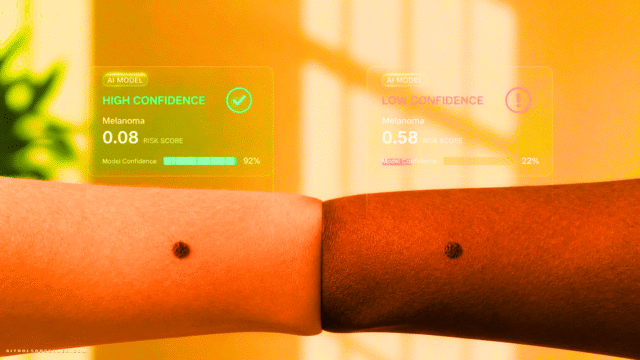
Using the Equal Employment Opportunity Commission’s own bias formula as the measuring stick, Stanford found that 26% of Black applicants and 15% of Asian applicants applied to positions where the AI system actively discriminated against their racial group.
The math behind that is staggering. If the AI had recommended Black and Asian candidates at the same rate as the most-favored group — typically white applicants — 40,000 more applications would have advanced to the next hiring stage.
How the Algorithm Hides What It’s Doing
Here’s where it gets clever — and not in a good way.
The bias doesn’t show up cleanly in aggregate data. The algorithm might recommend Black applicants frequently for warehouse roles while quietly filtering them out of finance positions. Average those two patterns together and the discrimination statistically disappears. Clean numbers, dirty reality.
Stanford’s researchers flag this directly: the big-picture average is a smokescreen. The real discrimination happens job by job, buried inside a system that most companies never audit and most applicants never see.
The 330-Day Black Hole

The racial bias finding is damning enough. But Stanford uncovered a second structural flaw that compounds the damage.
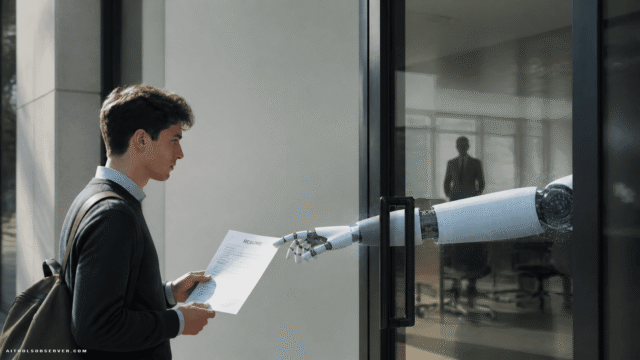
When multiple companies share the same AI hiring vendor, rejections don’t stay isolated. If one employer’s tool scores you poorly, that score follows you — recycled across every company using the same platform — for up to 330 days.
Apply to ten companies. Get auto-rejected by one. The algorithm quietly poisons the well at the other nine.
One job seeker described this firsthand in a comment thread: despite having a personal connection at a major medical device manufacturer, their application was blocked by the same ATS that had rejected them eight months earlier — same job ID, same rejection score, still active. A perfectly qualified candidate, invisible to a human recruiter, locked out by a number they never knew existed.
This isn’t a bug. It’s a feature nobody consented to.
Going Around the Front Door
So what do you actually do about it?
The short answer: stop using the front door.
The people landing interviews right now aren’t submitting cold applications into the void. They’re finding hiring managers before they submit anything. They’re asking former colleagues for internal referrals — because referrals route around AI screening entirely. They’re moving fast, reaching out the moment a job posts, and getting to a human first.
The algorithm cannot filter you out of a conversation you’re already in.
Tactical Moves Worth Trying
Keywords from the job posting — mirror the language directly in your resume. The ATS is scanning for exact matches. Give it what it wants.
Invisible text trick — some applicants have pasted the full job description into their resume in white text, making it invisible to readers but scannable by bots. Results are mixed, but it’s a known workaround.
Internal referrals — the single most reliable bypass. One warm introduction from inside the company can route your application directly to a recruiter’s inbox, skipping the AI layer entirely.
Platforms Built for Human Contact
If you want to sidestep algorithmic gatekeeping altogether, a few platforms are worth knowing.
Job Fair X hosts over 2,000 virtual hiring events annually across the US and Canada. You build a profile, get matched with hiring companies, and request interviews yourself. On event day, you’re face-to-face — usually via video — with someone who actually makes decisions.
DiversityX runs job fairs specifically for organizations focused on building diverse talent pipelines. If you’re a candidate the algorithm keeps filtering out, this is a room designed to see you.
Eventbrite is an underrated search tool here. Search for virtual or in-person job fairs in your area. Real events, real humans, real conversations — none of which require submitting a PDF into a black hole.
The Bigger Picture: A Market Failure in Plain Sight
What Stanford has documented isn’t just a technical glitch or an edge case. It’s a systemic market failure dressed up as efficiency.
Companies adopted AI hiring tools to save time and reduce bias. The data now shows those tools are doing the opposite — introducing new bias at scale, concentrating rejection power in a single vendor’s algorithm, and locking candidates out of opportunities for nearly a year based on an opaque score they can’t see or contest.
Former recruiters with decades of experience are calling it what it is: potentially illegal. Lawsuits may be the mechanism that forces accountability, but awareness is what gets there first.
What This Means for the AI Tools Ecosystem
For anyone tracking the AI tools landscape, this is a signal worth watching closely.
AI hiring tools represent one of the highest-stakes deployment environments for automated decision-making — and they’re operating with almost no transparency, minimal auditing, and zero feedback loops for candidates. The Stanford study is the kind of third-party accountability that the broader AI tools market desperately needs more of.
The question isn’t whether AI belongs in hiring. It’s whether the tools being used have ever been seriously evaluated against the outcomes they’re producing.
Most haven’t.










Comments (0) No comments yet
Want to join this discussion? Login or Register.
No comments yet. Be the first to share your thoughts!