


What Actually Happened
To promote The End of Oak Street — a sci-fi film directed by David Robert Mitchell (It Follows) and produced by J.J. Abrams — Warner Bros. collaborated with DogPark, a generative AI-centered dog podcast. The resulting video featured AI-generated dogs named Goldie and Frenchie, along with an AI version of the film’s real dog star, Starbuck.
The video ran just over 90 seconds. The backlash started almost immediately.
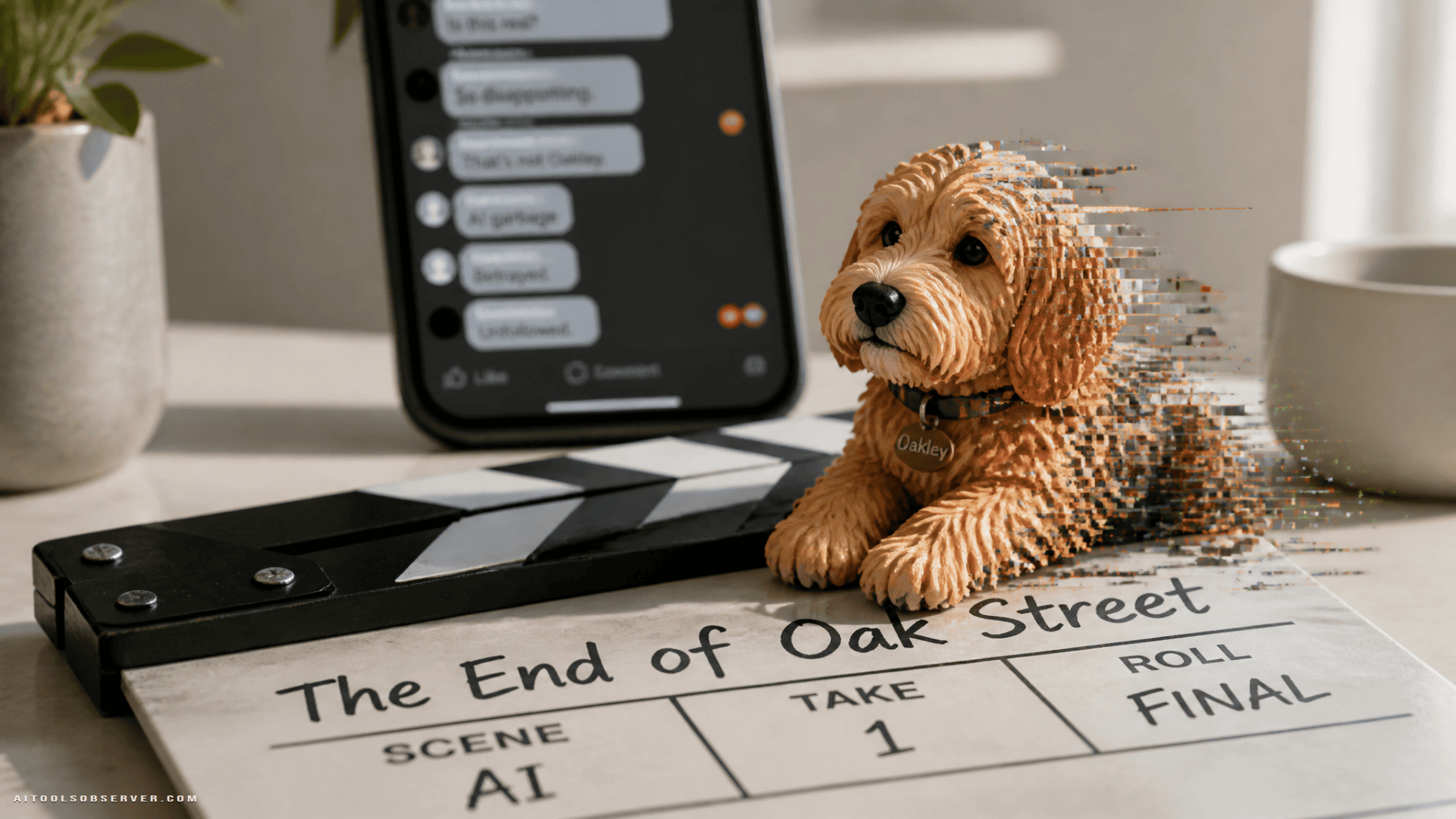
Across Reddit, X/Twitter, and Instagram, the reaction was overwhelmingly negative. Comments ranged from disappointed fans canceling their ticket plans to broader frustration about a multi-billion-dollar studio cutting corners on promotion.
One Instagram commenter put it bluntly: “I was so ready to go see this film. You’ve turned a guaranteed ticket sale into someone who just doesn’t even want to support any films you put out… Ever.”
A Reddit user called it “the cheapest, tackiest looking no-effort s**t.” On X, users described it as “embarrassing as hell.”
Why the Backlash Hit So Hard
The frustration isn’t really about AI existing. It’s about the perceived mismatch between the production’s scale and the promotional effort.
The film has two recognizable Hollywood leads, a genre-credible director, and a high-concept premise. Audiences noticed the gap between that and a short AI-generated dog video — and they read it as a signal that the studio didn’t care enough to try.
A few specific friction points made it worse:
- Confusion about the film itself. Some viewers weren’t sure whether AI was used in the actual production of The End of Oak Street, not just the marketing. That kind of ambiguity erodes trust fast.
- The content felt disposable. When promotional material looks low-effort, it can make the product it’s promoting feel the same way — even if that’s not accurate.
- The audience was already engaged. These weren’t casual observers. Many commenters said they were planning to see the film. Losing a warm audience is a harder hit than never reaching a cold one.
What This Signals for AI in Film Marketing
This isn’t an argument against using AI in marketing. It’s an argument against using AI in ways that feel cheap, confusing, or disconnected from the product.
There’s a meaningful difference between:
- Using AI to scale personalized ad targeting or generate localized campaign assets
- Publishing AI-generated content as a primary promotional piece for a major theatrical release
The first is largely invisible and functional. The second is visible, carries creative expectations, and invites scrutiny — especially when audiences are already primed to have opinions about AI in film marketing.
Warner Bros. has not publicly addressed the controversy. The End of Oak Street is still heading to theaters, and it’s unlikely one promotional misstep will define the film’s box office performance. But the reputational cost of the moment is real, and it’s already documented across social platforms.
The Practical Takeaway
If you’re using AI in marketing — for a product launch, a campaign, or a brand moment — the question isn’t just can we do this with AI? It’s what will this signal to the audience we’re trying to reach?
AI-generated content that feels effortless to produce can also feel effortless to dismiss. When your audience is already invested, that’s a risk worth thinking through carefully before you hit publish.


Comments (0) No comments yet
Want to join this discussion? Login or Register.
No comments yet. Be the first to share your thoughts!