



When the AI Trade Unwinds, It Unwinds Fast
Situational Awareness had performed well through the first half of the year. Then the AI selloff hit, margin calls followed, and the fund offloaded the bulk of its stock portfolio in what sources describe as a fire sale to Citadel.
Jane Street’s note to employees put it plainly: “AI-exposed stocks were down a lot during July, several of the largest memory and semiconductor stocks were down around 50%.”
That’s not a dip. That’s a structural unwinding.
The Concentration Problem
What makes this story instructive isn’t the loss itself — Jane Street still generated over $40 billion in trading revenue year to date, so the firm is far from distressed. What’s instructive is how the loss happened.
A few dynamics worth noting:
- Momentum cuts both ways. The same AI-exposed positions that drove strong Q2 outperformance became the source of July’s pain. Concentrated bets on a theme don’t diversify the risk — they amplify the reversal.
- Fund-of-fund exposure adds a layer of opacity. Jane Street wasn’t just holding chip stocks directly. It held a stake in a fund that held those stocks. When that fund faced margin calls, the cascade was fast.
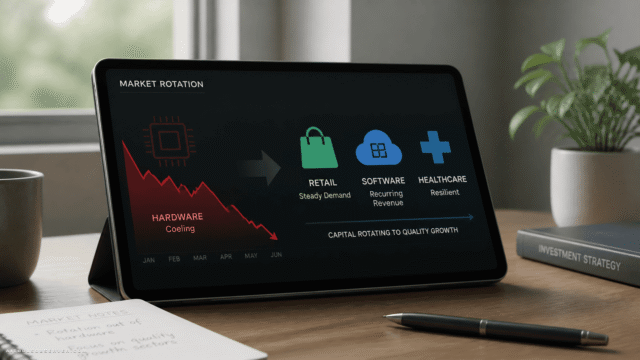
- Semiconductor and memory stocks bore the brunt. These are the picks-and-shovels plays of the AI trade — the ones that looked like “safe” infrastructure bets. A 50% drawdown on that thesis is a signal worth taking seriously.
What This Means for the Broader AI Market
The AI investment narrative has been running hot for years. Valuations in the chip and infrastructure space have been pricing in a lot of future demand. When sentiment shifts — even briefly — the gap between price and fundamentals becomes very visible, very quickly.
This isn’t a story about AI being overhyped in a general sense. It’s a story about risk concentration in a single theme at a moment when that theme was priced for perfection.
Jane Street said it will be “more selective” about risk going forward and has already reduced exposure in the affected areas. That’s the institutional equivalent of quietly closing a tab you shouldn’t have had open.
The Practical Read for AI Watchers
If you’re tracking the AI tools and infrastructure ecosystem — not as a trader, but as a builder, buyer, or analyst — this episode offers a useful calibration.
The AI trade isn’t monolithic. There’s a difference between:
- AI tools with clear, measurable ROI (workflow automation, code generation, content ops)
- AI infrastructure plays priced on projected demand curves that haven’t fully materialized
- AI-themed funds layering thematic exposure on top of already-concentrated positions
The selloff didn’t touch the utility of a good AI writing tool or a well-integrated coding assistant. But it did expose how much of the “AI market” is really a sentiment trade dressed up as a structural one.
The Takeaway
The Nostradamus of AI didn’t see this one coming — or at least, not in time. That’s not a knock on anyone’s intelligence. It’s a reminder that even well-reasoned thematic bets carry timing risk, and that concentration in a hot narrative is its own category of exposure.
For anyone building on, investing in, or simply watching the AI ecosystem: the tools that survive a sentiment reset are the ones solving real problems at prices that make sense. Everything else is just a trade.

















Comments (0) No comments yet
Want to join this discussion? Login or Register.
No comments yet. Be the first to share your thoughts!