



The real problem is not AI, it is AI abundance
The original pitch made sense. AI would scan markets faster than any person could, reduce noise, and surface cleaner trade ideas.
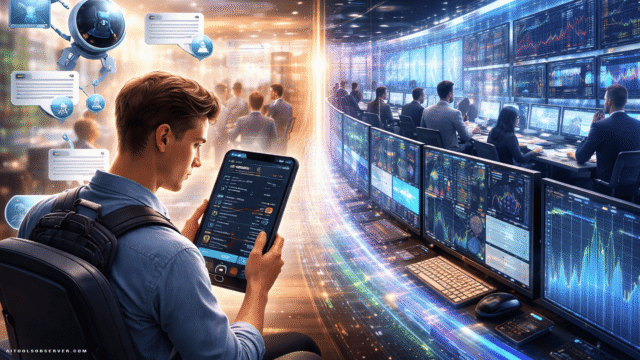
But when every platform offers signals, sentiment summaries, auto-analysis, and strategy suggestions, abundance starts to work against the user. Instead of simplifying decisions, AI often expands the number of things a trader feels responsible for watching.
This is where retail performance often breaks down. More information feels productive, but it can quietly create:
- decision fatigue
- false confidence
- reactive trading
- shorter time horizons
- weaker adherence to a plan
A trader who checks five AI tools before taking a position may feel more informed. In reality, they may just be more emotionally loaded.
More signals do not mean better signals
One of the biggest mistakes in AI-assisted trading is confusing signal quantity with signal quality.
A tool that constantly produces trade ideas can feel useful because it is active. But activity is not accuracy. If every market move generates another prompt, alert, or directional opinion, the trader becomes busy without becoming better.
What matters more is whether a signal has real weight behind it. In trading, that usually comes down to confluence.
Why confluence still matters
Confluence means multiple independent factors point in the same direction. That could include price structure, volume behavior, timeframe alignment, sentiment shifts, or macro context.
The key word is independent.
Many retail AI tools appear to confirm each other, but they often rely on overlapping inputs:
- the same price and volume feeds
- similar news data
- similar sentiment scraping
- the same broad technical logic
- correlated alternative datasets
So what looks like confirmation may just be repetition. Three tools agreeing with each other is not automatically strong evidence if all three are reading the same market story through slightly different interfaces.
That matters because repeated signals can increase confidence without increasing validity. Traders end up mistaking correlation for confirmation.
The UI got better, but the thinking often did not
A lot of modern trading tools are easier to use than older platforms. They package complexity into clean summaries, natural-language analysis, and color-coded prompts.
That convenience is useful. It is also dangerous.
When a tool explains the market in polished language, it can make weak analysis feel stronger than it is. Retail users may stop asking basic but critical questions:
- What is this signal actually based on?
- Is this output predictive or descriptive?
- Does this tool work in trending conditions, choppy conditions, or both?
- What would invalidate this setup?
The smoother the experience, the easier it is to skip the hard thinking.
Agentic trading raises the stakes
Agentic trading is the next step, not just AI that suggests trades. It is AI that can monitor, reason, act, and adapt with less human involvement.
That sounds efficient, and in some conditions it may be. But it also changes the risk profile.
Once traders move from signal tools to more autonomous systems, the danger is no longer just bad analysis. It becomes delegated execution. A flawed assumption can move from dashboard to order flow much faster.
For retail users, this creates a practical problem. Many do not have institutional controls around automation. They may have strategy access, but not the same safeguards, testing discipline, or risk governance.
So the question shifts from “Is this AI smart?” to “What happens when it is wrong?” That concern is becoming more visible in retail AI trading.
Historical performance is not the same as live resilience
AI trading systems can look impressive in backtests, paper trading, and favorable market windows. That is not meaningless. But it is not enough.
Markets change regimes. Liquidity shifts. Volatility clusters. Sentiment disconnects from fundamentals. News breaks in ways no historical dataset cleanly prepares for.
This is where overfitting becomes a major concern. A system can look highly capable when it has effectively learned the shape of the past too well. Then live conditions change, and the edge disappears.
Retail traders are especially vulnerable here because strong-looking performance can trigger trust before understanding. If a tool appears disciplined, many users assume it is robust. Those are not the same thing.
AI still struggles where markets become irrational
Markets are not just data systems. They are human systems.
Fear, greed, panic, crowd behavior, and narrative momentum can overwhelm clean models. Even when AI identifies patterns with precision, it can still struggle in situations where behavior becomes disorderly or where historical precedent offers limited guidance.
This is one reason human judgment still matters. Not because humans are faster than machines, but because good traders know when the market stops behaving in a way their framework recognizes.
That pause is valuable. So is the ability to decide not to act.
What better AI use actually looks like
The traders who tend to benefit most from AI are usually not the ones handing over the most control. They are the ones using AI inside a clear process.
In practice, that often means:
- using AI to surface ideas, not finalize them
- checking whether signals are truly independent
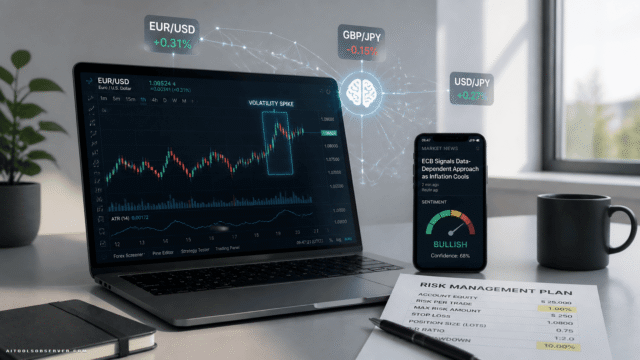
- defining risk before entry, not after
- keeping position sizing rules separate from AI confidence
- setting manual overrides and stop conditions
- reviewing tool performance by market condition, not only overall output
This is a very different posture from passive reliance. AI becomes an assistant inside a risk framework, not a substitute for one.
Questions worth asking before adding another tool
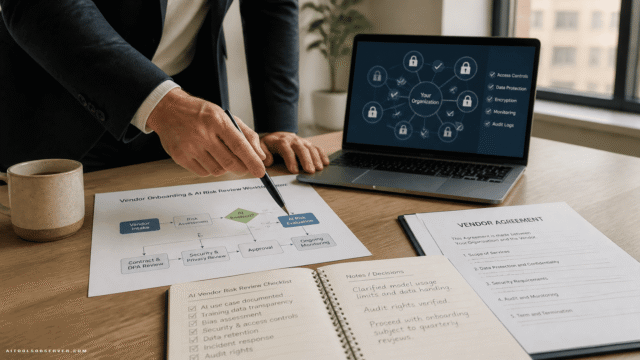
Before adding another AI trading product, traders should pressure-test it with a few basic questions.
Signal source
Where does the signal come from? If it overlaps heavily with what you already use, it may not add edge.
Market fit
What conditions does it appear suited for? Trend, momentum, mean reversion, event-driven trading, or broad market scanning are not interchangeable jobs.
Failure mode
How does the system fail? Slowly, noisily, or all at once? Every tool has a weak spot.
Human override
What is the intervention plan if the output becomes erratic or starts underperforming? If there is no answer, the tool is probably being trusted too easily.
Cost versus account size
Does the expected value justify the subscription burden? This matters more than many retail users admit.
Better traders are not the ones with the most AI
The strongest edge in 2026 may be surprisingly unglamorous: filtering.
Not more alerts. Not more models. Not another layer of machine-generated conviction. Just better selection, clearer risk rules, and the discipline to ignore low-quality setups even when tools insist there is action.
AI can absolutely improve trading workflows. It can speed research, monitor markets, summarize sentiment, and support risk awareness at a scale no person can match manually.
But retail traders do not get paid for using advanced software. They get paid for making sound decisions under uncertainty. If AI adds noise, overconfidence, or automation without control, it is not an edge.
The practical takeaway is simple: use AI to sharpen process, not replace judgment. If a tool gives you more trades but less clarity, it is probably making you worse.





Comments (0) No comments yet
Want to join this discussion? Login or Register.
No comments yet. Be the first to share your thoughts!