



The Problem Isn’t Ambition. It’s Cruel Optimism.
There’s a concept worth naming before we get into the tools.
“Cruel optimism” is the belief that what worked yesterday will protect you tomorrow. In business-building, it sounds like: “I need a team before I can launch.” “I need to learn code before I can build.” “I need six months before I can test the idea.”
None of that is true anymore. What you need is the right sequence, a clear outcome, and the discipline to turn AI from a toy into a working system.
The 7-Tool Stack for a Solo Launch Weekend

These tools aren’t random. Each one replaces a specific role — and together, they form a coherent operational foundation you can build in 48 hours.
1. Perplexity (Deep Research & Strategy)

This is the one that changes the game first.
A single well-structured prompt in Perplexity Computer can run for hours, break itself into subtasks, and produce the kind of market research and positioning strategy that would normally cost you a $20,000 strategist. It synthesizes live web data, identifies competitors, surfaces audience pain points, and hands you a strategic brief — not a vague summary.
The key is treating it like a research director, not a search engine. Give it a business outcome, not a question.
2. AI Website Builder (No-Code Presence)

You don’t need a developer. You need a landing page that converts.
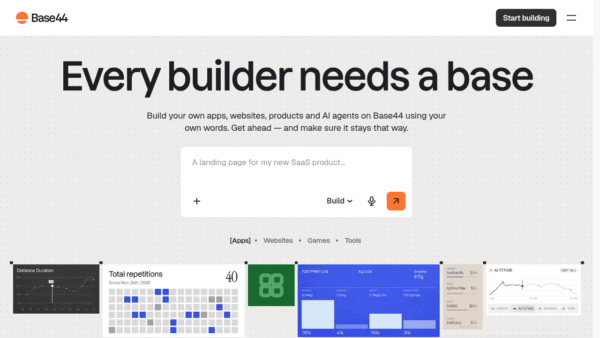
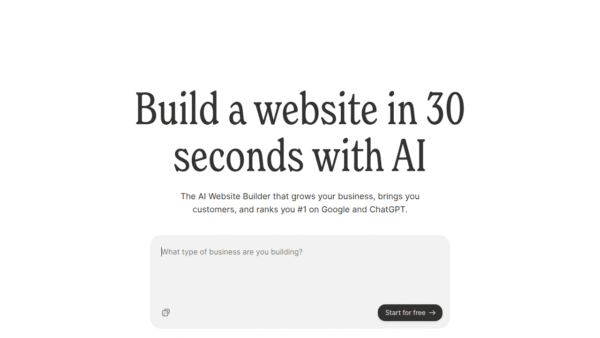
Tools like Framer AI or Durable let you describe your business in plain language and generate a functional, designed website in minutes. Swap copy, adjust layout, publish. The barrier to having a professional web presence is now measured in hours, not weeks.
3. AI Content Assistant (Copy & Messaging)

Once your positioning exists, your messaging needs to follow.
Whether it’s ChatGPT, Claude, or a purpose-built tool like Jasper, the job here is to translate your strategy into actual words — homepage copy, email sequences, social posts, offer descriptions. Feed it your Perplexity research output and watch the context compound. The output gets sharper when the tools talk to each other through you.
4. AI Lead Generation Tool (Finding Real Buyers)

Strategy without pipeline is just a document.
Tools like Apollo.io or Clay use AI to identify, filter, and enrich leads based on your ideal customer profile. You define who you’re targeting; the tool surfaces contact data, company signals, and outreach-ready lists. What used to require a dedicated SDR now runs on a Saturday afternoon.
5. AI Outreach & Email Automation (Personalized at Scale)

Finding leads and reaching them are two different problems.
Tools like Instantly or Smartlead handle cold email infrastructure — warming domains, sequencing follow-ups, personalizing at scale using AI-generated variables. You write the core message once. The system handles the rest. This is where “solopreneur” stops feeling like a limitation and starts to boost sales.
6. AI Scheduling & Operations Layer (The Invisible Admin)

Every business has invisible admin work that quietly eats hours.
Tools like Notion AI, Zapier, or Make handle the connective tissue — automating handoffs between tools, organizing your pipeline, triggering follow-ups, and keeping your workflow from collapsing into a mess of browser tabs. Think of this as your ops person who never sleeps and never invoices you.
7. Scribe (Document What Works, Then Scale It)

This one comes last — and it might be the most underrated tool in the stack.
Once you find a workflow that actually works, Scribe records it automatically as you move through it, generating a clean step-by-step SOP with screenshots. You can hand that to a VA, share it with a client, or feed it back into an AI agent to see how much of the process can run without you.
The goal isn’t just to do the work faster. It’s to build systems that outlast your attention.
How the Stack Actually Flows

Here’s the sequence that makes this a weekend project rather than a month-long project:
Saturday morning — Run your Perplexity research prompt. Let it work. Come back with a strategic brief.
Saturday afternoon — Build your landing page. Generate your core copy. Set up your lead list.
Sunday morning — Configure your outreach sequences. Connect your automation layer.
Sunday afternoon — Document everything with Scribe. You now have a business and a playbook.
That’s not a fantasy. That’s a workflow.
What You’re Actually Replacing

Let’s be direct about what this stack does at the role level:
- Researcher → Perplexity
- Strategist → Perplexity + AI content assistant
- Web developer → No-code AI builder
- Copywriter → AI content assistant
- SDR / lead finder → Apollo or Clay
- Email marketer → Instantly or Smartlead
- Ops coordinator → Zapier / Make / Notion AI
- Process documenter → Scribe
Eight roles. Seven tools. One weekend. One person.
The Real Shift Isn’t the Tools — It’s the Mindset
The 14% of business owners who have fully integrated AI into their operations aren’t smarter than everyone else. They just stopped treating AI as a novelty and started treating it as infrastructure.
The tools in this stack aren’t magic. They’re leverage — and leverage only works when you apply it in the right direction, in the right order, toward a specific outcome.
Pick a business idea you’ve been sitting on. Give yourself 48 hours. Use the sequence above.
The setup that used to feel impossible is now a weekend project. The only thing left is to start.













Comments (0) No comments yet
Want to join this discussion? Login or Register.
No comments yet. Be the first to share your thoughts!