



What this competition is about
The AI for SDGs – Global Youth AI Future Innovation Competition 2026 is described as an international science and technology innovation competition initiated by the UNU Global AI Network.
Its stated goal is straightforward: use artificial intelligence to address sustainable development challenges while supporting social innovation and youth development. For 2026, the spotlight is on education.
The 2026 theme: AI and Education
This year’s theme is:
AI and Education: AI Transforming the Educational Paradigm and Enhancing AI Literacy
That breaks into two big ideas:
- how AI can improve learning, teaching, and education systems
- how people can build the skills and ethical grounding to use AI well
So this is not just “build a chatbot for students and call it a day.” The framing is broader. Judges appear to be looking at both educational transformation and responsible AI understanding.
The application deadline and timeline
Here’s the part most people scroll for first.
- Application deadline: 15 September 2026
- Judge round: 16 September to 30 September 2026
- Semi-final round: 1 October to 15 October 2026
- Final competition and award ceremony: 26 November 2026 in Macao
Most of the evaluation process is mainly online until the final stage.
The three competition tracks
The competition is organized around three tracks. All three connect AI to sustainable development, but they point at slightly different problems.
1. AI for Education
This track focuses on improving education directly.
Examples of the kinds of projects listed include:
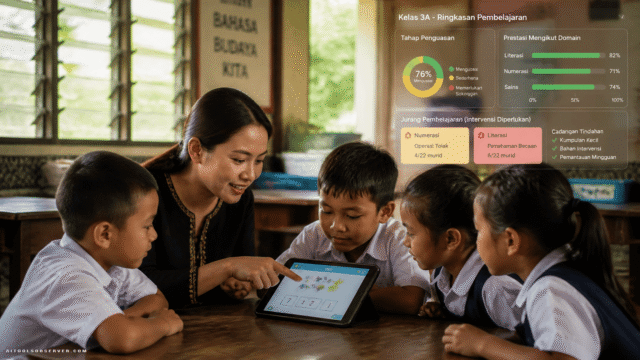
- intelligent tutoring and adaptive learning
- AI-assisted curriculum and content creation
- automated assessment and feedback
- predictive tools for student support
- school or education administration tools
- language learning and translation
- accessibility for learners with disabilities
- teacher support and professional development
The SDG anchor here is SDG 4: Quality Education.
This track makes the most sense if your product already serves learners, teachers, schools, or training systems.
3. AI for Less Developed Countries (LDCs)
This track is designed for projects built for constrained environments, not ideal ones. That distinction matters.
Example areas include:
- low-cost or offline-capable learning tools
- mobile-first solutions for remote communities
- AI literacy programs for youth and educators
- localized content and curriculum
- teacher training in underserved regions
- infrastructure-light tools such as SMS or voice-based systems
- community-led education initiatives
- preserving local languages and knowledge
The SDG references include SDG 4, SDG 9, and SDG 10.
This track is especially relevant if your product works where bandwidth is weak, devices are limited, or localization is the real feature.
Who is eligible
The eligibility rules are broad on access, but not loose on readiness.
Global eligibility
Registration is open worldwide to:
- individuals
- groups
- companies
Nationality and background do not appear to be restrictions.
Technology maturity
Projects must be at TRL 6 or above.
In plain English: this is not an idea-stage contest. Your project should be beyond the lab and ready for real-world validation, with signs of practical use and commercial or deployment potential.
That alone will filter out a lot of slide decks wearing product clothing.
Enterprise age
If your project is already incorporated, the company must be less than 10 years old.
Language
All applications and supporting materials must be in English.
Fees
There are no participation fees. No registration fee, no training fee, no hidden “just one more form” fee, based on the provided description.
What finalists get
For teams that reach the global final in Macao, the listed benefits include:
- complimentary hotel accommodation during the final program in November 2026
- a chance to apply for limited travel allowances of up to $1,000 USD per team before tax
That does not mean every team gets travel covered in full, so it’s smart to plan with some caution.
What kinds of projects fit best
The competition description strongly favors solutions that are both mission-driven and deployment-aware.
A strong fit likely looks like this:
- already tested beyond a prototype
- clearly tied to education outcomes
- usable in real settings, not just demo settings
- attentive to access, inclusion, or regional constraints
- able to explain the AI component without hand-waving
That last one matters. “AI-powered” is not a strategy. It’s a label. Judges will likely care more about what the system actually does, who it helps, and whether it can work outside a pitch deck.
How to think about track selection
If your project could fit more than one track, choose based on the core problem you solve.
Ask yourself:
- Are we mainly improving how education is delivered? Go with AI for Education.
- Are we mainly using education to address inequality or broader social issues? Look at AI for Social Innovation.
- Are we building for low-resource, underserved, or infrastructure-constrained settings? AI for LDCs is the clearest match.
The best track is usually the one where your use case sounds obvious in one sentence.
Why this matters for AI builders
A lot of AI news is about models getting bigger, interfaces getting shinier, and pricing pages getting longer. This competition points somewhere more grounded: can AI improve educational access, quality, and readiness in the real world?
That makes it useful for founders, researchers, nonprofits, and youth innovators building tools with a practical social case. It also reflects a broader shift in the AI ecosystem: less fascination with novelty alone, more pressure to show relevance, inclusion, and usable outcomes.
Practical takeaway
If you’re working on an AI solution for education, social inclusion, or underserved regions, this competition looks tailored for teams with real traction, not just ambition. The key filters are simple: pick the right track, make sure your project is at TRL 6 or above, prepare everything in English, and submit by 15 September 2026.
In other words: if your AI can teach, include, localize, or widen access — and it already works in the wild — this is one deadline worth circling.







Comments (0) No comments yet
Want to join this discussion? Login or Register.
No comments yet. Be the first to share your thoughts!