



What’s Actually Changing
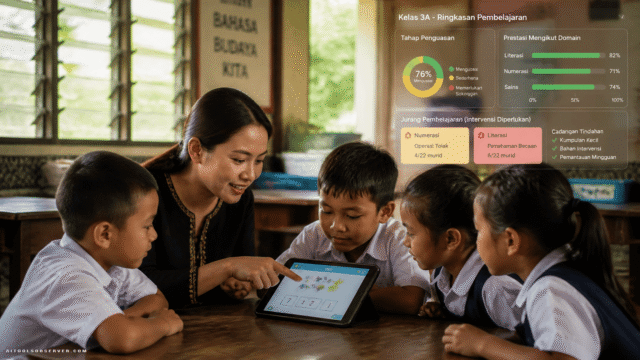
Copilot for educators appears focused on three practical areas:
- Lesson planning — generating and adapting curriculum materials faster
- Student feedback — drafting personalized responses at scale
- Administrative overhead — cutting the paperwork that quietly eats teacher hours
Early pilots reportedly point to meaningful time savings on lesson planning, though how that translates across diverse classroom environments remains to be seen.
Minecraft Gets an AI Upgrade Too
Minecraft Education Edition is also in the mix, with AI-powered coding assistants and world-building tools on the way. It’s a smart angle — rather than asking students to adopt a new platform, Microsoft is layering AI into something they’re already using voluntarily.
That’s a harder trick to pull off than it sounds, and it’s worth watching how the execution lands.
The Privacy Problem Isn’t Going Away
Educational data is among the most regulated in existence, and parents are paying attention. Microsoft is leaning on its enterprise compliance track record as a differentiator here — the argument being that schools already trust Microsoft with sensitive data, so extending that trust to AI features is a smaller leap.
That logic holds up better for districts already deep in the Microsoft 365 ecosystem than for those evaluating fresh options around privacy.
Where Google and the Startups Fit
Google Classroom is pushing its own AI features, and platforms like Khan Academy are integrating large language model capabilities directly into learning flows. The competitive pressure is real.
Microsoft’s structural advantage is distribution — a huge share of school districts already run on its productivity suite. Building AI into existing workflows is a lower-friction path to adoption than asking institutions to onboard something entirely new.
The Teacher Training Gap
The honest challenge here isn’t the technology. Many educators are still building confidence with basic digital tools. Rolling out AI assistants to classrooms where teachers haven’t had meaningful training is a reliable way to generate frustration rather than adoption.
Microsoft is investing in professional development programs, but that’s a slow, resource-intensive process — and it’s the part of ed-tech rollouts that most often gets underfunded.
What to Watch
The broader ed-tech market is cooling after its pandemic-era spike. Standalone AI tools for education are facing harder questions about long-term value. Microsoft’s embedded approach — AI as a layer on top of tools schools already pay for — is a more defensible position than a standalone product competing for a separate budget line.
The real signal will come when these tools move beyond early-adopter schools into mainstream classrooms with less technical support and more varied teaching contexts.
If you’re evaluating AI tools for education, the practical question isn’t whether Microsoft has the right brand or the right compliance story. It’s whether Copilot actually reduces friction for the teachers using it daily — or just adds a new thing to learn on top of everything else.








Comments (0) No comments yet
Want to join this discussion? Login or Register.
No comments yet. Be the first to share your thoughts!