



Three trends are colliding at once
The current AI landscape is being pushed by three forces that no longer sit in separate lanes.
First, AI models are getting more capable in both the U.S. and China. Second, governments are moving faster to define rules, limits, and accountability. Third, access to the strongest models may become more restricted, especially where national security concerns are involved.
Each trend matters on its own. Together, they reshape how AI tools are built, distributed, and trusted.
Why this is no longer just a tech market story
For the past few years, the AI tools ecosystem largely felt like a commercial race. Better prompts, faster generation, stronger reasoning, lower costs. That logic still matters, but it is no longer the whole story.
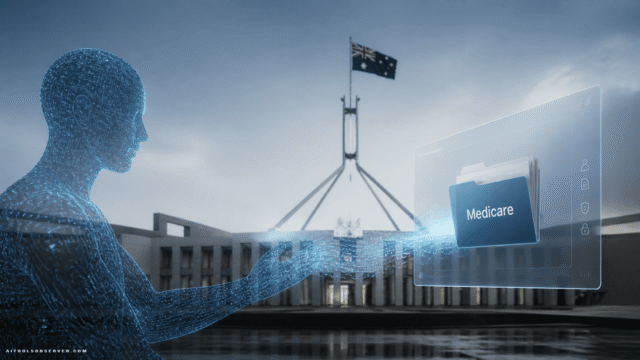
As autonomous agents improve, policymakers are more likely to see AI as infrastructure with strategic value, not just software. That changes the tone of regulation. It also changes how countries think about model access, chips, cloud infrastructure, and cross-border use.
For users, this means the AI stack may become less open, less global, and more fragmented.
The U.S.–China rivalry will shape which tools you can use
The U.S.–China AI competition is not only about who has the most advanced models. It is also about who controls the surrounding system:
- compute
- cloud access
- data environments
- deployment rules
- export controls
- enterprise trust
That matters because many AI tools are not standalone products. They depend on upstream models, hosting providers, fine-tuning pipelines, and API access. If one layer is restricted, the tools built on top of it may also change.
A business choosing an AI writing assistant, coding copilot, research tool, or workflow agent may soon need to ask questions like:
- Where is the core model developed?
- Where is inference processed?
- Can the vendor support regional compliance needs?
- Could regulatory changes affect long-term availability?
- Is the product built on a single model provider or several?
These are no longer edge-case concerns. They are becoming part of normal AI procurement. For a closer look at how Chinese models are competing on cost and capability, see Zhipu GLM 5.2 vs Anthropic and OpenAI.
Regulation will move from abstract risk to practical friction
A lot of AI regulation gets discussed at a high level. In practice, users feel it through friction.
That friction can show up as slower onboarding, stricter identity checks, narrower use cases, more documentation, usage limits, audit logs, or blocked features in certain regions. Vendors may need to separate enterprise and consumer offerings more clearly. They may also need to explain training practices, model behavior, and safety controls in much more detail.
This creates a split in the market.
On one side, some users will prefer tightly governed tools that are easier to justify internally. On the other, some users will keep chasing flexible tools with fewer restrictions, even if they carry more risk.
That tension will shape buying behavior across the AI tools ecosystem.
Closed models are becoming a strategic choice
The shift toward closed models is not just a product strategy. It is increasingly a control strategy.
When model providers limit access, restrict weights, reduce transparency, or narrow developer permissions, they are often doing more than protecting revenue. They may be managing safety concerns, competitive pressure, misuse risk, or government expectations.
For tool builders, this has major consequences.
If your product depends on a closed model, you gain convenience and often strong performance. But you also accept dependency. Your roadmap can be affected by policy changes, API restrictions, pricing moves, or usage rules you do not control.
If you build around more open alternatives, you may get flexibility and portability. But you may need to handle more infrastructure, more optimization work, and more risk on performance consistency.
This is not a simple open-versus-closed debate anymore. It is a resilience decision.
What this means for AI tool categories
Some categories will feel these changes faster than others.
Autonomous agents
Autonomous agents are likely to draw more scrutiny because they can take action, not just generate content. The more an AI tool can browse, execute, purchase, message, or make decisions across systems, the more likely it is to attract governance pressure.
This does not mean agents disappear. It means vendors may need stronger guardrails, better approvals, and clearer human oversight. For an example of how enterprises are approaching this, see NVIDIA Agent Toolkit for Specialized Enterprise AI Agents.
Enterprise copilots
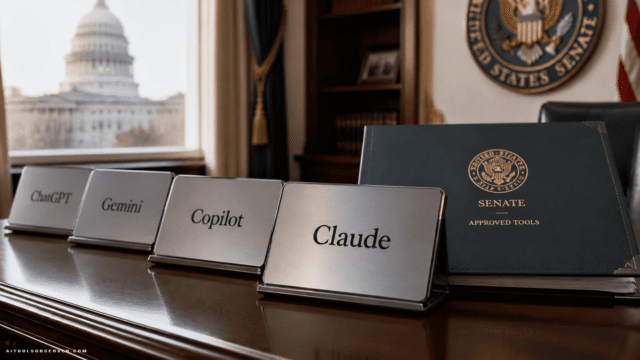
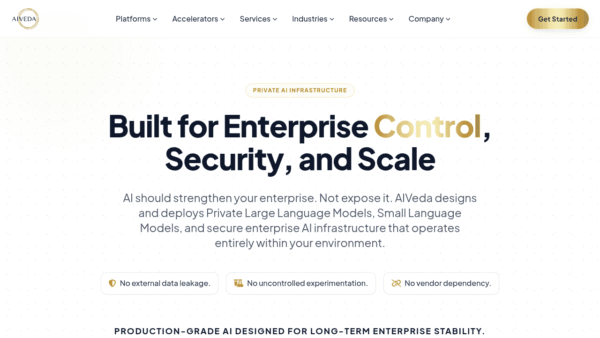
Enterprise AI tools will increasingly compete on governance, not just capability. Security controls, data boundaries, auditability, and regional deployment options may become stronger differentiators. Solutions built around sovereign AI infrastructure are one response to this pressure.
For many buyers, “Can legal approve this?” will matter just as much as “Can it summarize documents well?”
Developer tools
AI coding and infrastructure tools may face more questions about model provenance, code handling, and deployment jurisdiction. Teams building mission-critical software will care more about where code suggestions are processed and whether policies could change later. This also applies to agent builders and frameworks that underpin automated workflows.
Research and intelligence tools
Tools that synthesize information, monitor markets, or support decision-making could face greater sensitivity if they are used in regulated sectors or strategic industries. Expect more emphasis on traceability and source handling.
The new tradeoff: performance vs control
For years, many AI users optimized for one main thing: output quality. In 2025, the real comparison becomes more layered.
A powerful tool may deliver better results but come with more access restrictions. A compliant tool may be easier to deploy internally but slower to improve. A cheaper tool may create hidden switching risk if it relies on unstable upstream access.
This is why simple “top AI tools” lists often age badly. The better question is not just which tool is strongest today. It is which tool remains usable, compliant, and adaptable as the environment changes. Shifts in how major providers are structured — as explored in OpenAI IPO: How Its Market Debut Reshapes AI — are part of this picture.
How businesses should evaluate AI tools now
If geopolitics and regulation are shaping the market, teams need a sharper evaluation framework.
Here are the practical areas to review before committing to any AI tool:
- Model dependency: Is the vendor tied to one provider or diversified?
- Access risk: Could regional rules or export controls affect availability?
- Data handling: Where does data go, and what boundaries exist?
- Governance: Are there logs, admin controls, and policy settings?
- Portability: How hard would it be to switch models or vendors?
- Workflow criticality: What breaks if the tool becomes limited or unavailable?
These questions matter most when AI moves from experimentation into daily operations. Tools like LangWatch address some of these concerns by providing observability and guardrails for AI agents in production.
What founders and tool builders should do differently
Founders cannot treat policy as background noise anymore. If your product depends on external models, cross-border infrastructure, or broad user access, you need to build for volatility.
That usually means:
- reducing single-provider dependence
- designing fallback model options
- separating core workflows from model-specific features
- being clearer about data residency and controls
- planning for region-specific product behavior
Exploring open-source agent tools is one way to reduce dependency on any single closed provider. The policy environment is also shifting in ways that affect vendor relationships — as illustrated by A Public Stake in AI: Inside OpenAI’s 5% U.S. Plan.
The strongest AI products in 2025 may not be the flashiest. They may be the ones that stay reliable as rules tighten and access shifts.
Why the ecosystem will likely become more fragmented
One likely outcome of this collision is fragmentation.
Different countries may set different expectations for safety, access, transparency, and deployment. Vendors may respond by creating region-specific products, limited feature sets, or separate model tiers. Users may see more cases where a tool works one way in one market and differently in another.
Regulatory pressure around data practices — highlighted in analyses such as Human Rights vs AI Training Data: Amnesty’s Warning and Grok, X and FTC: AI data grab and privacy risks — is already accelerating this divergence.
That fragmentation can slow universal access, but it also creates openings. Specialized vendors that solve compliance, orchestration, model switching, or enterprise governance may become more important.
In other words, geopolitical pressure does not just constrain the AI tools market. It also creates new layers of demand around control and trust.
What to watch next
If you want to understand where AI tools are heading, watch these signals closely:
- tighter rules around high-risk AI use cases
- more restricted access to advanced models
- stronger national-security framing around AI infrastructure
- greater separation between consumer AI and enterprise AI
- rising demand for tools that offer flexibility across multiple models
These shifts will influence which startups gain traction, which incumbents expand, and which tools become risky long-term bets.
The practical takeaway
In 2025, choosing an AI tool will increasingly mean choosing a risk profile.
Capability still matters. Speed still matters. Cost still matters. But the smarter buyers will also compare policy exposure, access stability, and governance fit before they commit.
If you want to choose smarter, stop asking only what an AI tool can do today. Start asking what could limit it tomorrow.











Comments (0) No comments yet
Want to join this discussion? Login or Register.
No comments yet. Be the first to share your thoughts!