



What an AI sales assistant actually does
The term sounds broader than it needs to be. In practice, an AI sales assistant is software that supports sales work across the customer journey by handling repeatable tasks and offering recommendations.
That usually includes things like:
- Drafting follow-up emails
- Summarizing meetings
- Scheduling appointments
- Updating CRM records
- Scoring leads
- Highlighting buying signals
- Flagging prospects that may need attention
The point is not to replace a sales rep. The point is to remove the administrative fog around the rep.
A good assistant shortens the gap between “we had a useful conversation” and “the system reflects reality.” That alone can improve how a team works.
Why these tools are showing up in daily workflows
The biggest change is not that AI can write an email. Plenty of tools can do that. The bigger shift is that AI is becoming part of the routine workflow around CRM, outreach, research, and forecasting.
Sales professionals often lose hours to small tasks that pile up quietly:
- Logging notes
- Checking contact history
- Researching accounts
- Preparing for meetings
- Sending follow-ups
- Updating pipelines
None of these tasks are optional. They are just not where the human edge lives.
AI sales assistants help by doing more of the prep and cleanup work automatically. That gives reps more time for the parts of sales that still benefit most from human judgment: reading nuance, handling objections, building trust, and deciding when not to push.
Where the productivity gains actually come from
“Productivity” can be a fuzzy word, so it helps to be specific. In sales, AI tends to improve output in three very practical ways.
1. Less manual admin
If notes, tasks, meeting summaries, and CRM updates are partially automated, reps spend less time recreating conversations after the fact. Fewer missing fields. Fewer “I’ll update that later” moments. Less pipeline fiction.
2. Faster access to context
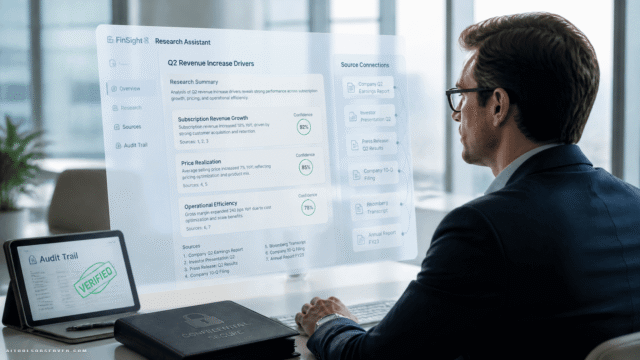
Before a call, AI can help organize the relevant history: prior interactions, account details, engagement patterns, and likely next steps. Reps walk in better prepared, which usually leads to better conversations.
3. Better prioritization
Not every lead deserves the same amount of attention. AI can help rank prospects based on behavior, history, engagement, and other signals, so teams focus energy where it is more likely to matter.
That is the real win. Not doing more activity for its own sake, but reducing wasted motion.
How AI supports better sales decisions
Sales decisions are often made under mild chaos. Which lead should get the next call? Which account is warming up? Which deal is slipping? Which forecast is optimistic in the bad way?
AI helps by analyzing patterns faster than a human team can reasonably do on its own. Based on the available context, that support tends to show up in a few key areas.
Lead scoring
This is one of the most useful use cases because it turns a messy pool of prospects into a ranked list. AI can evaluate customer behavior, prior purchases, engagement history, and demographic information to estimate purchase likelihood.
That does not make the score magical. It makes it useful.
Reps still need to apply judgment. But a decent ranking system can stop teams from treating every lead like a five-alarm opportunity.
Outreach assistance
AI can help draft personalized emails, suggest follow-up wording, and recommend when to send messages. This does not remove the need for a human voice. It removes the need to write every message from scratch while staring into the void.
The practical benefit is speed with some structure. Faster responses often mean fewer dropped threads and better engagement.
Forecasting support
Forecasting is where spreadsheets, optimism, and selective memory like to collaborate. AI can improve the process by spotting patterns across previous sales cycles and helping managers build plans from historical behavior rather than instinct alone.
That does not guarantee accuracy. It does reduce the odds of calling a wish a forecast.
CRM automation is doing more than housekeeping
CRM hygiene is not glamorous, but it quietly shapes sales performance. When records are incomplete or outdated, the entire system gets less useful. Recommendations weaken. Segmentation gets sloppy. Follow-ups miss the mark.
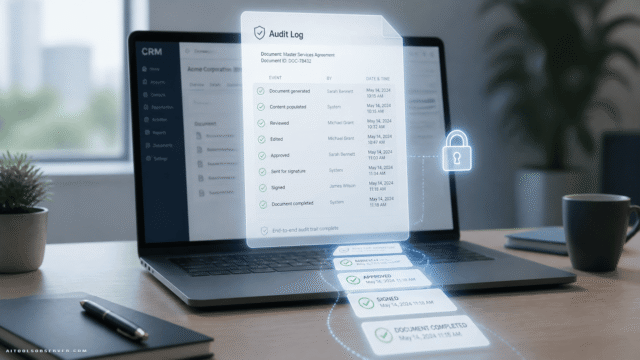
AI sales assistants help here by keeping records more current with less manual effort. That can mean automatic note capture, activity logging, reminder generation, and updating account details after interactions.
This matters because a CRM is only helpful if people trust it. Automation can strengthen that trust by reducing the lag between real customer activity and recorded customer activity.
In other words: fewer ghosts in the pipeline.
The catch: AI is only as good as the information around it
There is no elegant way to say this, so here it is plainly: bad data makes smart-looking tools behave dumbly.
If customer records are incomplete, outdated, duplicated, or inconsistent, the assistant’s suggestions can become less useful fast. That affects:
- Lead scoring
- Segmentation
- Outreach timing
- Forecasting
- Opportunity prioritization
High-quality data is the boring foundation under the shiny features. Teams that maintain cleaner prospect and customer information generally put AI in a better position to help.
So yes, automation matters. But data maintenance still has to exist. The spreadsheet monster never fully dies. It just gets better tools.
What businesses should think through before adopting one
AI sales assistants can be genuinely useful, but the best rollout usually starts with restraint, not shopping enthusiasm.
Start with the workflow, not the tool
The first question is not “Which platform should we buy?” It is “Which tasks waste the most time right now?”
If the biggest pain is follow-up, start there. If CRM updates are the sinkhole, start there. If forecasting is unreliable, start there. A narrow use case is easier to evaluate than a vague goal like “modernize sales.”
Check integration early
These tools work best when they connect cleanly with the systems your team already uses, especially CRM, email, and calendars. The more disconnected the stack, the more duplicate work sneaks back in.
A sales assistant that creates extra reconciliation work is not much of an assistant.
Train people on limits, not just features
Adoption is rarely a software problem alone. Teams need to understand what AI is good at, what it is bad at, and where human review is still essential.
That is especially true for messaging, prioritization, and forecasting. AI can support judgment. It should not impersonate it.
Keep privacy and security in view
Sales workflows often involve sensitive customer and prospect data. Responsible data handling matters for trust, compliance, and internal confidence.
The practical rule is simple: if a tool touches customer information, governance should not be an afterthought.
A quick comparison framework for choosing smarter
When comparing AI sales tools, it helps to ignore the loudest promises and focus on a few grounded questions:
- Does it save time in a workflow your team actually repeats?
- Does it improve data quality or depend on data quality you do not have?
- Does it integrate with your current systems without creating extra work?
- Does it help reps make better decisions, not just faster ones?
- Can the team understand and trust its recommendations?
That last point matters more than it sounds. A tool people do not trust becomes shelfware with a login screen.
Where human reps still matter most
The rise of AI sales assistants does not make human sales work less important. It makes the human part more visible.
People still need to:
- Build relationships
- Interpret context
- Handle difficult conversations
- Spot nuance in buying behavior
- Decide when automation should stop
AI is good at speed, structure, and pattern detection. Humans are still better at empathy, judgment, and knowing when a prospect’s “circle back next quarter” actually means “please stop emailing me.”
That division of labor is probably the most useful way to think about these tools.
The practical takeaway
AI sales assistants are becoming everyday workplace tools because they fit into work that already exists. They automate admin, support CRM accuracy, speed up outreach, and help teams prioritize with more confidence.
The smart move is not to ask whether AI belongs in sales. It already does. The better question is where it can remove friction without removing judgment.
Start with one messy workflow. Fix that. Then decide what deserves automation next.











Comments (0) No comments yet
Want to join this discussion? Login or Register.
No comments yet. Be the first to share your thoughts!