


What Changed
Graphwise has shipped a significant update to its AI Context Platform, introducing three distinct capability areas: Adobe Experience Manager (AEM) integration, built-in AI evaluation tooling, and expanded workflow automation. The release is aimed squarely at organizations moving GraphRAG deployments from controlled pilots into production environments at scale.
The update addresses a recurring friction point in enterprise AI: the difficulty of grounding large language model outputs in traceable, auditable context—especially across multilingual content and distributed data sources.
AI Trust and Rapid Onboarding
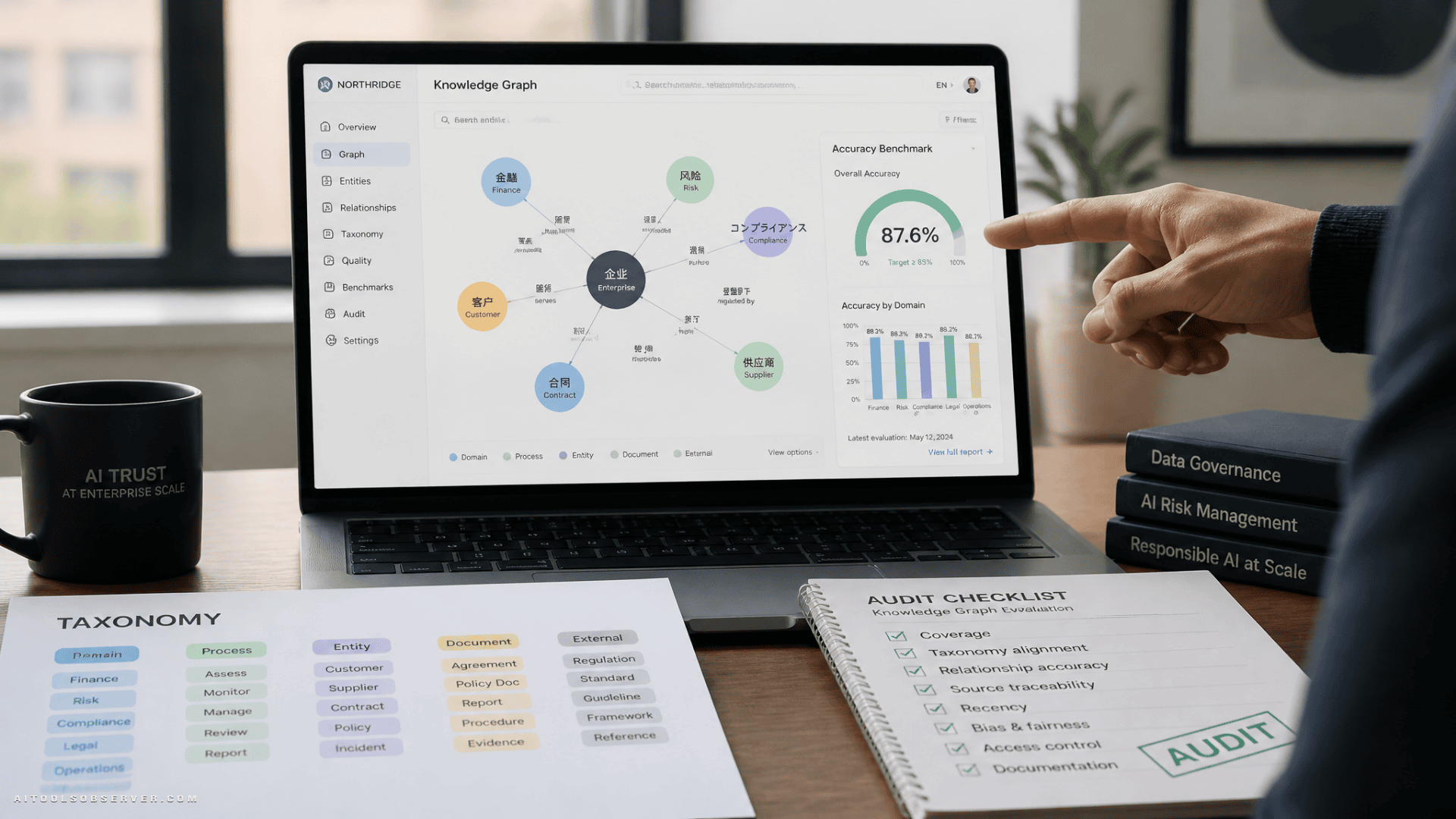
The platform now includes an evaluation framework designed to measure, audit, and benchmark AI response accuracy. Alongside this, automated ingestion pipelines convert raw enterprise documents into structured, grounded context with less manual intervention.
This combination targets a specific problem: enterprises often spend more time preparing data for AI than actually using it. Faster onboarding with built-in accuracy benchmarking reduces the gap between “we have data” and “we trust what the AI says about it.”
Enterprise Multilingual Governance via Adobe AEM
The AEM integration enables automated multilingual content tagging and cross-channel taxonomy synchronization. For organizations managing content across regions and languages, this is a governance problem as much as a technical one—inconsistent terminology erodes the reliability of any downstream AI output.
By connecting directly to AEM, Graphwise positions its platform as a layer that enforces term integrity globally, rather than leaving taxonomy alignment to manual editorial processes.
High-Concurrency Reliability
The release also includes performance and stability improvements to the underlying graph database architecture. The stated goal is supporting high-concurrency production deployments—meaning the platform is being hardened for environments where many users or systems are querying simultaneously, not just in controlled testing conditions.
Who Is Using This
The update arrives alongside the Graphwise AI Summit 2026, a free virtual event scheduled for October 7–8. Enterprise names attached to the event include Roche, S&P Global, AstraZeneca, and Accenture—organizations operating in regulated, data-intensive sectors where AI governance is not optional.
Roche is presenting on its Terminology and Interoperability System for building domain-specific ontologies. S&P Global and AstraZeneca are covering formal semantics for AI agents and governance graph frameworks. These are not experimental use cases—they reflect organizations that have moved past the pilot stage and are managing AI at institutional scale.
Over 800 professionals have reportedly registered for the summit, spanning healthcare, fintech, IT services, and education.
Why the Evaluation Layer Matters
The quote from Cognizone VP Agis Papantoniou cuts to the core of the release’s intent: “The binding constraint on enterprise AI isn’t model capability. It’s whether you can answer one question about what it tells you: how do you know?”
Built-in benchmarking and audit tooling directly address this. Without the ability to measure accuracy and trace outputs back to a verifiable source, AI adoption in regulated industries stalls—not because the technology doesn’t work, but because the organization can’t defend its outputs to auditors, regulators, or internal stakeholders.
Practical Takeaway
If your organization is running GraphRAG or knowledge graph-based AI in production—or planning to—the combination of AEM integration, evaluation tooling, and concurrency improvements in this release addresses three distinct bottlenecks: content governance, output trustworthiness, and operational stability. The AEM integration is particularly relevant for content-heavy enterprises already invested in Adobe’s ecosystem. The evaluation framework is worth examining regardless of stack, as benchmarking AI accuracy at the infrastructure level remains an underbuilt capability across most enterprise AI deployments.








Comments (0) No comments yet
Want to join this discussion? Login or Register.
No comments yet. Be the first to share your thoughts!