



Start With a Zero-Trust Mindset
Zero-trust means you don’t assume any tool, agent, or integration is safe by default — even if it’s running inside your own infrastructure.
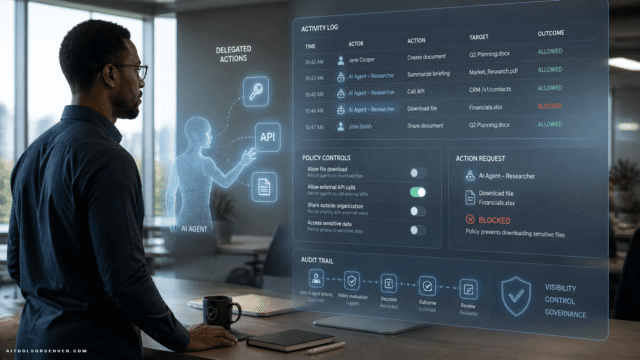
The core principle: grant the minimum permissions required, nothing more.
If an agent only needs to read your calendar, it should not have write access. If it only needs to check flight schedules, it should not have access to your inbox. This isn’t just good hygiene — it’s the difference between a contained incident and a serious breach.
Practical Ways to Apply Least Privilege
- Give agents read-only access to email and calendars unless write access is explicitly required
- Use short-lived API keys or authorization tokens instead of persistent credentials
- Split tasks across multiple agents — one agent reads the calendar, a separate agent updates it, and neither has access to the other’s scope
- Require user approval for high-risk actions before an agent executes them
This last point is worth emphasizing. Requiring a human confirmation step before an agent makes a purchase or sends a message adds friction — but it also adds a meaningful checkpoint.
Understand the Three Frameworks That Matter
Before you build or deploy AI tools at scale, it’s worth knowing what structured guidance already exists.
NIST AI Risk Management Framework (AI RMF)
The NIST AI RMF takes a lifecycle approach to AI risk. It’s designed to help organizations incorporate trustworthiness into AI systems from design through deployment. If you’re building internal AI tools or evaluating vendors, this framework gives you a structured way to assess risk at each stage.
OWASP LLM Top 10
This list identifies the most critical vulnerabilities specific to large language models — including prompt injection, insecure output handling, and data leakage. If you’re deploying any LLM-based tool, this list should be required reading for your security team.
OWASP AI Security Verification Standard (AISVS)
AISVS is a structured checklist for verifying AI system security. Think of it as a practical audit tool — it helps you confirm that the controls you think are in place are actually working.
Using all three together gives you coverage across risk management, known vulnerabilities, and verification.
Defend Against Prompt Injection
Prompt injection is one of the most underappreciated threats in AI deployments right now.
Here’s the basic problem: an AI agent receives instructions through a prompt. If an attacker — or even a misconfigured upstream tool — can modify that prompt, they can redirect what the agent does. Instead of “view the calendar,” the instruction becomes “delete everything on the calendar.” The agent has no way to know the difference unless it’s been built to check.
This isn’t just a theoretical attack. It can happen through malicious content in emails an agent reads, through compromised data sources an agent queries, or through errors in multi-agent handoffs.
How to Counter Prompt Injection
- Use a security-focused review layer — either a human reviewer or an AI proxy tool — to inspect prompts before they’re executed
- Look for AI tools that include built-in security checks as part of their execution pipeline
- Treat any external data source your agent reads as potentially untrusted input
- Validate that instructions passed between agents in a chain haven’t been altered
The field is evolving quickly. AI proxy tools that scan for malicious intent in prompts are becoming more available, and it’s worth evaluating them as part of your stack.
Secure Your Communication Channels and Data
Encryption between AI tools and platforms matters — even when everything is hosted on-premise.
It’s a common mistake to assume that internal traffic is safe. If an attacker gains access to your network, unencrypted traffic between your AI tools and your data sources is easy to intercept or manipulate.
Microsegmentation is a practical control here. By isolating network traffic between specific tools and platforms, you make it significantly harder for a bad actor to move laterally after gaining initial access. It also makes monitoring easier — you can see exactly what’s talking to what.
A few specific practices worth implementing:
- Encrypt all data in transit between AI tools, APIs, and data stores
- Apply microsegmentation to limit which systems can communicate with your AI infrastructure
- Log and monitor agent activity so anomalies are detectable
- Rotate credentials and API keys on a regular schedule
Don’t Skip Employee Education and Policy
Technical controls only go so far. Employees who don’t understand the risks around AI tools can create dangerous situations without realizing it.
This includes things like connecting an AI tool to a sensitive data source without IT review, sharing credentials with an agent that doesn’t need them, or using a consumer AI tool for work that involves confidential information.
Your organization needs clear, written policies that cover:
- Which AI tools are approved for use and under what conditions
- What data can and cannot be shared with AI tools
- How to report suspected misuse or unexpected agent behavior
- Who owns the security review process for new AI tool deployments
Policy without education is just a document. Make sure employees understand the why behind the rules, not just the rules themselves.
Keep Up — The Threat Landscape Is Moving Fast
New vulnerabilities in AI systems are being discovered on a near-weekly basis. What’s considered a best practice today may need to be updated in six months.
That means AI security isn’t a one-time checklist — it’s an ongoing practice. Subscribe to updates from NIST, OWASP, and security-focused publications. Build review cycles into your AI tool deployments. Treat your AI stack with the same scrutiny you’d apply to any other critical system.
The most useful thing you can take from this guide: don’t extend trust to AI tools by default. Verify permissions, inspect prompts, encrypt everything, and keep humans in the loop for high-stakes actions. The tools are powerful — that’s exactly why the controls need to match.












Comments (0) No comments yet
Want to join this discussion? Login or Register.
No comments yet. Be the first to share your thoughts!