



Demo Day Is Coming: Free AI Tool Demos for Retail Agents

On Wednesday, June 10, 2026 at 1 p.m. ET, Insurance Journal’s Risky Future series hosts its AI Tools for Retail Agents Demo Day — a free, live online event built specifically for retail insurance agencies.
Think of it as a curated showcase: each vendor gets 15–20 minutes to demonstrate how their tool actually works inside a real agency workflow. No fluff, no keynotes. Just demos.
Who’s Presenting and What They’re Solving
Liberate — Voice-first AI agents for the full insurance stack
Liberate started where most AI vendors won’t: voice. It’s the hardest channel in insurance and arguably the most valuable. Their AI agents handle sales, servicing, and claims conversations — and they’re expanding into full workflow automation. Long-term play: reasoning agents that manage the entire carrier and broker operation.
M-Files — Document management that’s actually AI-ready
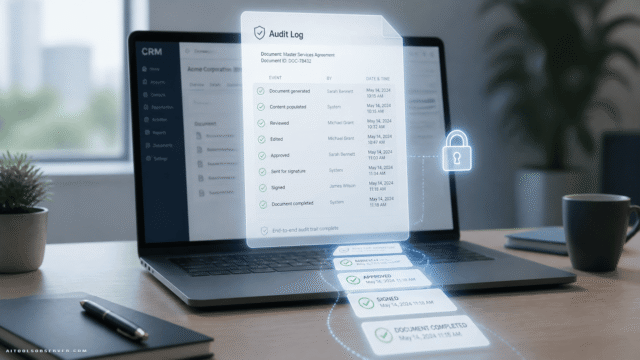
M-Files uses metadata-driven architecture to make documents easy to find, trust, and act on. It’s the kind of infrastructure layer that makes every other AI tool in your stack work better. If your documents are a mess, your AI is flying blind.
1Fort AI — The system of action for insurance brokers
1Fort’s pitch is refreshingly direct: brokers spend too much time on manual work and not enough time with clients. Their platform automates the administrative layer so producers can get back to producing. It’s not a CRM. It’s not a quoting tool. It’s the connective tissue between all of it.
Ennabl — AMS-integrated workflow automation
Ennabl pulls files directly from your AMS, extracts key data, summarizes and compares information, then pushes updates back to carriers or clients. It’s the kind of tool that turns a 45-minute renewal prep task into a 5-minute review. The workflow stays the same — it just runs faster.
What the Demo Day Is Actually About
Collectively, these four vendors address the most painful parts of running a retail agency:
- Prospecting and quoting — faster, more targeted
- Account management and renewals — automated, not manual
- Cross-sell gap identification — data-driven, not gut-feel
- AMS integrations — so nothing lives in a spreadsheet
If you’re an agency principal, sales leader, or ops team member wondering where AI actually fits in your workflow — this is a practical three-hour answer.
The Risk Data You Can’t Ignore: Travelers’ 2026 Injury Impact Report

While the Demo Day focuses on selling and servicing smarter, Travelers just dropped a report that reframes what risk management means for agents advising commercial clients.
The headline sounds positive: workplace injury rates are declining. The fine print is more complicated.
Injured Workers Are Out Longer Than Ever
Travelers analyzed 1.2 million workers’ comp claims filed between 2021 and 2025. The average injured worker misses 80 workdays. That’s not a rounding error — that’s four months of lost productivity per claim.
Two workforce segments are driving the complexity.
The Aging Workforce Problem
Workers aged 60 and older recover for an average of 97 days — more than two weeks longer than the overall average. Fractures and dislocations heal slowly. Slips, trips, and falls account for roughly 40% of all injuries in this age group and are the leading driver of catastrophic claims (those exceeding $250,000) across all employees.
The math is straightforward: an older workforce means longer recovery times, higher indemnity costs, and more complex return-to-work planning.
The New Employee Problem
First-year employees generate more than one-third of all injuries despite being a smaller share of the workforce. In restaurants, new hires account for roughly half of all injuries. In construction and small businesses, the numbers are nearly as stark.
This isn’t a training problem. It’s a systems problem — and it’s measurable.
Industry Breakdown: Where Lost Days Pile Up
| Industry | Avg. Lost Workdays |
|---|---|
| Construction | 114 days |
| Transportation | 94 days |
| Professional Services | 77 days |
| Manufacturing | 76 days |
Construction’s most severe injuries — spinal cord damage, amputations, traumatic brain injuries, severe burns — explain the gap. These aren’t sprains. They’re life-altering events with claims to match.
What Travelers Recommends (And What Agents Can Do With It)
Travelers outlines three focus areas for employers:
- Protect new hires — identify risks early, improve safety controls, define safe work practices before day one
- Build a culture of trust — workers who feel valued report hazards; workers who don’t, don’t
- Plan for injuries before they happen — structured response protocols and return-to-work plans reduce both severity and duration
For insurance agents, this data is a conversation starter. Clients in construction, transportation, or any business with a high share of new or older employees are carrying more risk than their current premiums may reflect. That’s a cross-sell opportunity, a coverage gap conversation, and a value-add consultation — all in one report.
Where These Two Stories Connect
The Demo Day tools and the Travelers data are pointing at the same thing: insurance agencies that use data and automation well will outperform those that don’t.
Ennabl can surface renewal gaps. 1Fort can free up a producer to have the workers’ comp conversation. Liberate can handle the follow-up call. M-Files can make sure the documentation is clean when the claim comes in.
The risk environment isn’t getting simpler. Aging workforces, high new-hire injury rates, and longer recovery timelines are structural trends — not anomalies. The agencies that understand this data and bring it to client conversations will look like advisors. The ones that don’t will look like order-takers.
The tools exist. The data is here. The only question is whether you show up on June 10.













Comments (0) No comments yet
Want to join this discussion? Login or Register.
No comments yet. Be the first to share your thoughts!