


What changed
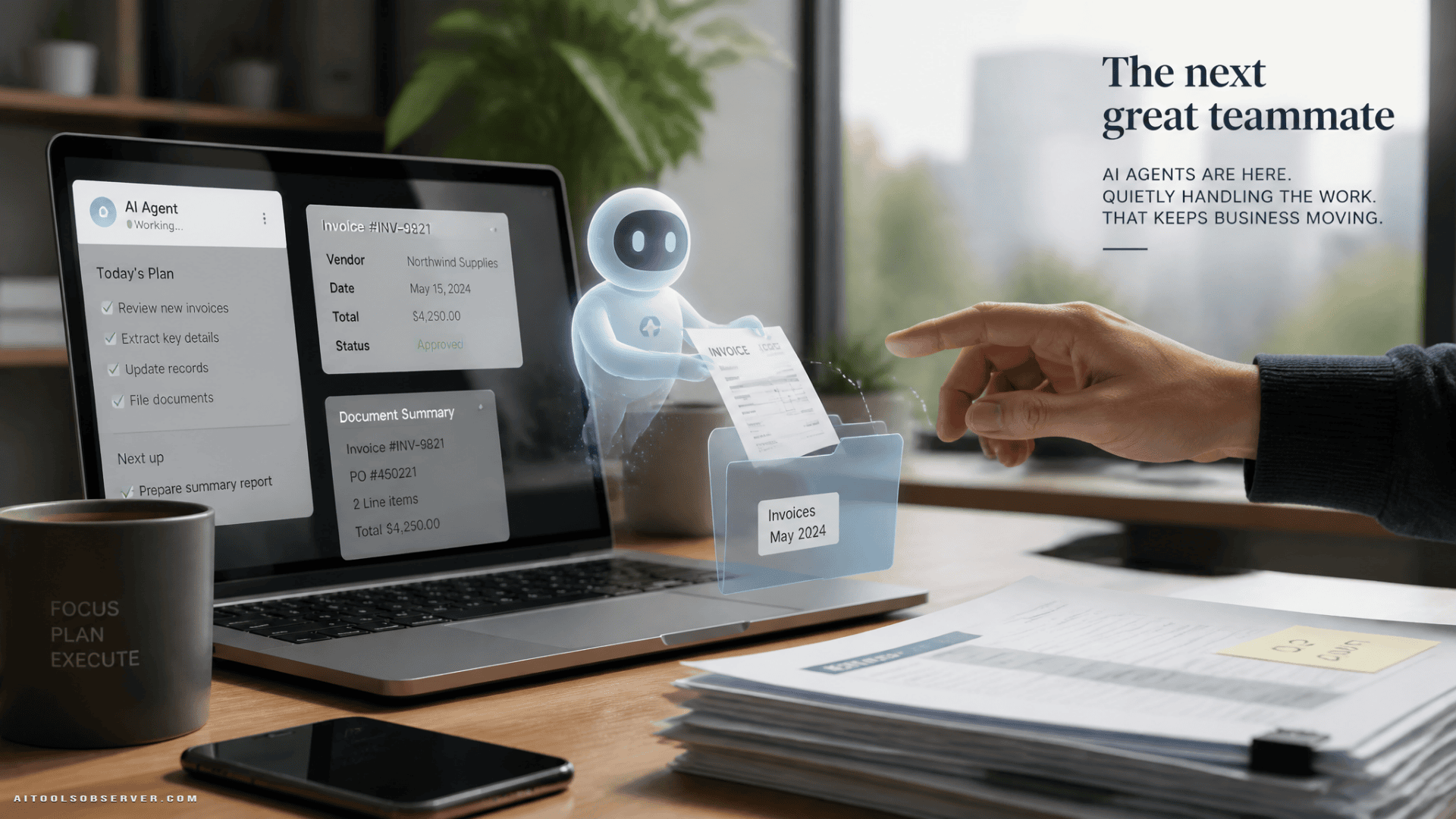
Prentis, launched in April, is emerging as a new enterprise AI agent startup focused on automating office workflows. Based on the available context, the company is training models to learn how workers move through routine tasks across documents and systems, with the goal of creating agents that can control computers directly.
The startup is also reportedly in fundraising discussions. At the same time, it has already signed contracts said to be worth up to $50 million with several customers across sectors including healthcare services, manufacturing, and consumer goods.
That matters because enterprise agent startups often generate attention long before they show commercial traction. Prentis is being discussed not just as a lab with technical ambitions, but as a company trying to attach those ambitions to actual workflow outcomes.
Why office workflow automation is such a big target
A lot of AI adoption still stalls at the demo stage. Enterprises may like copilots for drafting, summarizing, or support, but the harder value comes from automating repetitive workflows that consume real employee time.
Prentis seems to be aiming directly at that layer. The examples in the available description include:
- handling insurance claims
- managing customs duty refund exceptions
- locating and processing paperwork across systems
- completing routine office actions without manual handoffs
These are not glamorous use cases, but that is exactly why they matter. Businesses usually do not need AI to sound smart. They need it to reduce the time spent clicking through systems, hunting for documents, and resolving exceptions that slow down operations.
The company’s core bet
Prentis appears to be betting that everyday office automation could become a bigger AI opportunity than coding assistance. That is a bold thesis, but it is not hard to see the logic.
Coding tools are visible and popular, yet many enterprises have much larger populations of non-technical workers. If AI agents can reliably complete administrative tasks inside real business environments, the addressable market expands fast.
The tradeoff is difficulty. Office workflows are messy. They involve inconsistent interfaces, partial data, exceptions, approvals, old software, and human judgment. Building agents that can navigate that complexity is much harder than producing a polished chatbot experience.
The benchmark claims to watch carefully
Prentis says its Hive-32B model outperforms rivals on two computer-use benchmarks: WindowsAgentArena and ScreenSpot-v2. The company also argues that its edge comes from using a smaller, cheaper model, with claims of roughly 10 times lower cost per task than frontier APIs.
If true, that would be meaningful. In enterprise automation, cost per completed task matters as much as raw model quality. A model that is somewhat better but far more expensive can be harder to deploy broadly across routine work.
Still, this is the part readers should treat with caution. The benchmark results described have not been independently verified in the available reporting, and benchmark wins do not always translate cleanly into reliable production performance.
Why the cost angle matters
For enterprise buyers, computer-use agents do not have to be the most advanced models in the world. They need to be:
- reliable enough for repetitive tasks
- affordable enough to run at scale
- controllable enough to fit business processes
- specialized enough to handle real workflows
That is why the smaller-model strategy is interesting. If Prentis can deliver acceptable accuracy with much lower operating costs, it may have a practical angle even in a crowded market.
A crowded field, but a real one
Prentis is entering one of the hottest and most competitive areas in AI. Major labs and startups are all pushing toward computer-use agents that can interact with software the way humans do.
That means Prentis is not operating in an empty category. It is competing against well-funded players with strong model talent and distribution advantages. The broader market signal, though, is clear: AI companies increasingly believe direct computer control is the next major step beyond chat interfaces.
For buyers, this competition is useful. It should push faster improvements in task reliability, safety, and cost efficiency. It also means vendor claims will come thick and fast, so comparisons will matter more than branding.
Who is behind Prentis
The company is tied to founder Ritankar Das, who also leads Titan, a holding company that builds and operates AI businesses. The broader founding orbit also includes high-profile entrepreneurial and investment names, which gives Prentis added visibility early.
That does not guarantee product success, but it does signal ambition. The company has also reportedly hired more than 25 employees, including researchers from major AI organizations, suggesting it is assembling serious technical capacity rather than operating as a lightweight experiment.
In practical terms, buyers should pay less attention to the name recognition and more attention to whether the team can turn model performance into dependable workflow execution.
What enterprise teams should look for next
If you are evaluating AI agent platforms, Prentis is an example of the shift from “AI that helps” to “AI that does.” That shift is where the biggest ROI stories may emerge, but it is also where risk rises.
Here are the questions worth asking as this category develops:
- Can the agent complete multi-step tasks across real enterprise software?
- How does it handle exceptions, missing data, and ambiguous inputs?
- What is the true cost per completed workflow, not per API call?
- How much human oversight is still required?
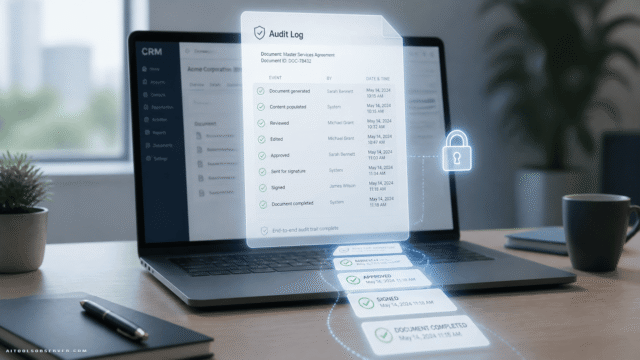
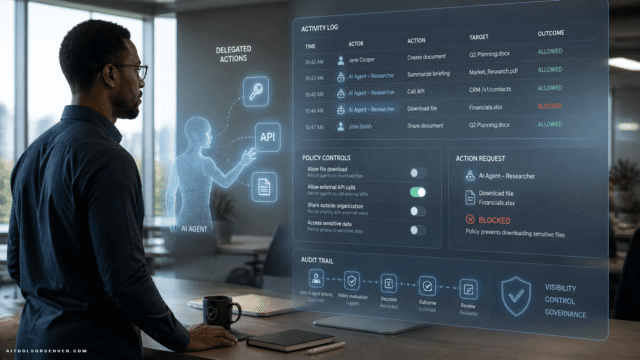
- Can teams audit actions and control permissions?
- Does benchmark performance hold up in production environments?
Those questions matter more than splashy leaderboard claims.
What this means for the AI tools market
Prentis highlights a broader market trend: enterprise AI is moving toward operational automation, not just conversational interfaces. The companies that stand out in the next phase will likely be the ones that can connect model capability to measurable business savings.
That is also where the sales motion changes. Instead of selling access to a general-purpose model, startups in this space are increasingly selling workflow outcomes tied to cost reduction or time savings.
For AI adopters, that is a better lens to use when comparing tools. Do not just ask whether an agent looks impressive in a demo. Ask whether it can remove repetitive work at a price and reliability level your business can actually use.
The practical takeaway
Prentis is worth tracking because it sits at the center of a category that enterprise buyers care about right now: computer-use agents for routine office work. The headline numbers and benchmark claims are notable, but the bigger story is the company’s focus on turning AI into task completion instead of interface polish.
If you are comparing enterprise AI tools, watch this category closely. The winners will not be the loudest companies. They will be the ones that can automate boring, messy workflows consistently, safely, and at a cost that makes rollout easy.









Comments (0) No comments yet
Want to join this discussion? Login or Register.
No comments yet. Be the first to share your thoughts!