



The Problem This Addresses
The strategic rationale behind the launch is grounded in data. Check Point’s own 2026 Cloud Security Report reveals a stark disparity: 77 per cent of organisations have updated their security strategies in response to AI adoption, yet only 26 per cent possess the architectural capability to actually enforce those strategies.
That gap is not a policy failure — it is an infrastructure and tooling failure. MSPs sit directly in the path of that problem, serving as the operational layer between security vendors and the enterprises that need protection. Check Point is positioning itself to become the platform that bridges that divide.
Multi-Tenant Management Platform

The new platform gives MSPs access to Check Point’s full product portfolio within a multi-tenant environment. Key components include native Workforce AI Security integration, expanded Professional Services Automation (PSA) connectivity, and Management Control Plane access through the MSP portal.
A dedicated MSP experience team for onboarding and ongoing support rounds out the offering. This matters because platform adoption in the MSP channel frequently stalls at the implementation stage — structured onboarding support directly addresses that friction point.
Workforce AI Security for the MSP Ecosystem

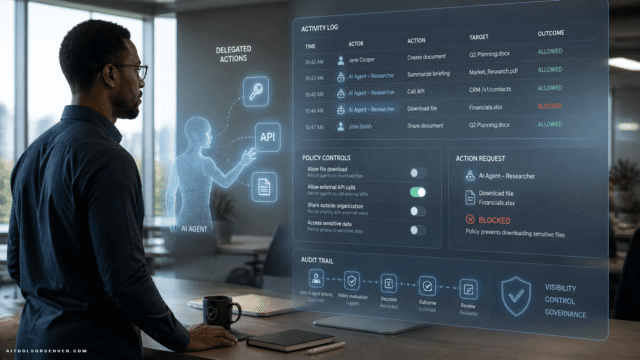
Check Point is extending its Workforce AI Security capabilities into the MSP channel for the first time. Partners will be able to discover AI tool usage across customer environments, govern how employees interact with AI applications, and protect sensitive data flowing through AI agents and platforms.
This is a meaningful capability expansion. As AI tool adoption accelerates inside enterprises, the attack surface is shifting — shadow AI usage, ungoverned data inputs, and unmonitored agent behaviour are emerging threat vectors that traditional endpoint and email security tools were not built to address.
Unified Security Bundles with Microsoft Licensing Alignment
Check Point has introduced consolidated security bundles that combine email security, endpoint protection, browser security, mobile security, SASE, Workforce AI, security awareness training, and DMARC into a single offering. The bundles are explicitly aligned to Microsoft licensing structures.
The alignment to Microsoft licensing is a deliberate commercial decision. It reduces procurement complexity for MSPs whose customers are already operating within Microsoft’s ecosystem, and it simplifies how MSPs frame and communicate security value — a persistent challenge in the channel.
Why This Move Makes Strategic Sense
Dave Meister, Check Point’s Vice President of MSP and MSSP, framed the shift clearly: MSPs are no longer managing infrastructure in isolation. They are now expected to guide customers through AI transformation — and that requires security tooling that matches the pace and complexity of that transformation.
The timing of this announcement is precise. AI tool adoption inside enterprises is outrunning governance frameworks, and MSPs are fielding questions they currently lack the tooling to answer. Check Point is moving to fill that gap before competitors consolidate the position.
The Microsoft licensing alignment also signals commercial maturity. Rather than asking MSPs to build a separate procurement motion, Check Point is embedding itself into an existing purchasing pattern — reducing friction and accelerating time to deployment.
What MSPs and AI Adopters Should Take Away
For MSPs, this platform represents a concrete response to a problem that has been growing quietly: customers are deploying AI tools faster than security policies can govern them. Having a single platform that handles discovery, governance, and protection across AI applications — within a multi-tenant management environment — removes a significant operational burden.
For enterprises evaluating their security posture, the 26 per cent enforcement figure from Check Point’s report should serve as a calibration point. Strategy documents and architectural capability are not the same thing. The tools that close that gap are now arriving in the MSP channel, which means access is broadening.
The launch at Pax8 Beyond 2026 is not a product refresh. It is a structural repositioning of Check Point within the MSP ecosystem — one that treats AI security governance as a first-class capability rather than an add-on feature. Whether the market responds will depend on execution, but the direction is well-calibrated to where enterprise risk is actually moving.














Comments (0) No comments yet
Want to join this discussion? Login or Register.
No comments yet. Be the first to share your thoughts!